
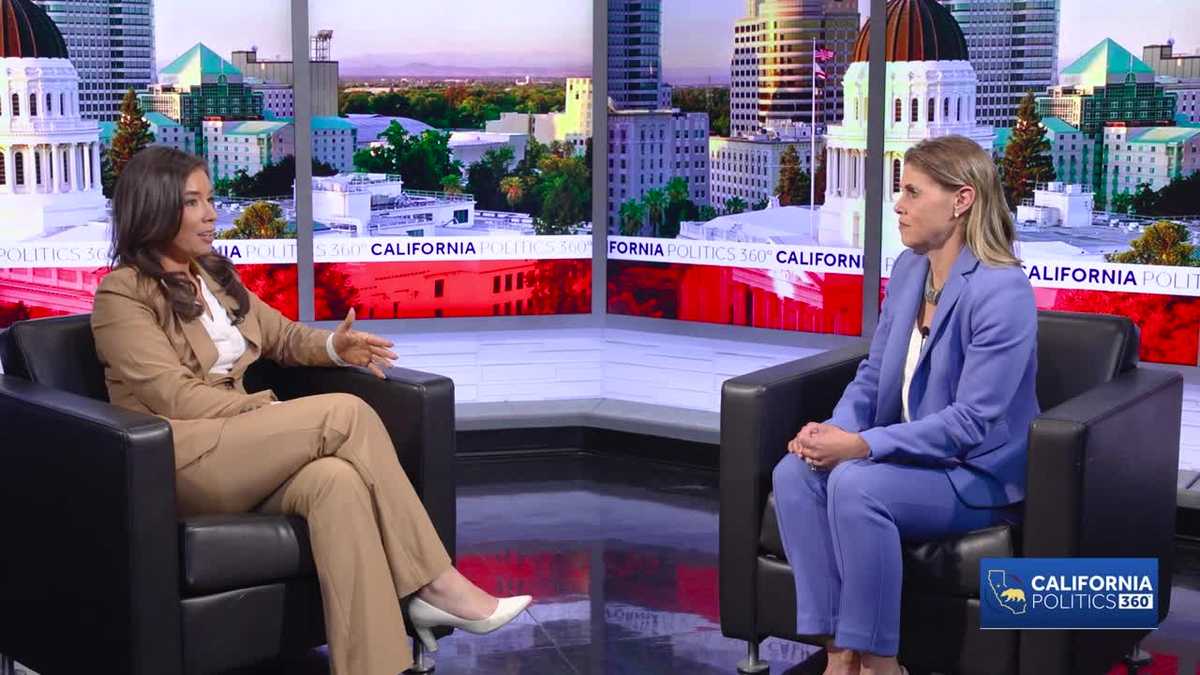
In a state that bans online sports betting, why is California allowing people to bet on politics? | California Politics 360
Assembly member Maggie Crowe, thank you so much for being with us. Thanks for having me. So just to take *** step back, I mean, technically it is illegal to even just sports bet online in California. I mean, for people who are seeing this happen with these prediction markets, how can people bet on politics? It’s *** very good threshold question. I mean, I, I’m looking at this from the standpoint on, is, is there any good policy from wagering on elections? I don’t see any public good from that. Yeah, I mean right now on the governor’s race, uh, we’re recording this in the week, there’s $13 million on the line between Calci and Poly Market in terms of who who is the winner of the governor’s race in California. And then also people can bet on like whether the billionaires tax gets on the ballot. I mean, where, where do you see lawmakers right now at our state capitol on this? I think this is really disturbing. I mean, I think the sanctity of our elections is threatened when we let people bet on it, and what I’m really focused on is the lack of disclosures. I mean, I see this as another pathway for dark money in California elections, and what I mean by that is these predictability markets can actually have an impact on elections because people are looking at this the same way they look at polls. Is there *** front runner and they see the odds and they see how much is bet. Um, and that could start to skew perception *** little bit, but the difference between that and polls is there’s no campaign disclosure that’s required. So who, who do you think should be disclosing this, like elected officials generally and then also candidates, and what and what exactly should they disclose? Well, I think it’s really, um, you know, kind of *** thorny issue. Candidates won’t necessarily know when somebody’s betting on them. So they, they, you know, don’t shoulder all of the responsibility here, um, but then you also have, you know, ***, ***, *** natural way for, um, you know, other actors to try and influence our elections, and that’s kind of what I’m talking about when I say. You know, we have enough of *** problem already with dark money and PACs and too much money in politics, and yet now we’re opening up this whole new playbook on it. You sent *** letter to the state’s Fair Political Practices Commission earlier this month. Have you just like offering to help with this? Have you gotten *** response or any discussions there? I had ***. Brief discussion with them. I haven’t gotten any kind of formal response, but yes, it’s an issue that I wanted to flag for them because I do think there’s *** potential for elections to be influenced by sites like Calci and Poly Market that are allowing public wagering to take place. The governor signed an executive order last week. That bans his appointees from influence like with influence from making these bets or allowing family, friends, etc. to benefit from them. Does that go far enough? I mean, should the same thing be done for state lawmakers, staff, people who have *** say in legislation, Secretary of State, like any, any thoughts there? Absolutely. Um, first of all, I’m, I’m, I’m so glad that the governor, you know, had that. That executive order, I think that’s *** really important step. I mean what we’re talking about here is insider trading, and we need to make sure that that is not occurring. And for its part, you know, Calci and other sites, they don’t want that either, right, because it hurts consumer confidence in their product. That’s good, but it doesn’t go far enough because, like you said, there’s all kinds of other people who could have insider knowledge that could be placing wagers through Calci, and these sites aren’t necessarily set up to know, to screen. So I think it’s definitely something that lawmakers need to think through and set better parameters to prevent the corruption of insider trading, but also prevent this larger corruption of wagering. Elections and the potential for dark money, does, I mean, the federal government, I mean, is there, should they step up here? Should this really be their arena as opposed to just like leaving it to the states? Yes, yes, um, you know, the federal government is, is very lax on enforcement on this, and that’s *** problem. I mean federal preemption is an issue here. It is *** difficult issue for states to legislate when there’s *** federal body responsible here. But I think there there is some gray area and um some places such as disclosures where states can step up and that’s what I’m looking at. No, we really haven’t seen this discussion. I mean this is emerging technology and now I, I, you see this as an emergent issue. Do you, I mean, there really hasn’t been discussions at our state capitol about this and the election is in June and then again in November. Like how quickly should there be action, if any, at our state level? You know this is an emerging issue and it’s really important that we get it right. Um, I don’t know if it’s an issue that that we can, you know, rush into in, in, in 72 hours, but it is something that we need to look at and, and begin to start talking through right now because the federal government hasn’t done anything really in this space at this point. I know different states are, I mean, just what does that mean for California? What is like the legal. Landscape for lack of *** better term, look like on this? Yeah, um, good question. I mean, it, it’s, it’s, it’s dynamic and it’s quickly emerging as you say right now in Nevada, for example, um, Calci’s been blocked because it conflicts with Nevada’s gaming laws in New Mexico. The attorney general has filed misdemeanor criminal charges against, um, you know, against those wagers to try and keep that in check. Now in California there was *** case that was brought by tribal plaintiffs because the wagering conflicts with our own gaming compact that gives tribes. Exclusive authority over gaming, so that case is pending right now. I think it’s gonna be heard in the Ninth Circuit on April 16th, so we’ll see where all those cases fall. But regardless, I mean California should be thinking about how we can be *** leader here, how we can ensure that our elections are fair and not influenced by dark money, and actually you mentioned the gaming tribes. Uh, we did have the leader of one of them on our program in October, and he said that. I mean these predictive markets are their biggest concern at that moment. I’m I’m sure nothing really has changed, um, and this was around *** discussion about daily fantasy sports betting. Um, should the Attorney general issue *** legal opinion? Should he be asked for one? Is there *** space for the Department of Justice in California to step up here? Sure, I think the Attorney General, uh, you know, has been, has been helpful in clarifying what the laws in California and should continue to do so as these emerging issues come up and if necessary should take legal action. Senator Carl, thank you so much for your time.
In a state that bans online sports betting, why is California allowing people to bet on politics? | California Politics 360

Updated: 8:25 AM PDT Apr 5, 2026
Online sports betting is illegal in California but as of right now, it’s apparently legal for most people to bet on politics. As of Friday, more than $13 million combined in bets were placed in sites such as Kalshi and Polymarket on the outcome of the California governor’s race. Other available wagers include which party takes the state’s highest office, and whether a measure to impose a new tax on billionaires lands on the ballot. “I think this is really disturbing,” said Assemblywoman Maggy Krell, D-Sacramento, on California Politics 360. “The sanctity of our elections is threatened when we let people bet on it.” Krell said she’s focused on the lack of financial disclosures when it comes to elected officials and political candidates, noting the political betting could be another way that would allow “dark money” into politics. “These predictability markets can actually have an impact on elections because people are looking at this the way they see polls,” Krell said. “Is there a front-runner? They see how much has been bet and that could start to skew perception.” Krell said it’s a thorny issue and candidates would not necessarily know who exactly is placing bets on them. She sent a letter to the state’s Fair Political Practices Commission offering to help put together new state laws to address the issue. Krell said she had a brief discussion with the commission so far. Gov. Newsom signed an executive order last week prohibiting state appointees from using inside information to benefit on predictive market bets. But state lawmakers, staff, and other constitutional officers and their staff are not prohibited. California Attorney General Rob Bonta did not take a position on the issue, noting the next steps on the future of prediction markets in California depends on state lawmakers. “I think it’s something lawmakers need to think through and set better parameters to prevent corruption of insider trading and this larger corruption of betting on elections and potential for dark money,” Krell said. She did note it’s a difficult issue for state’s to regulate when a federal body is technically responsible. She said the federal government needs do more. In the meantime, states are taking on the issue separately. In Nevada, Kalshi has been blocked because it conflicts with the state’s gaming laws. In New Mexico, the state attorney general filed criminal charges against Kalshi. Washington has also sued Kalshi for illegal gambling. In California, Krell notes gaming tribes have sued and a state appeals court is set to reconsider their push to block Kalshi later this month. “California should be thinking about how we can be a leader,” Krell said. KCRA 3 Political Director Ashley Zavala reports in-depth coverage of top California politics and policy issues. She is also the host of “California Politics 360.” Get informed each Sunday at 8:30 a.m. on KCRA 3.
Online sports betting is illegal in California but as of right now, it’s apparently legal for most people to bet on politics.
As of Friday, more than $13 million combined in bets were placed in sites such as Kalshi and Polymarket on the outcome of the California governor’s race. Other available wagers include which party takes the state’s highest office, and whether a measure to impose a new tax on billionaires lands on the ballot.
“I think this is really disturbing,” said Assemblywoman Maggy Krell, D-Sacramento, on California Politics 360. “The sanctity of our elections is threatened when we let people bet on it.”
Krell said she’s focused on the lack of financial disclosures when it comes to elected officials and political candidates, noting the political betting could be another way that would allow “dark money” into politics.
“These predictability markets can actually have an impact on elections because people are looking at this the way they see polls,” Krell said. “Is there a front-runner? They see how much has been bet and that could start to skew perception.”
Krell said it’s a thorny issue and candidates would not necessarily know who exactly is placing bets on them. She sent a letter to the state’s Fair Political Practices Commission offering to help put together new state laws to address the issue.
Krell said she had a brief discussion with the commission so far.
Gov. Newsom signed an executive order last week prohibiting state appointees from using inside information to benefit on predictive market bets. But state lawmakers, staff, and other constitutional officers and their staff are not prohibited.
California Attorney General Rob Bonta did not take a position on the issue, noting the next steps on the future of prediction markets in California depends on state lawmakers.
“I think it’s something lawmakers need to think through and set better parameters to prevent corruption of insider trading and this larger corruption of betting on elections and potential for dark money,” Krell said.
She did note it’s a difficult issue for state’s to regulate when a federal body is technically responsible. She said the federal government needs do more.
In the meantime, states are taking on the issue separately.
In Nevada, Kalshi has been blocked because it conflicts with the state’s gaming laws. In New Mexico, the state attorney general filed criminal charges against Kalshi. Washington has also sued Kalshi for illegal gambling.
In California, Krell notes gaming tribes have sued and a state appeals court is set to reconsider their push to block Kalshi later this month.
“California should be thinking about how we can be a leader,” Krell said.
KCRA 3 Political Director Ashley Zavala reports in-depth coverage of top California politics and policy issues. She is also the host of “California Politics 360.” Get informed each Sunday at 8:30 a.m. on KCRA 3.