
A suburban neighborhood in Milpitas, Calif., with houses and residential development spread across the valley floor.
Alex Potemkin/Getty Images
Milpitas is intending to give its police a crime-fighting boost through the approval of a $60,000 grant to expand the use of doorbell cameras. Last month, the Milpitas City Council unanimously approved the program, which would allow residents to obtain the cameras on a first-come, first-served basis.

At the March 17 council meeting, Tyler Jamison, the Milpitas Police Department’s acting assistant police chief, said a police analysis revealed there is a “high demand for residential security cameras.”
Article continues below this ad
“The safety tool can improve case solvability, support suspect identification and enhance overall public safety outcomes,” Jamison said.
The program, led by Councilmember Evelyn Chua, was developed after the council asked police to evaluate the possibility last year, according to Jamison. During the meeting, Jamison said the purpose of the program is to improve neighborhood safety, increase the amount of video evidence for investigations and ensure the program is “equitable for everyone.”
Doorbell cameras such as Ring and Google Nest have become increasingly popular as home security tools. Police departments have also cited residential cameras as key to tracking down suspects; for example, when Oakland coach John Beam was fatally shot at Laney College, authorities reviewed hundreds of hours of surveillance footage, including Ring cameras, to locate the suspect. But while the technology has helped investigations, some privacy experts have raised concerns about data access and oversight.
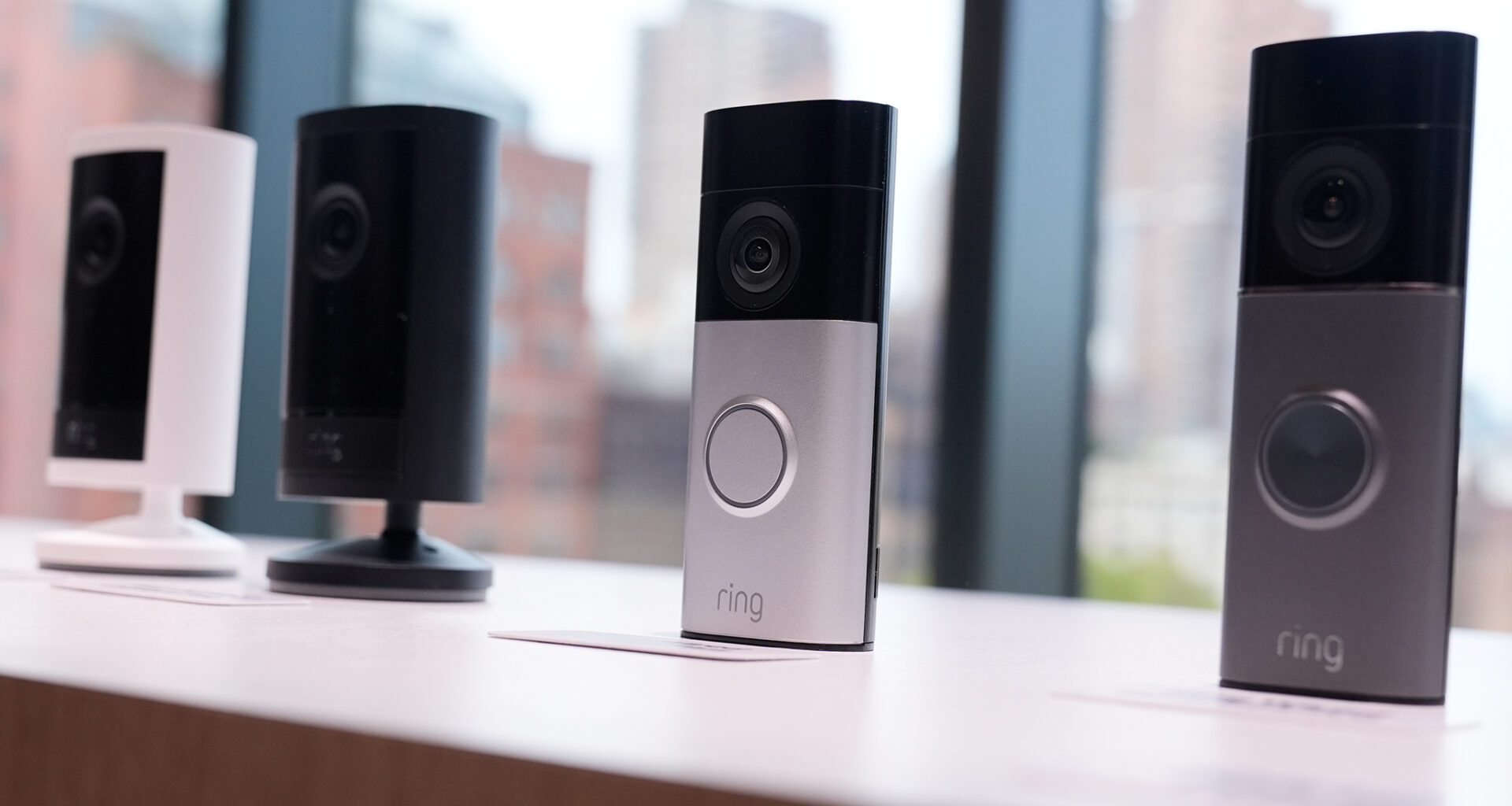
New Ring doorbells and cameras are displayed at an Amazon event in New York, Tuesday, Sept. 30, 2025.
Seth Wenig/AP
In Milpitas, officials considered several different ways to give cameras to residents.
Article continues below this ad
Jamison presented three versions of the program: one featuring Ring cameras that require a monthly subscription, another using non-subscription cameras, and a third in which residents would purchase cameras themselves and be reimbursed. Police supported the non-subscription camera option, which was the same option the council members backed during the vote.
Jamison told SFGATE that officials chose the second option because the Ring cameras would’ve cost residents $5 a month and the reimbursement option would require upfront costs.
Police have yet to choose the camera brand, he said, and the $60,000 grant would allow the department to provide approximately 350 to 500 cameras.
Article continues below this ad
“We evaluated the program and determined the option of providing the residents cameras that don’t have a subscription service, because we didn’t want them to bear any additional costs,” he said.
The Ring cameras also would’ve provided a “direct integration” with the police department’s video system, Jamison said. Non-subscription cameras would let residents choose whether to submit video footage in investigations using an online link.
“The most important thing is that this is a voluntary program,” Jamison said. “Obviously the cameras are first come, first served, but also the sharing of the footage is voluntary and we’re not going to have any access to the footage unless the resident chooses to share.”
Experts raise alarms
But even as sharing footage is promised to be optional, some privacy experts still have concerns about the cameras. Matthew Guariglia, a senior policy analyst at the Electronic Frontier Foundation, told SFGATE that the cameras risk blurring the line between residents’ personal devices and police resources.
Article continues below this ad
“As the saying goes, there’s no such thing as a free lunch,” he said. “… Police may still have to request the footage from either the user or Ring, but they clearly consider it part of a larger network of police surveillance. In exchange for free cameras, police will undoubtedly expect users to comply when they request footage.”
Guariglia said the increased cameras could also be harmful to people who are already disproportionately profiled because it “creates assumptions” and potential racial biases.
“People peering through their cameras or are eager to pass footage onto police should realize that they put the camera up for safety, but not everyone you see through the lens is a potential criminal and there are a thousand legitimate reasons why someone might be knocking on your door or looking at your house,” he said.
In a similar sentiment, Chris Hoofnagle, a consumer law and protection expert with UC Berkeley’s School of Law, also pointed to the Fourth Amendment, which protects people and their property from unreasonable search and seizures. He said the law applies to the government, not individual people, so it means someone can collect evidence on their own and share it with police, taking the blame off of authorities.
Article continues below this ad
“Thus, the police department’s decision to have the homeowner decide to share data is probably strategic, to make the data collection more closely tied to the homeowner’s personal motivations,” Hoofnagle said in an email to SFGATE. “It says: the government didn’t tell you to share the information, you decided to on your own will.”
Jamison, though, is optimistic that camera owners will participate. He told the City Council that Milpitas residents are willing to share video footage to help with investigations most of the time.
Interested residents will be able to sign up online for a camera, and the police department will eventually host community meetings where officers will explain the purpose behind sharing footage when investigations happen, he added.
Article continues below this ad
The program comes after the San Leandro Police Department launched a similar initiative last year, providing free Ring cameras to its residents.