
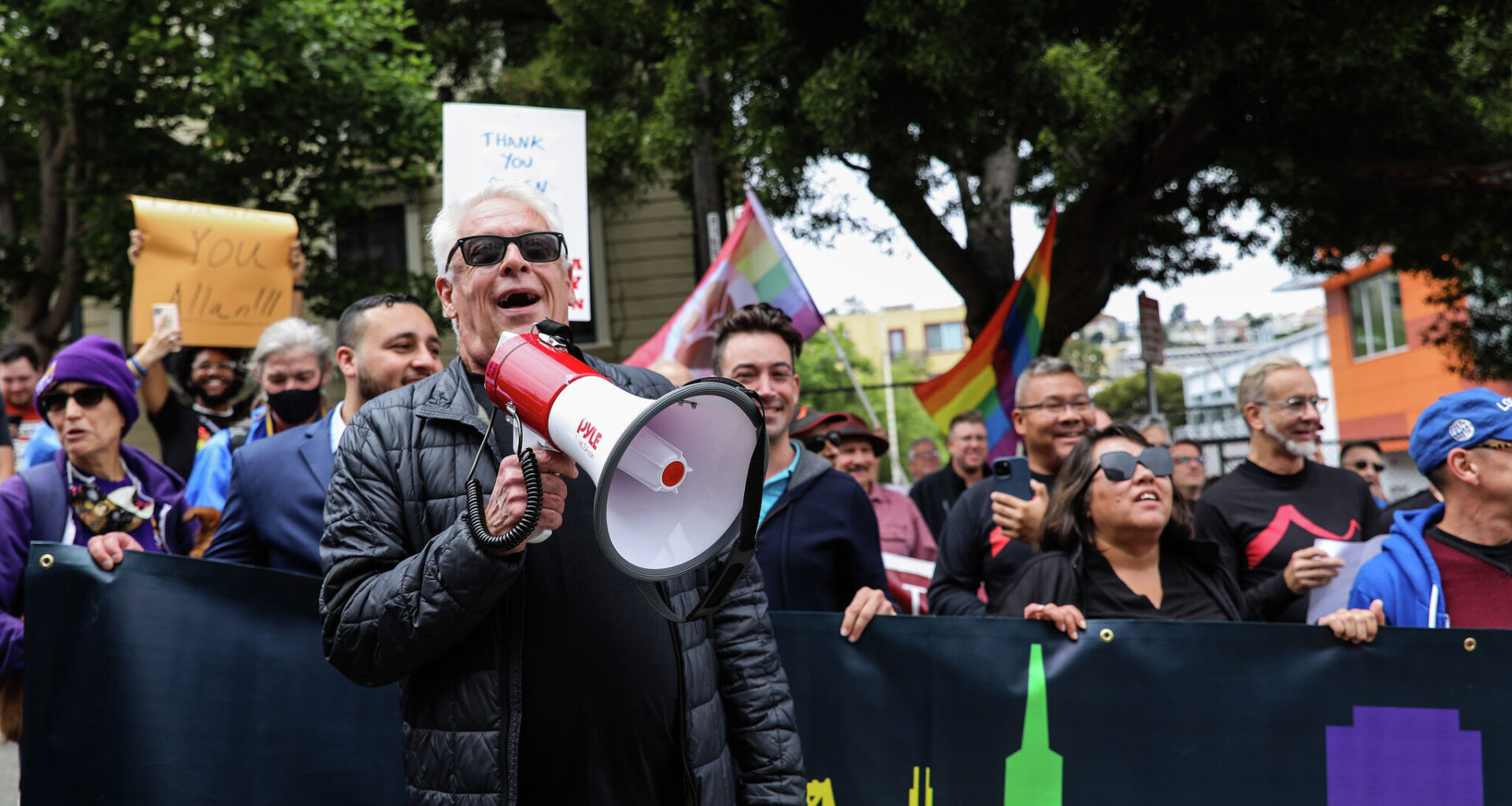
Cleve Jones, pictured in 2021, is a lead organizer of a nationwide call to action demanding that political candidates answer for where they stand on the health of the people they seek to serve.
Yalonda M. James/S.F. Chronicle
I came of age in San Francisco at a time when a mysterious disease was killing my friends. By the time we understood it was HIV and AIDS, so many were already gone. I watched people I loved disappear, one by one. Entire communities were hollowed out. Before it was over, more than 20,000 San Franciscans would die.
We were told to be afraid. We were told to stay quiet. We were told nothing could be done.
Article continues below this ad
But that was not the first time ordinary people had to fight for the idea that every life matters. Workers had marched for it. Communities had organized for it. People had gone to jail for it. The fight for human dignity has always required ordinary people to stand up when those in power decided some lives were not worth saving.
We have been here before. We are here again.
San Francisco Chronicle Logo
Make us a Preferred Source to get more of our news when you search.
Add Preferred Source
As we mark World Health Day on Tuesday, we are reminded of the global fight for health and dignity, even as the Trump administration calls for deeper cuts to public health programs on top of the damage already done. These decisions will determine who gets care and who does not. Cuts to Medicaid. The gutting of the Centers for Disease Control and Prevention and the National Institutes of Health. Pullbacks in vaccine and cancer research that took decades to build. Reductions in global AIDS programs that kept millions alive.
Behind every one of these cuts is a person who may not get the care that they need in time, a family driven into bankruptcy because of health care costs and a community left without the resources to respond.
Article continues below this ad
Millions of lives are at stake. Not thousands. Millions.
Cleve Jones is pictured in 1987 with a quilt from the Names Project, which he founded. The project, now known as the AIDS Memorial Quilt, honors those who lost their lives to the disease.
Deanne Fitzmaurice/S.F. Chronicle
I have watched this pattern my entire life. During the AIDS crisis, we were told there was no money, no urgency, no political will. We organized anyway. We marched. We demanded that science be funded and that our community be seen. We changed the trajectory. That didn’t happen by accident.
For the first time in my lifetime, we have reached the brink of zero new HIV transmissions, through sustained research and investment, including breakthroughs from companies like Gilead that brought us to twice-yearly injections capable of preventing transmission altogether. For those who have fought this epidemic for nearly half a century, that was not just a medical breakthrough. It was the promise of an ending.
Now even that is at risk.
Article continues below this ad
The same forces that ignored AIDS ignored working people for generations. Through my years organizing with hotel workers, food service workers and hospital workers at Unite Here, I saw what it means when the system decides your life is a line item to be cut. These are people who show up every day to care for others and have had to fight, contract by contract, strike by strike, for the right to be cared for themselves.
We know who gets left behind when public health fails. Working families. Black and Latino communities. People in rural towns where the nearest hospital is already an hour away. Seniors who built this country and now find their care subject to a budget negotiation. Young people who inherited a world they were told was moving forward, only to watch it pull back.
We saw it during COVID. The pandemic changed everything: how we work, how we gather and whether our neighborhood still feels like home. We told ourselves we would learn from it.
Public health is not a partisan issue. It touches every person, every family, every community, regardless of how they vote or where they live. It is the difference between life and death.
Article continues below this ad
We have a moment today. Again.
Communities across the country will come together for Seven Days in June: Health Is Primary, a nationwide call to action in towns and cities alike. From June 1 through June 7, people will gather in town halls, community centers, places of worship and public spaces to make one thing clear: Every candidate at every level must answer for where they stand on the health of the people they seek to serve.
On June 5, candlelight vigils will be held at sunset across the country to honor those we have lost and those we stand to lose if we do not change course. In many places, sections of the AIDS Memorial Quilt will be on display, a reminder of what happens when we fail to act and what becomes possible when we do.
Seven Days in June is about refusing to be quiet. It is about adding our voices to the long line of ordinary people who looked at an injustice and decided not to accept it.
Guest opinions in Open Forum and Insight are produced by writers with expertise, personal experience or original insights on a subject of interest to our readers. Their views do not necessarily reflect the opinion of The Chronicle editorial board, which is committed to providing a diversity of ideas to our readership.
Read more about our transparency and ethics policies
San Francisco has answered that call before. In the worst of times, in the face of fear, stigma and indifference, this city organized, spoke out and refused to accept that some lives mattered less than others.
Article continues below this ad
We can do it again because the truth is simple. Health is not ideological. It is not optional. It is primary.
Cleve Jones is a human rights advocate and author. He founded the AIDS Memorial Quilt and co-founded the San Francisco AIDS Foundation. He has worked closely with UNITE HERE and the labor movement on behalf of working people. He is a lead organizer of Seven Days in June: Health Is Primary. To learn more, visit www.sevendaysinjune.org.