
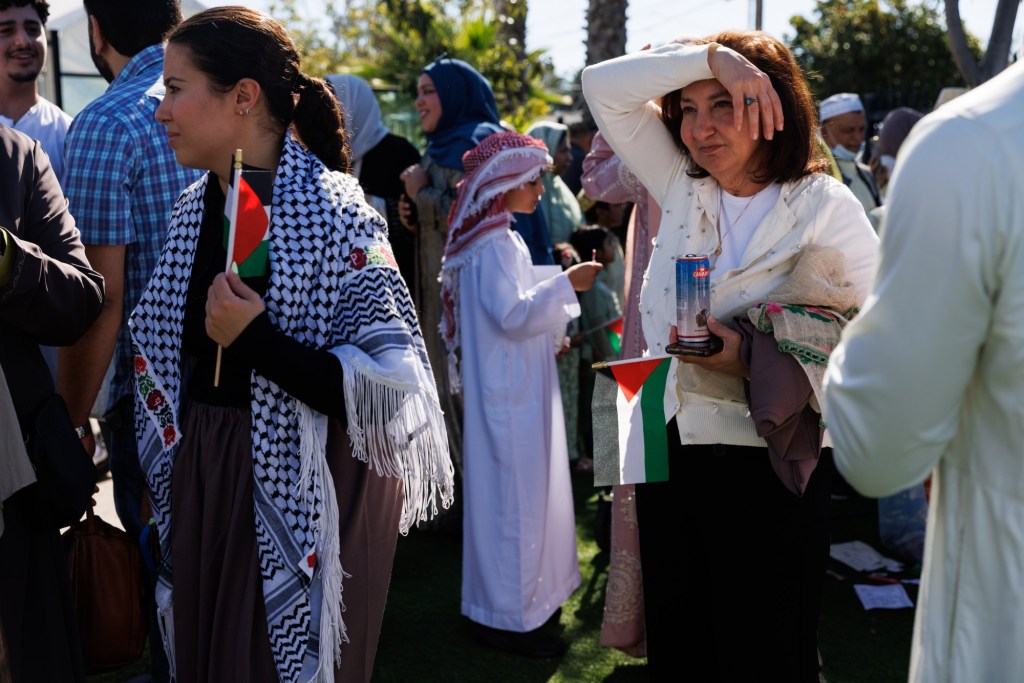
Recently, I could not help letting a few tears slip out when I told my grown sons that this was not the world their father and I envisioned for them. Aspirations and opportunities did not seem to be a part of what they could one day claim. The world now lacks safeguards and guidance for all young people, and us older people, too. What is missing? Has the world forgotten stewardship as a key ingredient for an aspirational future?
Stewardship bridges communication and navigation. Stewardship understands context as a grounding for transformation. It embraces the small and peripheral, and it cares about the natural world. Humans have roles to play in our social and natural environments. Throughout history, periods of stability quietly cared for the Earth and its people to create the miracles of modernity. Miracles were especially nourished in the Arab world for centuries.
Islam kissed the ethnically and religiously diverse Arab lands and devised an inclusive and innovative formula. Its functional belief is that all people are central. Call it a “marketing strategy.” Conversion was not essential. Rather, differences would be privileged over sameness. The Islamicate or governing bodies found virtue in protecting minorities. Minorities are viewed as the glue for societal harmony. To this day, the Arab world especially misses its diverse Christian and Jewish populations, unique to every city. Minorities were included in every part of society: artisans, merchant marines, medical doctors, philosophers, mathematicians, inventors, legalists, farmers, bankers and astronomers. The core of this belief system is that those who negotiate and facilitate, especially if they were part of a micro-ethnicity, create stable and trusting environments and wealth for all.
Additionally, the Arabic language brought people together through an unbroken lineage. Arabic carries ancient histories encompassing a myriad of subcultures and sustainable systems for the world. The Phoenician-based languages like Aramaic birthed Arabic along with Arabic numerals, which we all use today. Arabic is the outcome of centuries of trade, innovation and communication, never letting go of the beauty of symbols, pictographs and glyphs. Even though it moved to sound, its visualization as calligraphy and architecture flourished. Both its poetry and pragmatism influenced many other languages as they ambled toward modernity. Advanced communication in language and math created balances easing the modern world into being.
Arab women created several firsts in education and precision navigational tools. Fatima al-Fihri, a Moroccan woman, created the world’s first university, University of Al Quaraouiyine, in Fez, Morocco, for higher learning and research nearly 230 years before Europe created its first ones. It operates today and our cap and gown is fashioned from Al Quaraouiyine’s graduating class! The second and third universities were all in Egypt and Mali. There is an unbroken lineage from the Romans for precise astrolabes, which was advanced, perfected and made more functional by a Syrian metallurgist, Mariam al Astrulabi. She turned its ancient origins from Roman Alexandria, Egypt, into shiny and beautiful tools to navigate and measure vast distances on Earth and in the night sky.
Arab innovations in communication, medicine and navigation continue today. Palestinian American and New Yorker Rajie Cook created the public and civic symbols for escalators, restrooms and airports in the mid-1950s. GPS technology was adapted to our cell phones by two immigrant Arab American engineers who worked for Qualcomm.
The Holy Land urgently requires us to look beyond the dangerous stereotypes about Arabs. Let’s acknowledge Palestine’s instructive past for answers. Let’s be skeptical about how Arabs are defined today. War is usually dependent on hate and stereotypes. Palestine was the most successful guardian of faith for all religious beliefs. Its legacy erased no one. Endless examples teach us how to nourish our humanity by embracing all. Historic Palestine’s future is the not too distant past.
War is a failure distracting from other failures of governments and leaders. The illusive present is difficult to grasp. Could our religious, ideological, political, social differences collude to remind us of what we share in common? Will we create constructive and humane outcomes for our children, great grandchildren and beyond? Can stewardship, no matter how small, add to collective harmony?
Arab heritage teaches us to encompass and absorb everything. The future will be found in a past where everyone is the glue that builds trust and keeps us safe. Arabs and Arab Americans have a template fused in our DNA for guarding our assets. Arab peoples know how to heal, negotiate and rebuild expectations for a future of promises kept.
Bittar is an artist and community activist who lives in North Park.