
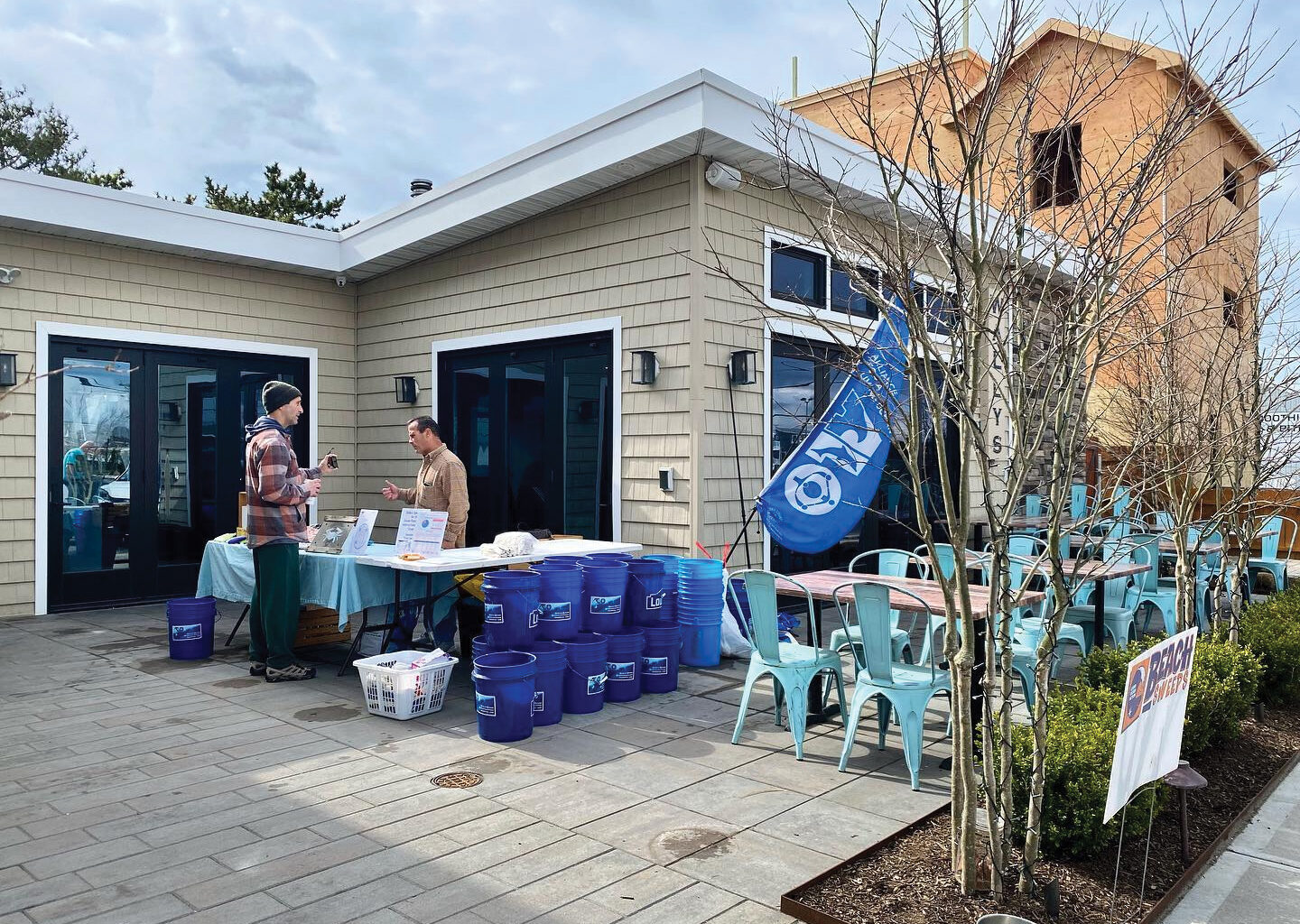

(Supplied Photo)
Clean Ocean Action’s Spring Beach Sweeps take place, rain or shine, at 80-plus locations throughout New Jersey each year. Join this collective cleanup from 9 a.m. to 12:30 p.m. this Saturday, April 11 to help rid the state’s beaches and waterways of litter, and log what’s found.
On Long Beach Island, where COA partners with Alliance for a Living Ocean, volunteers can meet ALO members outside Wally’s Restaurant, at 712 Long Beach Blvd. in Surf City, to aid in the beach-cleaning effort. Buckets and gloves will be provided, or participants can bring their own.
COA launched the region’s first Beach Sweeps in 1985 to rid beaches of unsightly and harmful trash, and the event is now one of the longest-running cleanups of its kind.
“Thanks to the commitment of volunteers, the Beach Sweeps continue to expand each year, reaching more beaches; inspiring and educating new volunteers; and removing increasing amounts of debris from the marine environment,” said COA Executive Director Cindy Zipf.
In 2025, more than 4,000 volunteers removed and tallied nearly 170,000 pieces of litter from 77 spots along the state shoreline during the fall and spring cleanups. According to COA’s annual Beach Sweeps report, plastic comprised more than 83% of the total trash collected.
Plastic bottle caps and lids topped the 2025 “Dirty Dozen” list (the top 12 debris items collected) with 28,222 pieces, making up 16.6% of the debris. Plastic cups, meanwhile, made the “Dirty Dozen” list for the first time since 2009, totaling 3,235 pieces collected and 1.91% of all debris.
Among the most unusual finds during last year’s cleanups were a pair of cross-country skis, a full quart of milk, a whole watermelon and a wedding ring.
“The findings in this year’s report highlight both the challenges our ocean faces and the incredible commitment of volunteers,” noted Meg Sulzberg, COA plastic-free sea coordinator. “The volunteers’ efforts continue to drive meaningful progress toward a cleaner, safer coastline.”
Beach Sweeps data help drive policy change, including New Jersey’s 2022 ban on single-use plastic bags and foam food containers, which to date has prevented an estimated 4.8 billion bags from entering circulation each year.
“Clean Ocean Action strives to reduce plastic pollution along New Jersey’s coast and in the ocean, targeting litter before it reaches waterways and the ocean,” the organization stated. “Debris from people makes its way into waterways and the ocean. This threatens marine life, entangles animals and gets mistaken for food, while breaking down into toxic microplastics that can persist for hundreds of years.
“These micro- and nano-plastics are also, increasingly, a human health concern,” the group added. “Recent studies show plastics accumulating in the body, including in the blood and organs, and being linked to reproductive, immune and endocrine system disruptions. By removing plastic debris from beaches and documenting pollution trends, COA provides data to guide policy, raise public awareness and prevent plastics from entering both the ocean and the food chain, helping protect marine life and human health alike.”
To read the entire 2025 Beach Sweeps report or to register for the April 11 cleanup event, visit cleanoceanaction.org. —J.K.-H.