
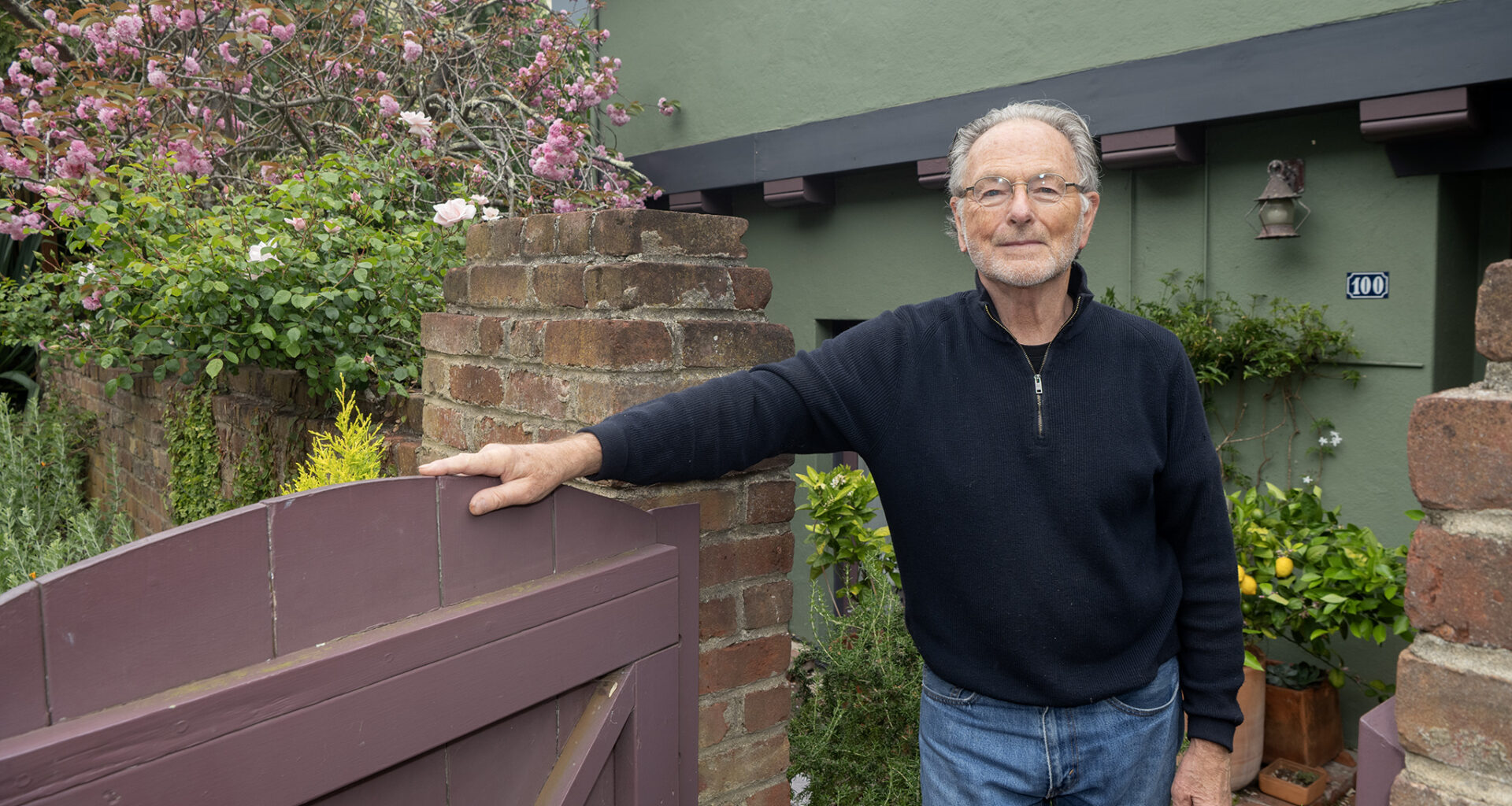
When Orene Kearn and her husband bought their six-bedroom Hillsborough home in 1994, they stretched their budget to make it work. That early bet on the Bay Area housing market paid off so well, they now say they’re stuck in their home.

Kearn, 69, declined to share what she paid for the house, but said current estimates put the value at more than quadruple that original price. Her son has long moved out, and Kearn said they might have downsized already, but given the huge appreciation in their home’s value, the taxes on the profits they’d make if they sold would be astronomical — and it’s the main reason they’re not moving.
“The whole system, in my opinion, is designed to not have anyone move out of their homes once they’re empty nesters,” Kearn said.
Article continues below this ad
Lots of homeowners across California feel “locked in” to their housing situation right now. Mortgage rates remain relatively high, Proposition 13 keeps homeowner property taxes low, and real estate inventory remains sparse in most locations throughout the state. But for a large subset of mostly baby boomers, what’s keeping them in place is the money they’d lose to the government — both federal and state — if they sold.
Staying put is getting worse
California homeowners stay in their homes longer than anywhere in the country. In Los Angeles, the average was 20 years in 2025, according to a recent Redfin report, while San Jose homeowners held on for around 18.7 years.
Make SFGATE a preferred source so your search results prioritize writing by actual people, not AI.
Add Preferred Source
Those numbers are only growing. The average home tenure increased in the past decade in every major California metro except Sacramento. In San Francisco, the average homeowner stayed for 16.5 years and, in that time, home values appreciated by around 70%. It’s a privileged problem to have, one that aspirational homeowners dream about. Still, empty-nest baby boomers own nearly 30% of the country’s homes with three or more bedrooms, a previous Redfin study showed, while millennials with kids only own about 14% of them.
Article continues below this ad
San Francisco resident John Cate is pictured at his home on Monday, April 6, 2026.
Charles Russo/SFGATE
Retiree John Cate is well aware that “there’s a family out there with a couple of kids that would want to have a house like this.”
“This” means the four-bedroom Cole Valley home that he and his wife have owned since 1997.
“We’re over-housed, there’s no question,” Cate said.
Article continues below this ad
He didn’t even realize the situation he was in until a few years ago, when a house just down the street went up for sale, which they saw as a nice option for downsizing. He talked to his accountant, and the estimated tax bill they’d pay on the gains of their current home effectively ended the conversation.
Federal capital gains rates can reach up to 23.8% for the highest-income sellers. For a primary residence, homeowners can exclude up to $250,000 if single or $500,000 if married filing jointly, and they also can generally deduct any renovations. California, meanwhile, does not have specific capital gains taxes and instead tacks the profits onto regular income, with rates ranging from 1% up to 12.3%.
For example, if a California home was purchased in 1997 for $500,000 and sells for $4 million today, that homeowner would likely owe around $1 million in taxes.
“It really hamstrings people,” Cate said. “I know talking to other people, we’re not the only ones that are in that situation.”
Article continues below this ad
And Cate said it’s not just the taxes. He calculated that it could cost as much as $250,000 just to sell the home, taking into account broker and other fees included in the transaction itself.
He admits he’s “financially OK” and obviously, they could make some kind of downsizing work, but no one knows how many years you have to plan for in retirement. He’s 79, but says he’s in great health — when we spoke, he had just gotten home from a week-long ski trip.
Houses in Cole Valley in San Francisco.
Alexander Spatari/Getty Images
When asked if he felt guilt about staying in his home, Cate said what he felt was frustration. He knows moving into a single-story home would probably be a smart move as they age, but since the tax code isn’t likely to change any time soon, they’re staying put.
Article continues below this ad
“It’s hard to say what to do about it. We just stay put until we have to be carried out, I guess,” he said, with a forced laugh.
Devin Lucas sees this all the time in his role as a real estate tax attorney. Homeowners are searching for a real estate agent, and “it’s an enormous shock” when they find out how much tax they’re going to have to pay. “There are people that live in $3 million homes, but they’re not millionaires. They just happen to have bought a home at the right time and they’re literally looking at $500,000, maybe even a million-dollar tax liability,” Lucas said.
Some people go on to remodel their homes instead, if they have the means. He said he’s seen plenty of people adding a primary bedroom on the main level so as they age, they can live life like they have a single-story home.
Article continues below this ad
Lucas said if the tax code changed, he thinks there’d be “an enormous amount of homes that would come on the market that people otherwise are not going to sell until they die.”
“Who wants to write a $500,000 check to the government when you could potentially leave that to your children?” Lucas said.
‘A psychological barrier’
Taxes are “a psychological barrier more than an economic barrier” for most Californians, said Enrico Moretti, a professor of economics at UC Berkeley. Still, that doesn’t mean they aren’t contributing to incredibly low turnover.
Article continues below this ad
Moretti said he believes mortgage rates are still the main cause of the stagnant market right now, but couple that with Prop. 13 and tax concerns, and you end up with a big segment of the market that isn’t going to change homes anytime soon.
Plenty of people don’t move for other reasons besides taxes. They’re emotionally tied to a home, or they want to stay close to family and friends. Considering both the personal and financial ramifications of moving, “it is overwhelming,” Nancy Brown, a 73-year-old Campbell resident, told SFGATE.
Afternoon sun shines on historic 1928 steel water tower of downtown Campbell. Aug. 29, 2024.
MattGush/Getty Images
Brown moved to California with her then-husband in 1989. They bought their four-bedroom house for $235,000 in 1993, and she estimates it’s worth around $2 million today. She met with a real estate agent in February, just to try to get a better sense about what repairs she’d need to make if she ended up putting her house on the market in the near future.
Article continues below this ad
“A lot of people are in the same position as I’m in of not understanding it all,” Brown said.
She’s been “wishing to not be a homeowner” for years now, but she’s also unsure of where she would go next. She’d like to move closer to her daughter, who lives in San Diego with her family, but she’s unsure if they’ll stay there long term, and she doesn’t want to have to move more than once.
Kearn, the Hillsborough homeowner, is frustrated by her situation, much like Cate. She said most people think if you have a home that has appreciated so much, you’d be able to pay the taxes and fees to sell it, but in reality, “most people can’t,” Kearn said.
“I can’t afford to downsize. There is nothing left to buy with what’s left over,” she said.
Article continues below this ad
So many of the small starter homes near her have been renovated, she said, and it’s left so little inventory for them to consider in what would be their price range after selling.
Meanwhile, Kearn said the larger house affects how she’s budgeted for retirement, given that they’ll likely keep maintaining it, along with its extensive landscaping and other features a smaller home likely wouldn’t have. And it’s not just her budget that takes a hit; it’s her time, too. Managing an older, large home takes more effort, she said.
Plenty of her neighbors and friends are in the same position she’s in, ready for their next life chapter, but feeling locked into the home they bought two or three decades ago, she said.
‘All kinds of crazy things’
If a homeowner can’t or doesn’t want to incur their home’s tax implications, they sometimes turn to loopholes to get out of it, or at least delay it. “People are doing all kinds of crazy things if they want to downsize,” Kearn said.
Article continues below this ad
Aerial view of residential neighborhood built on a hill, Berkeley, San Francisco bay, California;
Sundry Photography/Getty Images
One of the most common things she sees is couples letting their grown children “rent” their house, often a millennial couple and their kids, while they live in a house or condo that’s much smaller nearby.
She’s also had friends rent out their house for a few years so that they can do a tax-deferred exchange like a 1031, which allows you to sell one investment property and reinvest the money into a new investment property, delaying capital gains taxes. You then have to rent out the new property for a period of time, as well.
Article continues below this ad
And that’s for the very determined. Many people just stay in their houses until someone passes away, and then the surviving spouse can get what’s known as a “step up in basis” that makes selling the house more manageable financially. For example, if the home a couple purchased for $400,000 is worth $3 million when one spouse dies, the basis — the home value — resets to market value. This makes the taxes much lower when the home sells, hopefully allowing a surviving spouse enough profit to afford to relocate. But it means losing a partner.
“The only way out of this is to die,” Kearn said.