

Few storylines engage Los Angeles Times readers more than the “leaving California” narrative. And over the last decade, there has been much to write about.
The pandemic brought waves of demographic change as some Californians exited to other states, often chasing greater affordability and new lifestyles. The “California exodus” was a real thing during the COVID-19 emergency years, though population levels across the state stabilized and some places such as San Francisco and Silicon Valley have seen major rebounds.
You’re reading the Essential California newsletter
Sign up to start every day with California’s most important stories.
By continuing, you agree to our Terms of Service, which include arbitration and a class action waiver. You agree that we and our third-party vendors may collect and use your information, including through cookies, pixels and similar technologies, for the purposes set forth in our Privacy Policy such as personalizing your experience and ads.
But California’s high prices have remained a grim fact of life, especially for young people struggling to enter the housing market, despite the draw of enjoying the Golden State’s many attributes such as its natural beauty, powerful economic might and culture of innovation.
I have been charting these shifts for The Times. Here are my answers to some common questions on this subject:
The California exodus, especially during the pandemic, made lots of headlines. Where do we really stand now with that in terms of population?
California’s population has essentially been treading water since the pandemic. Before the last decade or so, the state’s history has been one of constant growth. Then 2020 came along and our population dropped for the first time ever; years later, California has still yet to fully recover from the net loss of hundreds of thousands of people during the pandemic.
For the last three years, the state has grown in population, though the numbers have been quite small. A decrease in foreign migration into the state has more or less canceled out a reduction in the net outflow of Californians to other states. While we’re growing on paper with lower migration rates, the population is basically flat.
There’s some groundbreaking new UC Berkeley research that really shows the economic changes people see when they leave California. What stood out in that research.
The California Policy Lab findings helped answer some questions we’ve had since the California exodus began. Those who left the state were 48% more likely to become homeowners after six years than their neighbors who stayed in California. Their monthly housing costs also dropped nearly $700 on average. Clearly, those who leave are finding a lower cost of living.
The idea that other places are cheaper than California was not particularly shocking, but the magnitude of the change was impressive to me. Also, after reading so much punditry on the California exodus with relatively little granular information available, it is enlightening to have a numerical study of those much-ballyhooed former Californians.
What did the report say about how affordability surpasses ideological concerns such as “too much wokeness” in driving Californians away?
The report strongly suggested that affordability was the key concern. The most persuasive numbers for me were those that compared those who left California with their neighbors who stayed. By pretty much every metric — student loan debt, credit scores, rates of homeownership — those who left were in worse financial shape than their neighbors, prompting them to leave for a better economic climate.
While the report did not rule out political motivations for leaving the Golden State, it did suggest that many of those who leave are being priced out as part of the state’s ongoing affordability crisis. What was also interesting in talking to the researchers was that housing affordability is becoming a bigger problem across the country, such that relief from California prices is becoming harder and harder to find.
Today’s top stories 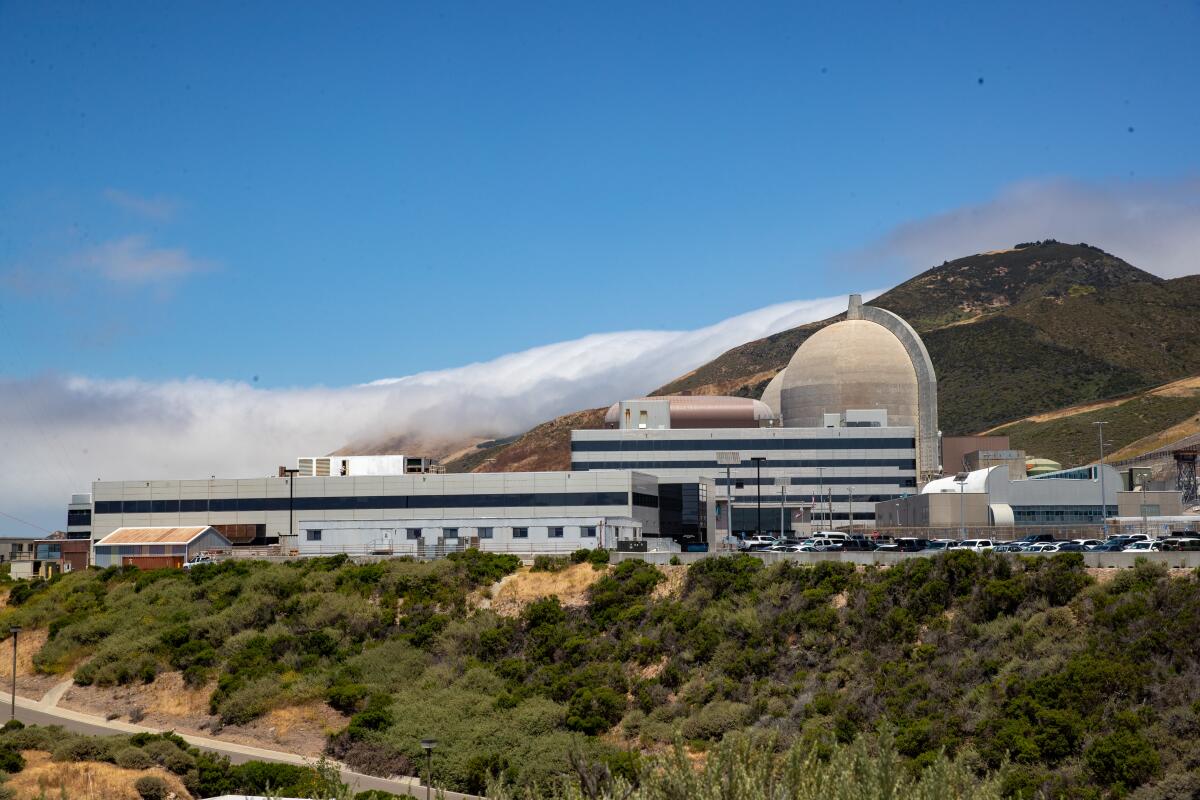
Pacific Gas & Electric’s Diablo Canyon Power Plant, the only operating nuclear power plant in California, in June 2023.
(Brian van der Brug/Los Angeles Times)
Why PG&E is overcharging CaliforniansA new report alleges Pacific Gas & Electric inflated costs when it requested a loan for Diablo Canyon, potentially creating a $685.6-million cost to taxpayers if lawmakers don’t intervene.If ratepayer fees for Diablo Canyon were eliminated from 2027-30, experts say, California utility customers could save an estimated $1.84 billion in controversial subsidies.A vacant home tax could be coming to San DiegoSan Diego voters will vote in June on a vacant home tax that could apply to about 5,000 properties, potentially raising up to $24 million.The $8,000 annual tax would apply to residences that are empty for more than 182 days a year, with some exemptions.Cease-fire deal between U.S. and IranThe two countries reached an 11th-hour ceasefire deal on Tuesday night, pausing for two weeks the threat of military strikes that President Trump had warned would wipe out a “whole civilization” unless Tehran agreed to reopen the Strait of Hormuz.Iran’s Supreme National Security Council said in a statement that it had accepted the terms of the two-week ceasefire, but emphasized that “this does not signify the termination of the war.”What else is going onCommentary and opinionsThis morning’s must readFor your downtime 
(Los Angeles Times photo illustration; images from Museum Associates / LACMA and Bruce White
)
Going outStaying inAnd finally … your photo of the day 
The moon fully eclipses the sun.
(NASA)
Today’s great photo is from NASA, taken during the Artemis II crew’s historic lunar flyaround on Monday.
Have a great day, from the Essential California team
Jim Rainey, staff reporter
Hugo Martín, assistant editor, fast break desk
Kevinisha Walker, multiplatform editor
Andrew Campa, weekend writer
Karim Doumar, head of newsletters
How can we make this newsletter more useful? Send comments to essentialcalifornia@latimes.com. Check our top stories, topics and the latest articles on latimes.com.