
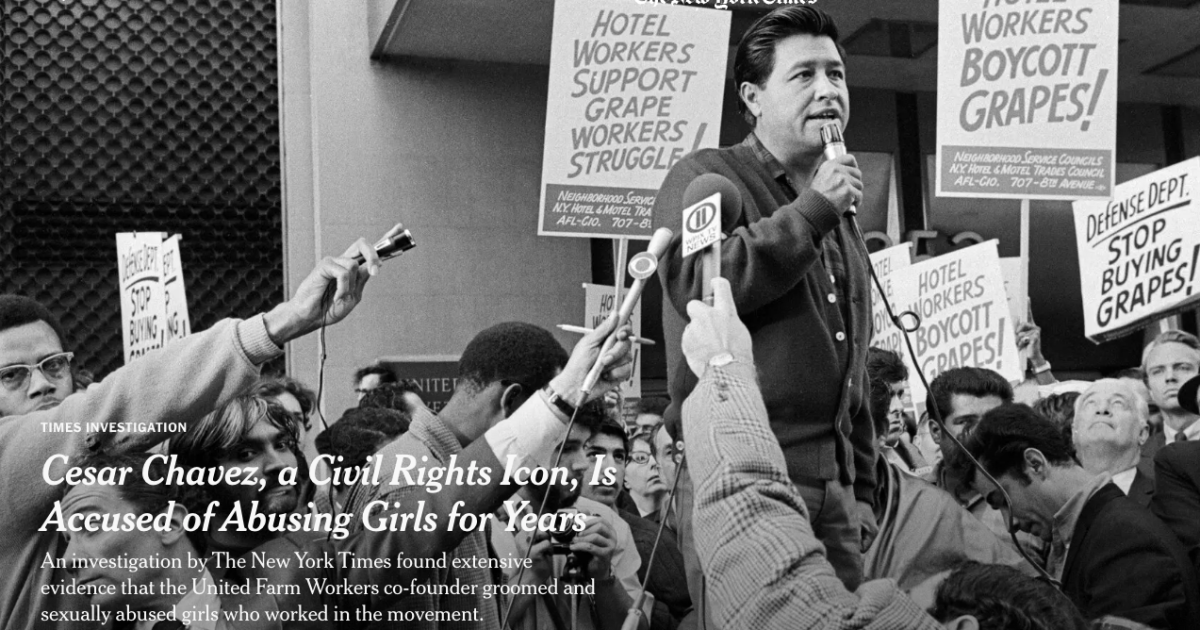
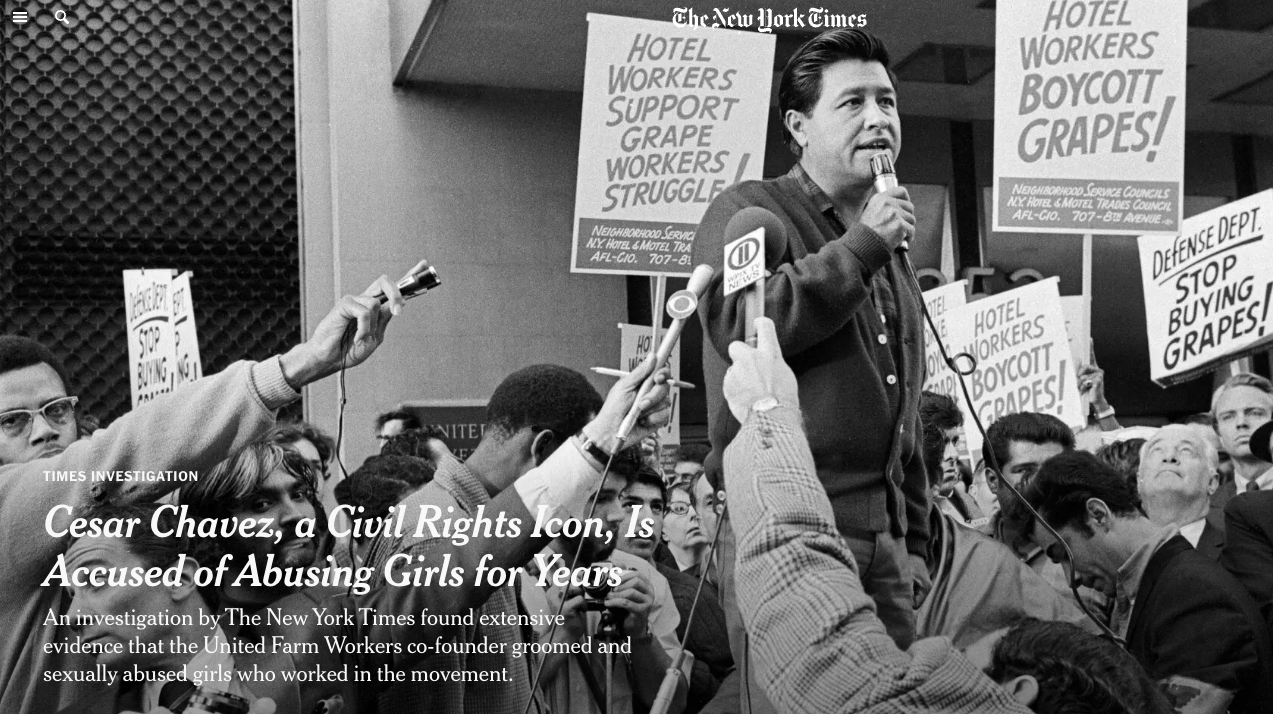
BAKERSFIELD, Calif. (KERO) — An investigation published last month by The New York Times examining sexual assault allegations involving labor leader Cesar Chavez is prompting renewed conversations in communities across the country about his legacy and the farmworker movement he helped build.
The reporting, led by Manny Fernandez, the California editor at large for The Times, and investigative journalist Sarah Hurtes, followed months of interviews and years of groundwork to bring forward accounts from women who had not previously spoken publicly.
“For so long, they thought no one would believe them, because who are they in contrast to this revered figure,” Hurtes said.
Hurtes said she was first introduced to the allegations after being approached by journalist Fernandez a year ago, which set off a deeper investigation into claims that date back years. The reporting itself traces to 2021, when historian and Dartmouth professor Matthew Garcia raised questions about allegations that had not been fully examined.
“It just took months and months to not only gain their trust, but corroborate it,” Hurtes said.

23ABC
According to Hurtes, much of the reporting process centered on building trust with women who had long remained silent, while also interviewing dozens of people — including former Chavez aides and family members — and reviewing archival materials, personal letters and records from across the country.
“What we didn’t know is whether we could gain the trust and access to these women and we knew we needed that,” she said.
The investigation places Chavez — long viewed as a central figure in the Farmworker Rights Movement — at the center of serious allegations, including claims of sexual assault involving women, some of whom were minors at the time, as well as allegations involving fellow activist Dolores Huerta.
WATCH OUR COVERAGE BELOW OF THE ALLEGATIONS DOLORES HUERTA MAKES AGAINST CHAVEZ:
Dolores Huerta speaks out for the first time on alleged sexual abuse by civil rights leader Cesar Chavez
“The difficulty was being able to tell their stories without necessarily throwing away the whole movement,” Hurtes said.
Hurtes said some of the behavior described in the reporting had been known by certain individuals decades ago.
“His relationships with underage girls was indeed known by several people,” she said.
Since the story’s publication, Hurtes said reaction has been swift, with some communities reevaluating how Chavez is remembered. She added that much of the response has focused on supporting those who came forward.
“The response has been overwhelmingly in support of those who have been wronged,” Hurtes said.
Questions remain about why the allegations are emerging now, but Hurtes said the reporting is not intended to rewrite history, rather to add to it.
“I don’t think there’s an expiration date as to knowing the truth,” she said.
For the women who shared their experiences, Hurtes said speaking publicly has brought a sense of relief after years of silence.
“The women overall feel some sort of relief and freedom from having shared their stories,” she said.
The investigation continues to spark discussion about how Chavez’s legacy is taught and remembered, particularly in communities across California’s Central Valley.
Stay in Touch with Us Anytime, Anywhere: