
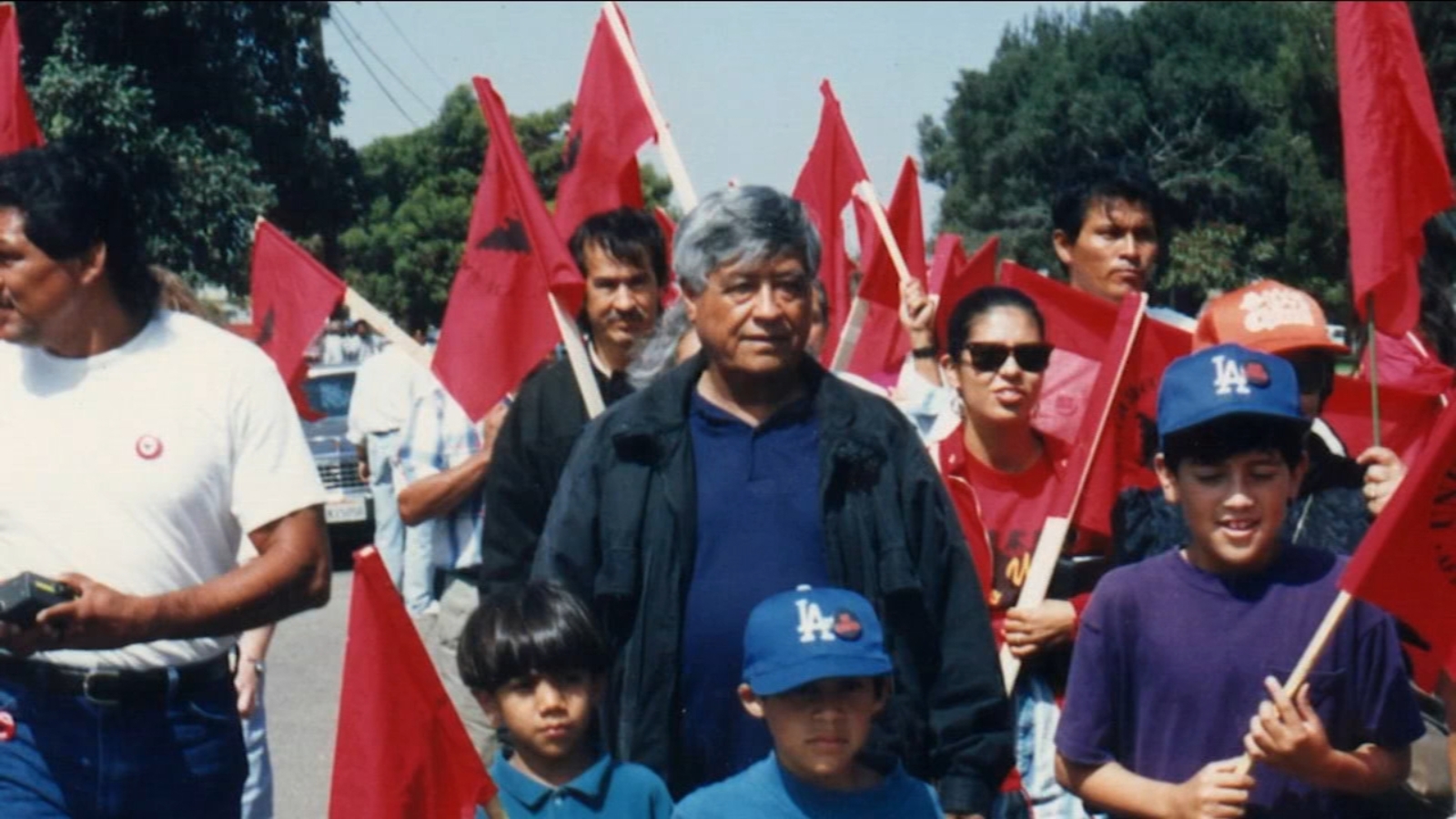
FRESNO, Calif. (KFSN) — Last month, the New York Times published a bombshell report that investigated sexual assault allegations against the civil rights icon, Cesar Chavez.
Since the news broke, it has sent ripples through the Central Valley and beyond.
Murals painted over; his statue at Fresno State was covered and then removed; streets named in his honor were voted to be replaced.
We’re hearing directly from one of the journalists behind the story; she spoke with our ABC affiliate, KERO, in Bakersfield, about the journey to bring these women’s stories to light.
“Cesar Chavez, a Civil Rights Icon, Is Accused of Abusing Girls for Years,” this the title of a bombshell report that dates back to 2021, published by the New York Times last month.
Sarah Hurtes is one of the investigative reporters behind the story. She is now speaking out about the process to compile evidence that supported the accusations against the late labor leader.
“It took months and months, not only to gain their trust to have their stories, but corroborate it,” says Hurtes.
Hurtes says they led with bare facts; they dug through archives, used letters, and records from across the country to confirm the women’s accounts.
She says reporters spoke with countless UFW members before they gained the trust of the victims who had never spoken publicly.
Their main focus, sharing their stories without losing sight of the movement.
“The difficulty was being able to tell their stories without necessarily throwing away the whole movement,” says Hurtes.
During her time speaking with union members, Hurtes says accounts began piecing together, even though many did not know the full truth.
“His relationships with underage girls were indeed known by several people, but it wasn’t a huge open secret in the entire community to say that would be unfair,” says Hurtes.
As the story unfolded, the reality of Chavez’s legacy came more into question.
“Cesar had already been established as a complicated, complex character, not very much of a saint,” says Hurtes.
The report sparked a swift reaction across the Central Valley and the country. Murals have been painted over, his statue at Fresno State removed, and schools and streets are now set to be renamed.
But some questions still remain, with many asking, “Why now?”
Hurtes says it’s not about changing history but rather bringing these women’s stories to light after years of living in silence.
“I don’t think there’s an expiration date as to knowing the truth,” says Hurtes.
Now, Hurtes did share her thoughts on the images and namesakes of the civil rights leader being removed, but she says she hopes those spaces continue to represent the people who built the movement.
For news and weather updates, follow Brisa Colón on Facebook, X and Instagram.
Copyright © 2026 KFSN-TV. All Rights Reserved.