
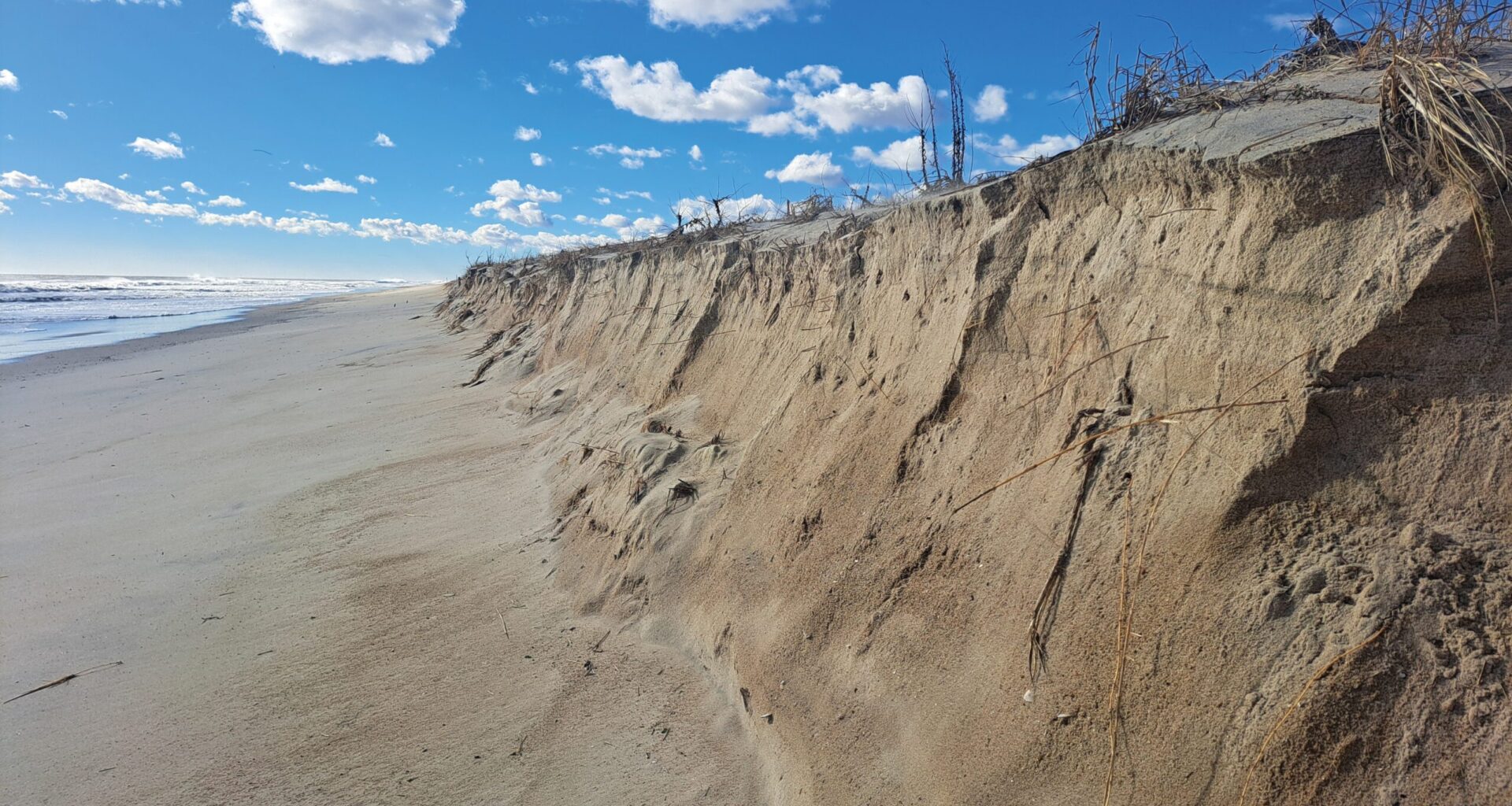
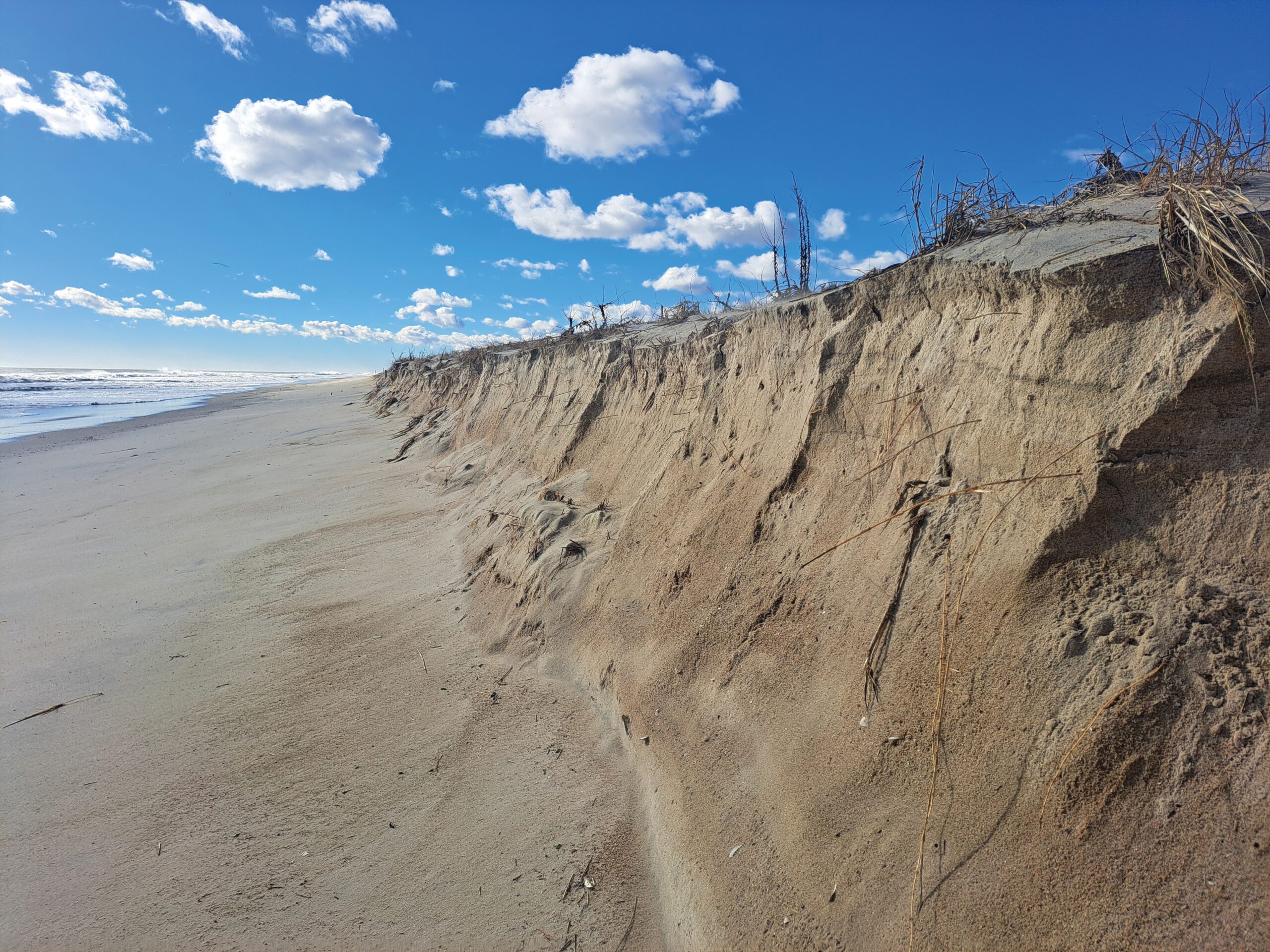
CRY FOR HELP: Island beaches sustained erosion beginning with storms last summer and continuing this winter. (Photo by Curt Travers)
Even as Congressman Jeff Van Drew celebrated securing $99 million for beach replenishment projects in Cape May County, he pledged to press federal lawmakers for an additional $70 million in funding for critical beach restoration and storm-protection projects on Long Beach Island and Absecon Island.
“That includes funding to design erosion mitigation structures through my hotspot erosion law, so these communities are better protected moving forward,” Van Drew said April 6.
In December 2024, Congressman Frank Pallone (D-N.J. 6th Dist.) and Van Drew announced the inclusion of their New Jersey Shore Hot Spot Erosion Mitigation Study in the Water Resources Development Act of 2024.
Protecting more than 100 miles of the state’s coastline, which tallies about $100 billion in property and accounts for tens of thousands of jobs, is the focus of the study. Without it, hot spot erosion will continue to sink any investment in shore projection by undermining the projects. That type of erosion happens when currents collide with geography, focusing wave action and energy on a narrow area of beach.
Under the study, the Army Corps of Engineers will identify areas most prone to that type of erosion, assess their impact on existing federal shore protection projects and recommend solutions tailored to sustain project effectiveness in the long term.
On the Island, Ship Bottom and Surf City officials are looking to receive funding for their beaches in 2027.
Earlier this year, Van Drew introduced the Coastal Trust Fund Act bill with Congresswoman Laura Gillen (D-N.Y.) for a permanent and more reliable funding option for beach replenishment nationwide.
The proposed legislation aims to change the status-quo funding opportunities with the investment of $1 billion annually in coastal storm management projects, with the funds coming from offshore energy lease revenues.
“We earned a budget neutral score from the Congressional Budget Office, meaning no new taxes or fees on anybody,” Van Drew said last month.
The Coastal Trust Fund bill was referred to the House committee on transportation and infrastructure, in conjunction with the committees on natural resources and budget. As of April 7, there was no significant movement on it at the national level. It was introduced Feb. 10.
Van Drew’s office made the announcement Monday evening about the windfall for Cape May County, saying it is the biggest investment in New Jersey beach replenishment projects in a year without a severe coastal storm.
It was less than two months ago that Van Drew and Adam Telle, assistant secretary of the Army, Civil Works, surveyed those communities for beach erosion.
“For months, I have been saying we needed to use disaster funding to get some of these projects done, and that is exactly what we did to unlock funding for places like Avalon and Stone Harbor,” Van Drew said.
There is an additional investment in dredging across South Jersey, with more than $5 million going toward projects on the Salem River, Maurice River, Cold Spring Inlet and the New Jersey Intracoastal Waterway, along with continued work to deepen channels, he said.
“This is a huge investment for our shoreline, one of the largest we have ever seen, and it is going to make a real difference,” Van Drew said. “Our beaches are so important to South Jersey, and this level of investment means stronger protection, more stability, and peace of mind for our shore communities. I want to thank Secretary Adam Telle for coming down to the shore and seeing these needs firsthand and helping make sure this got done.”
— Gina G. Scala