
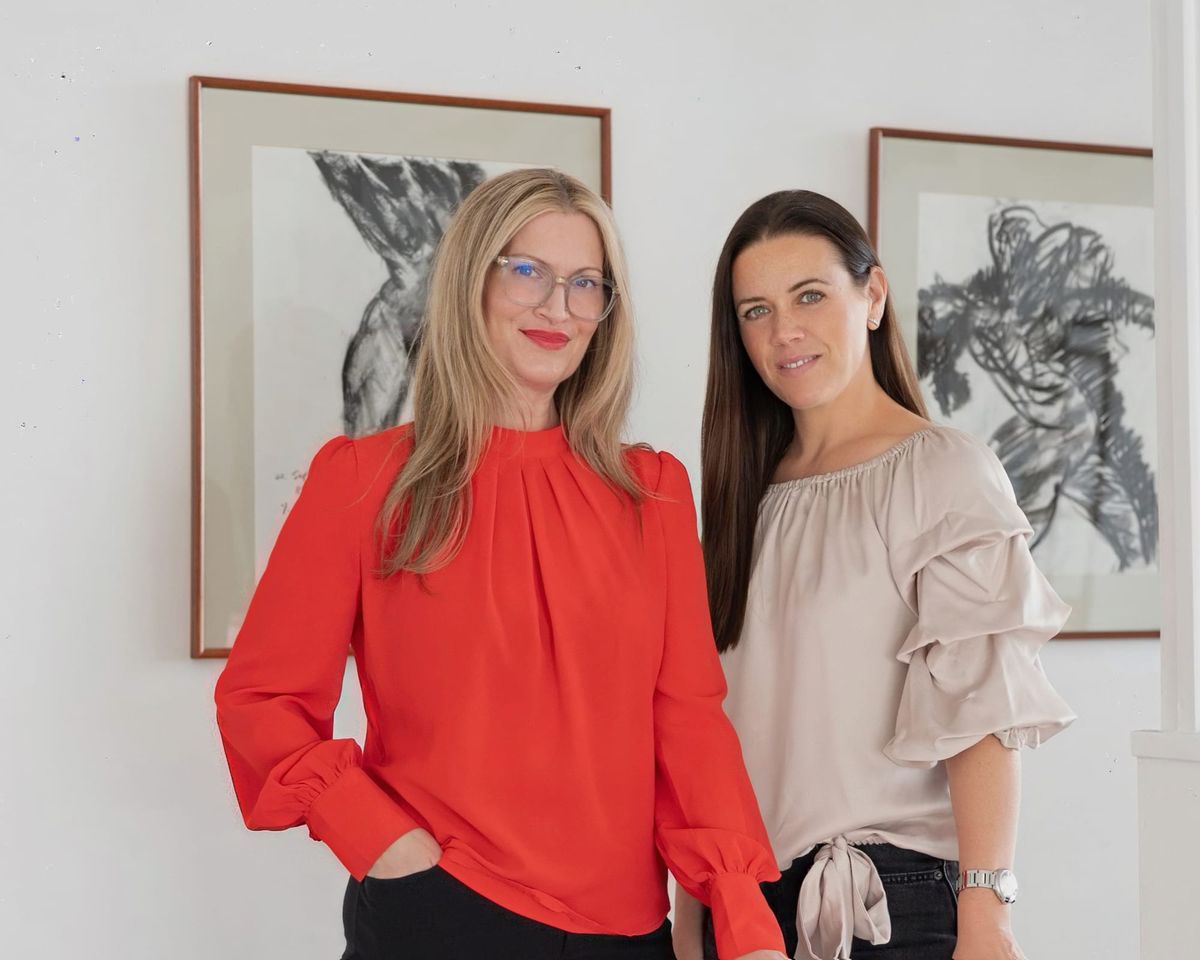
A chance friendship between two neighbors on the same Los Angeles street has grown into a business built on a deceptively simple premise: that older adults don’t always need a caregiver — but many do need a friend.
Sarah Kolenik and Kat Hatayama launched Karma Companions, a Los Angeles-based service that matches adults 55 and older with paid companions for friendship, outings and conversation. The company targets what its founders describe as an underserved gap in the senior services market — active, independent older adults whose social circles have quietly contracted over time, not from incapacity, but from the ordinary passage of life.
“We were surrounded by older adults who were sharp, independent, and fully capable — but whose social worlds had become smaller over time,” Kolenik said. “Their lives were still full, but something essential was missing: consistent, meaningful interaction.”
The two East Coast transplants — Kolenik with a background in entertainment, Hatayama in real estate — say their paths to founding the company were shaped by personal experience rather than market research. For Kolenik, it began during the pandemic, when she volunteered with Meals on Wheels and found herself forming genuine friendships with clients.
“What started as a simple check-in often turned into long conversations, outings, and deeper friendships that clearly mattered just as much as the meal itself,” she said.
Hatayama’s perspective was shaped by marriage into an Asian family, where she observed firsthand a cultural emphasis on consistent connection and community for older adults. “It was striking to see the impact that kind of environment had — not just emotionally, but on longevity and overall quality of life,” she said.
Both founders describe their company’s mission through the lens of ikigai, a Japanese concept referring to the intersection of what one loves, what one is good at, and what the world needs. They say the founding of Karma Companions represented their own search for purpose — and that they hope to help both clients and companions find theirs.
What sets Karma Companions apart from other senior services, the founders say, is its deliberate rejection of technology-driven matching. There is no algorithm. Every pairing is made by Kolenik and Hatayama themselves, based on in-depth conversations with clients, their families and prospective companions.
“A computer can’t pick up on the nuances we see in an in-person conversation — what drives someone, what makes them laugh, what sparks a memory, how they speak about their life, their purpose, or even loss,” Kolenik said. “Those are the things you uncover sitting across from someone, often over coffee and a really tasty treat.”
Matches are made based on personality, interests, lifestyle and overall energy. The founders say they are open to unexpected pairings — noting that a retired physician whose entire social world has revolved around medicine might be better served by a companion who is a glass-blowing enthusiast with a passion for pickleball than by someone with a similar professional background.
Companions are also vetted carefully, with the founders spending time understanding their motivations and what makes the work feel fulfilling. “We want this to be meaningful for them as well — not just a job, but something they genuinely want to show up for,” Hatayama said.
Karma Companions operates as a boutique placement service. Clients or their families pay a $500 upfront fee to initiate the search. Once a match is made, a placement fee — generally around 25% of the companion’s annual compensation — is charged. Companions are then paid directly by the client on an hourly basis, typically ranging from $35 to $50 per hour depending on the role and level of experience.
Because the service is centered on companionship rather than medical care, it is not covered by insurance. The founders say many families nevertheless view it as an investment in well-being and their loved one’s continued independence.
Some clients are drawn to a more traditional companionship arrangement — shared outings, conversation and social activity. Others opt for what the founders call a “companion-assistant” role, which incorporates an element of structure and logistical support in daily life.
Karma Companions launched in Los Angeles with a focus on the Westside, including Santa Monica and Brentwood, where the founders say they identified a high concentration of active older adults alongside what can be an isolating urban environment.
The response so far has been encouraging, the founders say. Nearly every person they have spoken to has reacted with a version of the same sentiment: they didn’t know such a service existed, but immediately recognized the need.
“Success in year one is really about depth, but also about awareness — making sure people know we exist and understand that this kind of support is available,” Hatayama said.
Karma Companions is based in Los Angeles. More information is available at https://karmacompanions.com/.