
What’s at stake?
The farmworker wage fight is heating up particularly fast on the Central Coast, where farmers say they simply can’t afford massive mandatory pay hikes.
Four years after a landmark report from UC Merced painted a dire picture of health outcomes among California’s more than 900,000 farmworkers, a new study suggests not much has improved.
If anything, matters seem to have only worsened since 2022, as the 21 farmworkers interviewed for the new study told researchers. As the prices of daily necessities have climbed while wages have stagnated, farmworkers said they’ve been forced to make even tougher decisions between covering the costs of medical care and other essentials like paying for childcare or utility bills.
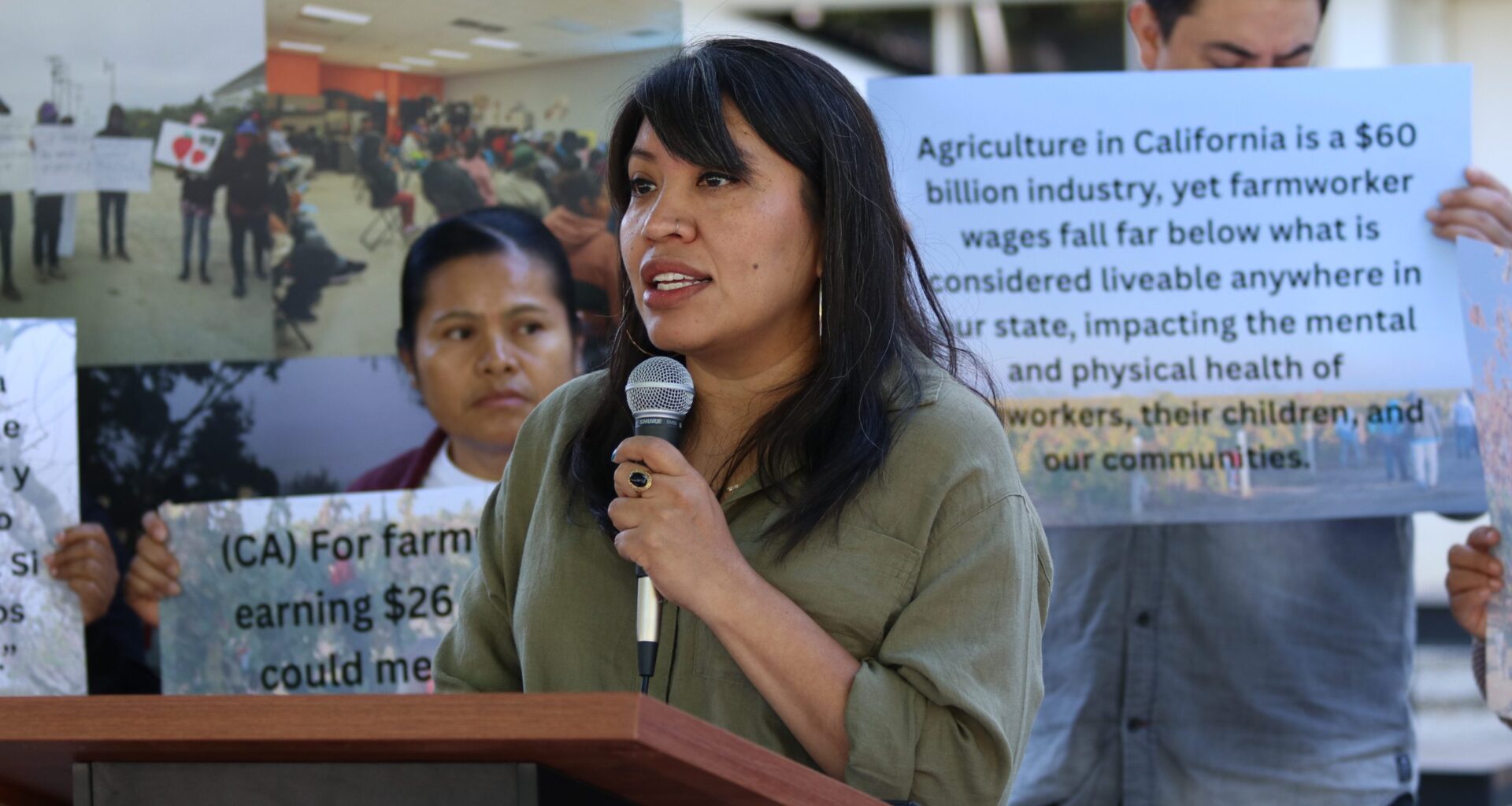
At a news conference in downtown Fresno on Wednesday, organizers with Centro Binacional para el Indígena Oaxaqueño, one of the collaborators on the report, highlighted these findings — and urged state lawmakers to mitigate strains on farmworker health by establishing an industry-wide, livable wage standard.
“Our legislators have the power in the state of California to provide the opportunity to ensure our farmworkers have a livable wage,” said Sarait Martinez, executive director of Centro Binacional, “dignified wages and an opportunity to thrive.”
The study projected possible health outcomes if farmworker wages were raised to $26 per hour. That’s almost $10 higher than the median wage of $17 an hour that farmworkers make in California — which is closer to $16.63 in Fresno County, according to California Employment Development Department data compiled in the report.
Twenty-six dollars is also the hourly minimum farmworkers and advocates are pursuing in Santa Barbara County.
Farmers in the Central Coast county have pushed back on the initiative, the Santa Maria Times reported, arguing the minimum wage could backfire, leading to farmworker layoffs and putting farms out of business as growers keep up with rising costs of doing business in California.
Martinez told Fresnoland she supports the minimum wage efforts in Santa Barbara and hopes it will demonstrate that farmers can in fact afford to pay their workers more.
“We hope it passes,” she said. “We hope that it is successful because I think it will show that the industry is not going to break for paying livable wages.”
Other potential wage cuts loom over farmworkers
The farmworkers interviewed in the new study — conducted by a collective of community-based organizations across the Central Valley, Central Coast and North Bay — reported strains on both their physical and mental health as they struggled to make ends meet.
Interviewees said these strains also have a ripple effect on their children. One farmworker shared, for instance, that her child was getting bullied at school for always wearing the same clothes — and that new clothes were a luxury they couldn’t afford.
A lot of these findings were nothing new to Martinez, whose organization has served farmworkers in the Central Valley since 1993.
But with the added pressure from heightened immigration enforcement in President Donald Trump’s second term, she said it’s a timely reminder of what’s at stake when it comes to farmworker wages.
“The economic and political climate is so different right now,” she said, “not just for farmworkers — for everyone. Farmworkers, with the current immigration threats — there’s a lot of fear.”
Diomedes Rosales, a farmworker that currently lives in Madera, also echoed the sentiments from the report at Wednesday’s news conference.
Rosales, who’s worked on California farms since 2003, said some farmworkers’ wages haven’t budged from the $50 to $60 dollars a day he and his colleagues averaged more than 20 years ago.
“I don’t understand how there are people that still pay this same wage,” he told reporters in Spanish, “and how they think people with this wage are going to sustain a household and a family.”
The new study also comes as farmworker advocates await a ruling in federal court over another measure they worry will make it even harder for workers to afford basic necessities.
A federal judge is expected to rule whether to temporarily pause an October 2025 change from the Department of Labor to the minimum wage calculations for guest agricultural workers hired through the H-2A visa program.
Farmworkers and advocates quickly sounded the alarm that the new process would dramatically cut wages not just for guest workers but also their U.S. counterparts. In November, the United Farm Workers union — alongside the nonprofit UFW Foundation and 18 individual farmworkers — sued the Department of Labor over the changes.
Federal court records show Judge Kirk E. Sheriff has yet to issue a ruling on UFW attorneys’ requests for a preliminary injunction as of Wednesday afternoon.
Related