
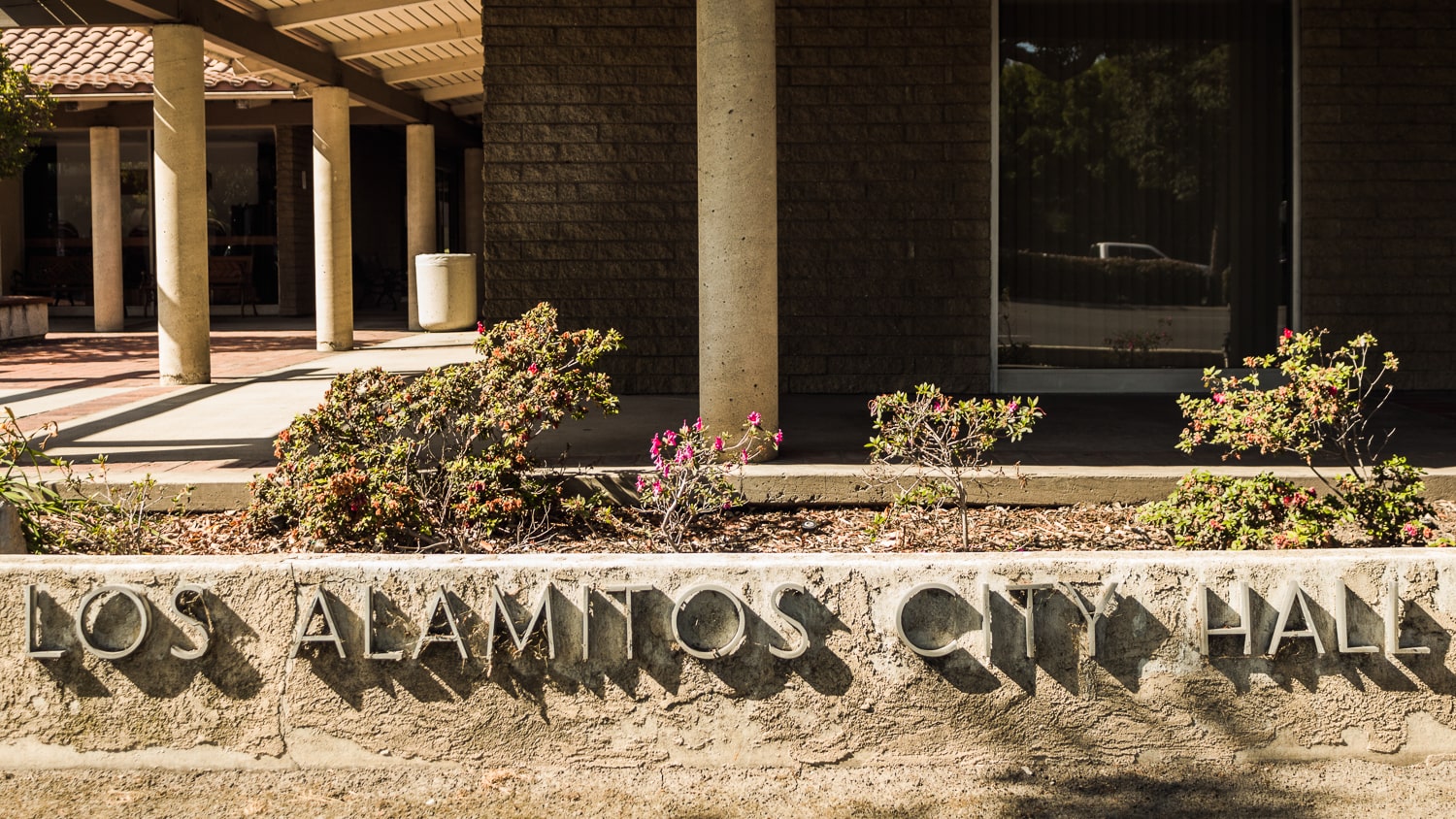
Los Alamitos officials are instituting a partial ban on kratom — joining a growing trend of OC cities cracking down on the substance — after some council members and residents voiced concerns about protecting certain access to the drug.
Derived from a tropical tree native to Southeast Asia, products containing kratom leaves are commonly used to self-treat chronic pain and even mental health conditions like withdrawal and depression, according to the U.S. Food and Drug Administration.
The natural leaf, when dried, can be taken in low doses to boost energy — a similar effect to caffeine.
However, a component of the leaf known as 7-hydroxymitragynine, or 7-OH, has an opioid-like effect when taken in larger quantities. 7-OH is a highly-concentrated, synthetic component of the kratom leaf that can lead to addiction or overdose, according to the OC Health Care Agency.
Leaders in Los Alamitos voted unanimously to restrict kratom distribution and advertisement in the city, including prohibiting the sale of any kratom productions to people under 21 years old and prohibiting the sale of all 7-OH kratom products — the synthetic version.
The vote also bans the marketing of kratom toward children.
[Read: More Orange County Cities Eye Kratom Bans]

Editors’ Note: This dispatch is part of the Voice of OC Collegiate News Service, working with student journalists to cover public policy issues across Orange County. If you would like to submit your own student media project related to Orange County civics or if you have any response to this work, contact admin@voiceofoc.org.
The decision came after community members expressed frustration with a previously proposed outright ban on all kratom products, including a member of the city council, arguing the importance of kratom access.
Councilmember Jordan Nefulda stated that he uses kratom to soothe his arthritis and knows people in the community who — like him — rely on it for pain relief.
“I can’t even play catch without taking something,” Nefulda said during a city council meeting in February.
He noted that many critics of kratom dismiss its effectiveness for self-treating chronic pain.
“Whether it’s in our minds or not, I think this product works, and I’d hate for us to ban it outright,” Nefulda said.
He also pointed out that the city “[doesn’t] even know if it’s being sold or if it’s a problem here” and added that “good people get screwed because there are bad people doing stupid things, and I hate to see that with a product like this.”
In 2021, the Substance Abuse and Mental Health Services Administration reported that 1.7 million Americans aged 12 and older used kratom that year. In light of its popularity, the FDA said that users of the stimulant can develop an addiction and side effects like anorexia, seizures and hallucinations mirroring opioids.
On Feb. 9, Los Alamitos leaders introduced plans to completely ban the distribution of products containing kratom and 7-OH despite protests of its alleged healing benefits among older members of the community.
City leaders returned with modified restrictions during their March 23 meeting that is consistent with county law allowing the purchase and sale of kratom for people over the age of 21, but bans 7-OH or any derivatives that don’t contain the natural leaf.
Ed Arthur, a resident of Los Alamitos, said he uses kratom daily.
The 78-year-old retired woodworker credits kratom for his ability to work with his bad back relatively pain-free, allowing him to push his retirement three years.
“I see that they’re taking something that’s very beneficial to people my age, older, younger and around the world,” Arthur said at the Feb. 9 city council meeting.
Los Alamitos has a population of 13.7% of residents aged 65 or older, with a median household income of $75,000 per year.
Arthur’s concern was that the city would issue a blanket ban on kratom. He said he wanted council members to consider the benefits it brings to community members.
Within Los Angeles County, there have been six deaths due to overdosing on 7-OH in the last year. Despite the risks of kratom use, with its new popularity, there is limited research on its long-term effects.
Los Alamitos has focused on outlining the difference between the natural kratom leaf and the 7-OH, which contains the most addictive opioid-like qualities.
Councilmember Shelley Hasselbrink also voiced concerns brought up by both Nefulda and Arthur.
“7-OH is the problem,” she said. “That’s the thing that the kids are buying … That’s how we’re losing lives.”
Enforcement of banning kratom marketing towards children is heavily emphasized in the newly written law, like cartoon characters, bright colors and candy-like branding.
Hasselbrink said that banning kratom outright would be a disservice to many people in the Los Alamitos community, so focusing on banning 7-OH is the main concern, especially since they “don’t want to punish the people who are using it right.”
Many Orange County cities have faced similar community controversy as a wave of restrictions has hit Southern California amid calls for a potential statewide ban on kratom.
Officials in Mission Viejo preliminarily approved a ban on the sale, distribution and advertisement of all kratom products during a meeting on March 24. It requires a second vote and approval before it can go into effect.
“I just see a lot of warning signs about the use of this,” Mission Viejo Councilmember Trish Kelley said at that meeting. “Anything that we put out there that could be a danger to our young people — I can’t support having the availability like this in our city.”
“As was noted, those who really do need it and use it can order it online, get it somewhere else,” she continued, “but I don’t like having it in our local stores and places where our kids can get it and maybe experiment with it.”
Tustin and Newport Beach are two OC cities that have put a blanket ban on kratom and 7-OH, while other cities like Huntington Beach and Anaheim have placed restrictions solely on products containing more than 2% of 7-OH.
[Read: More Orange County Cities Crack Down on Kratom]
Los Alamitos Mayor Tanya Dobby shared her concerns about not banning the sale of kratom outright. She said banning every shape and form of kratom is the safer bet before it becomes a larger issue within the city.
“I believe in being proactive,” Dobby said. “I don’t want it to be a problem if I can see something and deal with it before.”
Councilmember Emily Hilbard shared a different viewpoint.
“I find it a little bit odd that it ended up on our agenda, being that we have zero problems,” she said.
Hilbard said she’d rather gain more information on how kratom is negatively affecting the community, if at all, before deciding on creating a restriction for the entire city, when they can’t provide one example of a problem within their community.
Collegiate News Service Editor Angelina Hicks contributed to this report.
Related