
Over a year after wildfires tore through Los Angeles, the question is no longer how fast we can clear debris or issue permits. The real question is far more uncomfortable: Who actually gets to come back?
Today’s Los Angeles recovery is not being determined by construction timelines or political will, but by insurance, with the question of how homeowners will be insured post-rebuild in high-risk areas. Insurance is quietly deciding which communities survive and which do not.
Public attention has focused on visible bottlenecks – debris removal, permitting delays, and rising construction costs, but those are not the true constraints. The real bottleneck is invisible access to coverage. “From an insurance perspective, insurance determines whether a community survives,” said Greg Econn, Executive Vice Chairman of Venbrook Insurance Services and Steadfast LA Insurance Chair. “If the policies don’t respond and people don’t have the wherewithal to rebuild, they leave. And if they leave, the community doesn’t come back.”
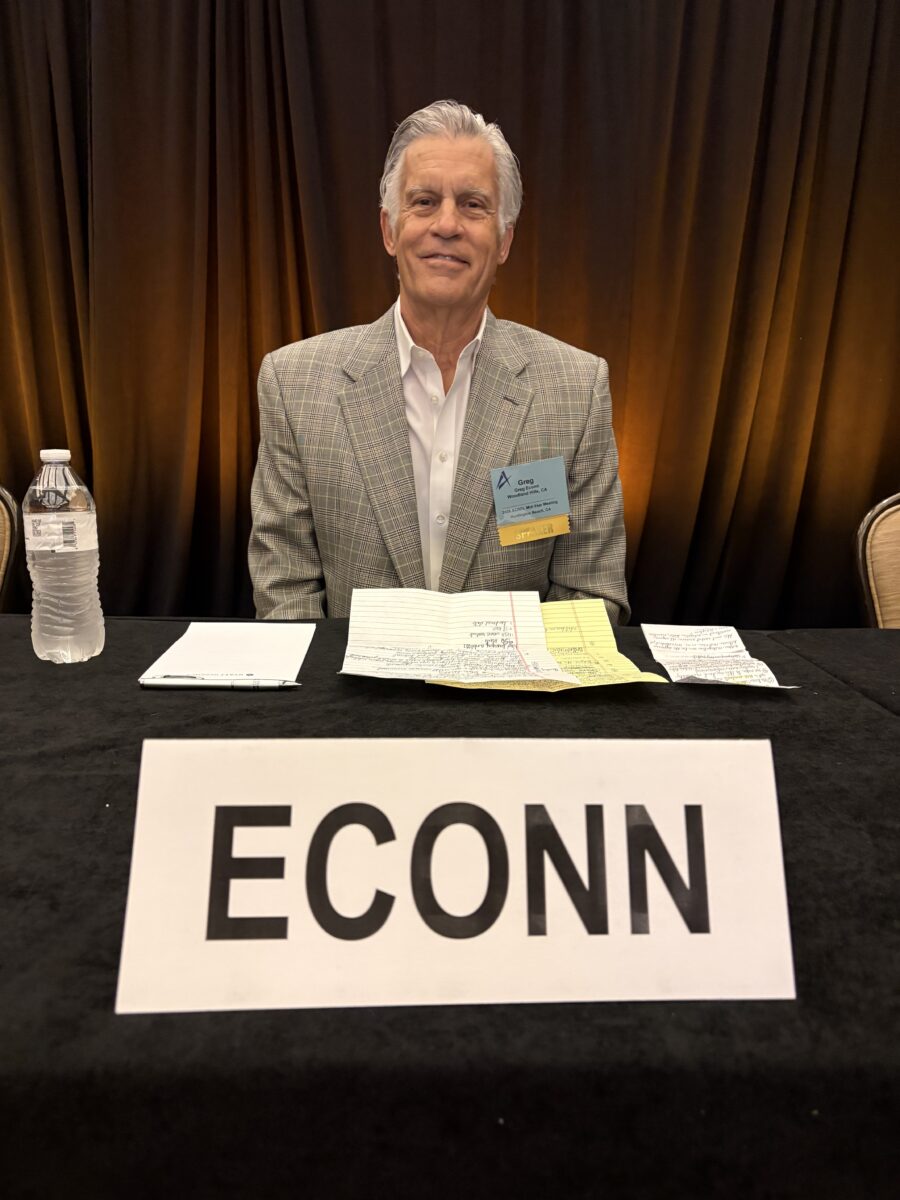 Greg Econn, Executive Vice Chairman of Venbrook Insurance Services and Steadfast LA Insurance ChairCredit: Michelle Edgar
At its core, insurance is designed to spread risk; many contribute so that a few can recover, but that system is under pressure. “What used to be 50-year or 100-year events are happening with far greater regularity,” Econn said. “The models are being tested in real time.”
Behind every homeowner’s policy lies a global system where insurers pass risk to reinsurers, and reinsurers pass it to retrocession markets, distributing exposure across international capital. “The capacity is there,” Econn said. “It’s not a question of whether capital exists; it’s under what conditions it is willing to be deployed.” Capital has not disappeared, but has become conditional.
For homeowners, recovery now depends on navigating three imperfect paths: self-insurance, the FAIR Plan, or traditional coverage known as HO3, the gold standard required by lenders. “HO3 is the gold standard,” Econn said. “It’s as good as you’re going to get, and it’s what lenders require.”
Access to that level of protection is no longer guaranteed. Without insurance, there is no financing, and without financing, there is no rebuilding. What was once a back-end purchase has become the front door to recovery.
Scroll to continue reading
Insurance is no longer underwriting homes; it is underwriting communities. Even newly rebuilt, fire-hardened homes are struggling to secure coverage, not because of their design, but because of their surroundings. “This is a partnership,” Econn said. “If you’re protecting your asset, you’re protecting the insurer’s asset. Nobody wins in a loss.”
There is an even more consequential force shaping recovery: time. Data shared among industry and legal experts reveals a stark pattern: approximately 30 percent of homeowners leave immediately after a disaster. Of those who remain, most are willing to wait up to three years to rebuild. After that, communities lose roughly 20 percent of their remaining residents each year; by year six, many neighborhoods are largely gone. The implication is difficult to ignore. Recovery is not just about resources; it is about speed.
Even when coverage exists, the path forward is not simple. “Smoke damage has been one of the most disruptive issues we’ve seen,” Econn said. “The definitions are narrow, and that leads to underpayment and litigation.”
After major disasters, insurers often deploy independent adjusters from across the country, interpreting policies strictly, leading to delays, disputes, and in some cases, denials.
At the same time, homeowners are asked to reconstruct their lives from memory. “You’re handed a blank sheet of paper and asked to recreate your entire home,” Econn said.
At the same time, California is beginning to address one of the most contested points in recovery, smoke damage. Legislation expected to move through the Assembly on April 22, AB 1795, the Smoke Damage Recovery Act, would establish the first uniform, statewide standards for how smoke damage is inspected, tested, and remediated.
Today, no such standards exist. The result has been a patchwork of insurer practices, delayed claims, partial payments, and, in some cases, outright denials; all of which slow recovery at the moment it matters most.
AB 1795 aims to change that by requiring consistent remediation protocols, mandating insurer compliance, and ensuring homes are restored to safe, habitable condition. It also introduces timelines, including requiring insurers to inspect properties within 30 days and to release undisputed funds within 15 days once remediation begins.
The impact extends beyond claims handling. By creating clarity around one of the most disputed areas of wildfire recovery, the legislation has the potential to reduce delays, restore confidence, and accelerate rebuilding timelines, and in a system where time determines whether communities survive, that may be the difference between recovery and permanent loss.
Environmental realities add another layer of complexity. Post-fire ash can contain hazardous materials, including asbestos, lead, and heavy metals. In some cases, contamination is discovered after initial cleanup, requiring additional testing and excavation that can cost tens of thousands of dollars. Each delay compounds the same outcome with time lost, and residents leaving, communities eroding.
There are signs of progress. “We went to London about 30 days after the loss,” Econn said. “We knew that if we could get a viable product in place, others would follow. The industry operates with a herd mentality,” he said. “Once one or two carriers step in and it works, others follow.”
Billions in coverage have begun to return, particularly in builders’ risk, demonstrating that capital can flow back when risk is better understood and managed.
None of this works without preparation. “If there’s one takeaway, it’s to document everything before a loss occurs,” Econn said. “Photograph every room; every drawer; every closet. We try to adjust the loss before it occurs.”
Preparation is no longer optional; it is part of resilience. What is happening in Los Angeles is not just a rebuild; it is a restructuring in an upcoming election year, with a new insurance commissioner coming in as well, which plays a critical role.
Rebuilding is no longer just about construction; it is about insurance, time, and the ability of systems to respond under pressure. “Insurance provides the capital between disaster and recovery,” Econn said. “Without it, the pathway back simply does not exist.”
As climate-driven disasters intensify, the challenges facing California will not remain isolated, but will spread, and the question facing communities will not just be how to rebuild, but whether they can rebuild at all, because in the new economy of climate risk, insurance is no longer just a safety net, but the gatekeeper.