
The creation of this content included the use of AI based on templates created, reviewed and edited by journalists in the newsroom. Read more on our AI policy here.
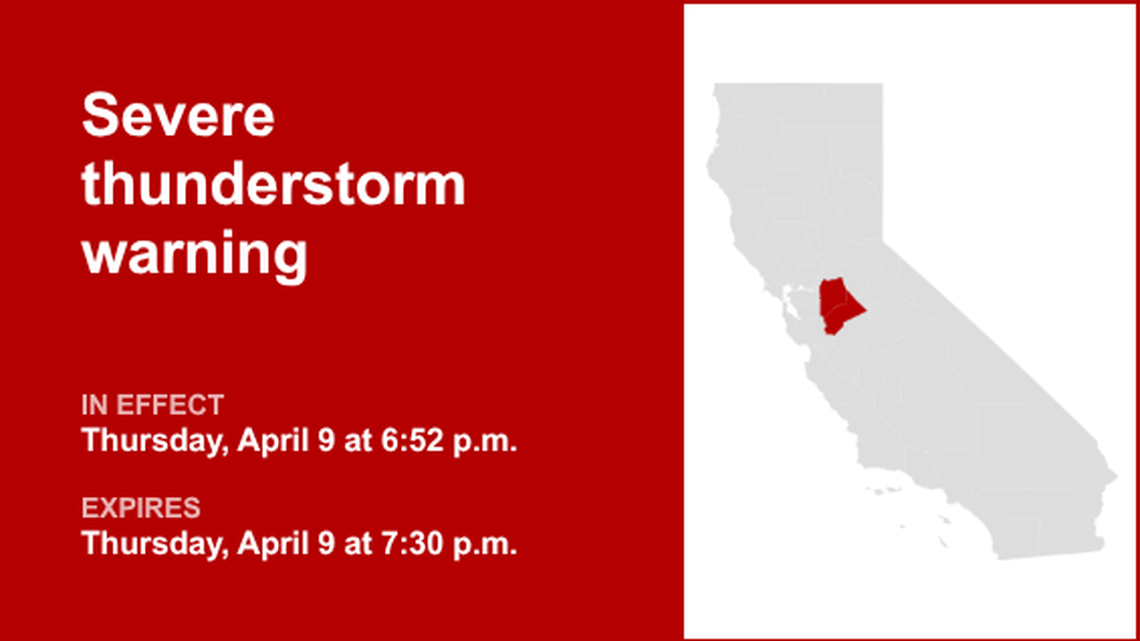
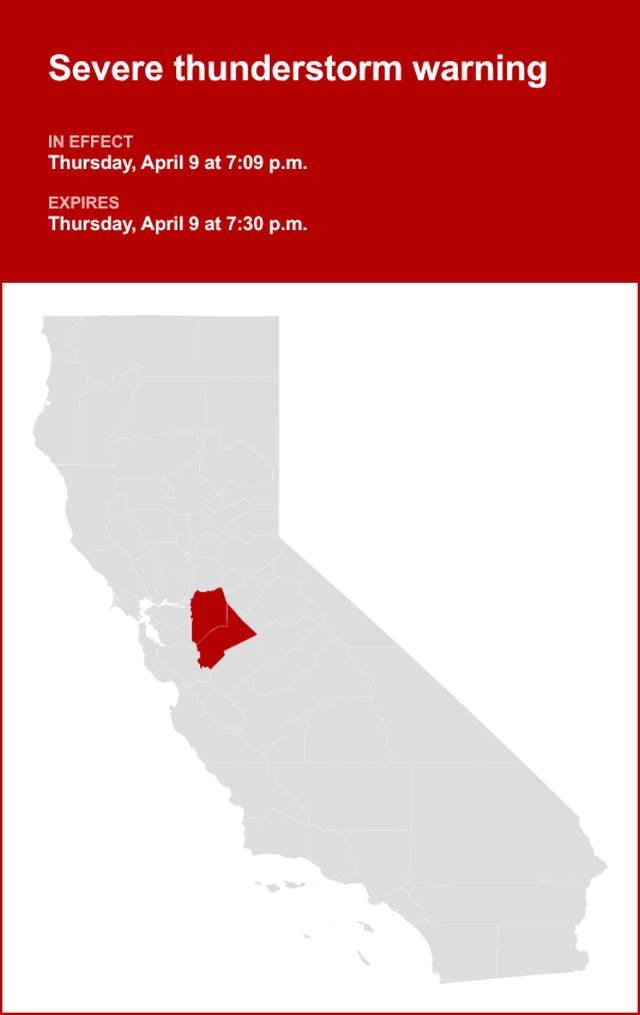
On Thursday at 7:09 p.m. an updated severe thunderstorm warning was issued by the NWS Sacramento CA in effect until 7:30 p.m. for San Joaquin and Stanislaus counties.
The storms are packing quarter-sized hail (1 inch).
“At 7:08 p.m., a severe thunderstorm was located over Empire, or over Ceres, moving north at 15 mph,” states the NWS. “Damage to vehicles is expected.”
Locations impacted by the warning include Modesto, Oakdale, Riverbank, Waterford, Escalon, Hickman, Empire, East Oakdale, Del Rio, Bystrom and Hughson.
The NWS adds, “For your protection move to an interior room on the lowest floor of a building.”
This warning is in effect until 7:30 p.m.
 Actions to take when lightning threat is imminent
Lightning strikes the United States about 25 million times a year. Most of the strikes occur in the summer, killing 20 people each year, according to the NWS. Chance of lightning increases as a thunderstorm approaches and peaks when the storm is overhead. It diminishes as the storm moves away.
Here are tips on how to stay safe during a thunderstorm:
To decrease the risk of getting struck by lightning, when you go outside, establish a plan to reach a safer place.If the sky turns ominous and thunder can be heard, find a secure place for shelter.Once inside, avoid contact with corded phones, electrical equipment, plumbing, and windows and doors.Wait 30 minutes after the last lightning or thunder before going back outside.
If finding indoor shelter is not an option:
Avoid open fields, hill peaks, or ridge tops.Keep a distance from tall, isolated trees or other elevated objects. If in a forest, stay close to lower trees.If you are in a group, disperse to prevent the current from passing between group members.When camping in an open environment, select a campsite in a valley, ravine, or low region. Just remember, tents do not offer protection from lightning.Maintain a safe distance from water, wet items, and metal objects. Water and metal do not attract lightning, yet they conduct electricity efficiently.What to do in the rain on the road? Switch on headlights – Even during daylight hours, using headlights can enhance visibility and signal your presence to other drivers.While on the road – Opt for the middle lanes and remain on higher ground. Rainwater tends to gather along the road edges.Avoid puddles – Driving into puddles or low rainwater areas can lead to vehicles hydroplaning or losing control.Do not follow large vehicles closely – Large vehicles like trucks or buses can create a spray of water that can reduce your visibility.Avoid flooded zones – If you encounter a flooded road, make a U-turn and go back. The powerful currents of flash floods can carry drivers off the road. Driving through deep water can also damage a vehicle’s mechanical and electrical systems.
What is hydroplaning?
Hydroplaning happens when a vehicle starts sliding uncontrollably on wet roads.
This happens when water in front of the tire builds up faster than the vehicle’s weight can push water out of the way. The water pressure then causes the vehicle to rise and slide on a thin layer of water between the tires and the road, making the driver lose control. Hydroplaning is most commonly attributed to three factors:
Vehicle speed – When a vehicle’s speed increases, the tire-traction grip and ability to control the vehicle decreases. Drive at a reduced speed during wet weather.Water depth – The deeper the water, the sooner a vehicle loses traction on the road. It doesn’t matter how deep the water is, even a thin layer can lead to hydroplaning.Tire tread depth – Checking your tire tread before hitting the road is important, as low or no tread can lead to sliding.
In the event of your vehicle hydroplaning, here’s what to know:
Ease off the accelerator – Step off the gas to slow down the vehicle until the tires find traction.Turn into the skid – Turning into the skid can help the vehicle’s tires realign to regain control.Make sure the tires reconnect with the road – During the skid, wait until the tires reconnect with the road and then gently straighten the wheels to regain control.Brake gently as needed – Brake normally if the vehicle has anti-lock brakes and pump brakes gently if in an older vehicle.
Source: The National Weather Service
United Robots California
This story was originally published April 9, 2026 at 6:54 PM.