
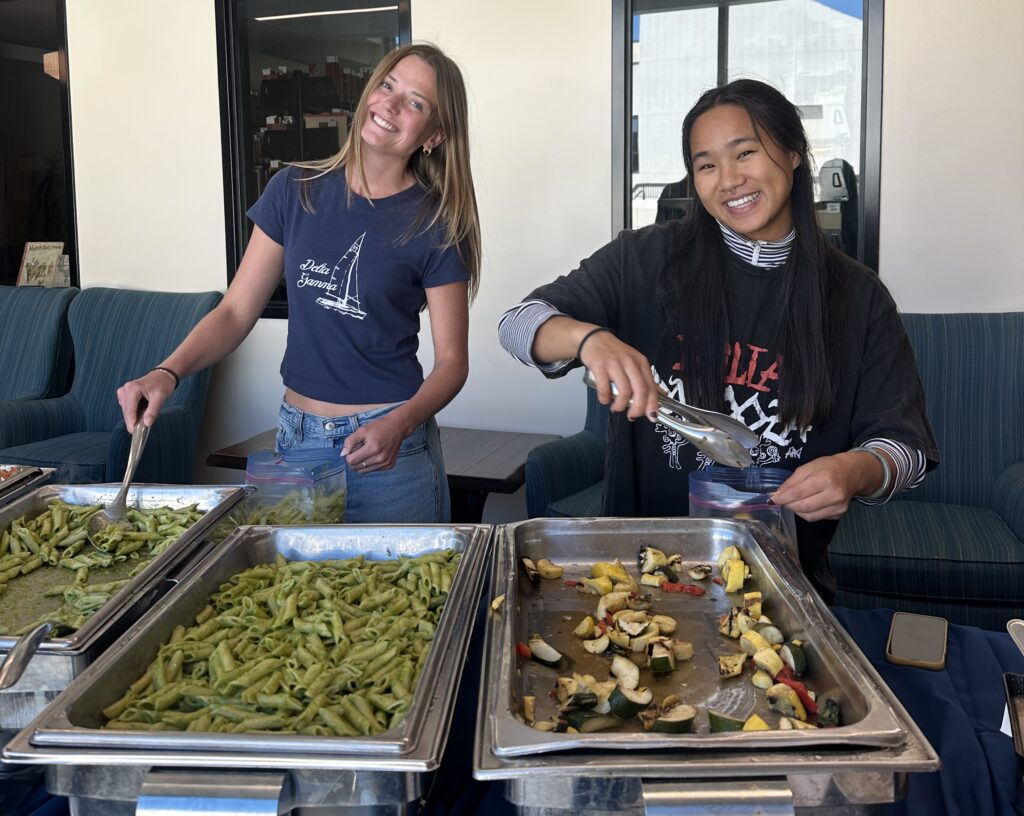
Students serve food at Pepperdine’s Food Recovery Network.
Courtesy of Pepperdine Food Recovery Network
Top Takeaways
University campuses throw out 22 million pounds of food each year, according to the National Library of Medicine.
Food-recovery student organizations have sprouted on college campuses all across California.
Student leaders say they have faced a lack of funding, communication and assistance from university administration.
Joshua DeAnda’s freshman-year dorm room window overlooked a UCLA dining hall.
Every night, he would watch as workers exited the dining hall and discarded countless untouched trays of food into the dumpster. Watching the waste occur “destroyed” him, he said.
Two years later, in 2018, DeAnda launched BruinDine — a fully student-run organization that recovers and redistributes uneaten food from UCLA dining halls. Today, BruinDine — with nearly 200 volunteers — is among college organizations combating both food waste and food insecurity, said Victoria Tong, the current internal vice president of BruinDine.
“There’s so much food waste, and we are really bridging that gap,” Tong said.
BruinDine recovers food in three ways: hot food from three different UCLA dining halls three times a week, uneaten pastries from on-campus coffee shops and extra concessions after UCLA basketball games. The organization then redistributes the food to students and UCLA employees on Tuesday, Wednesday and Thursday nights.
A line snakes out the door every night, as attendees are served by volunteers. Chatter fills the room as students and employees sit and share their evening meal together.
At the end of the night, food is offered to the volunteers, and any extra food is sent home with attendees.
 UCLA’s BruinDine, which has nearly 200 volunteers, is among the college organizations combating both food waste and food insecurity. Courtesy of UCLA’s BruinDine
Tong, a fourth-year biochemistry student, said that though the organization recovers about 200 pounds of food per night, there is rarely any left at the end of the day. She added that BruinDine saw a noticeable uptick in diners amid the federal government shutdown in November, when CalFresh — California’s version of Supplemental Nutrition Assistance Program (SNAP) — was paused.
Natasha Kuhn, a fourth-year geology student at UCLA, said she found out about BruinDine when she was worried about making ends meet during the CalFresh pause, and now frequently attends their distribution events. She added that she has trouble affording groceries and finding the time to cook, and that BruinDine acts as an invaluable safety net.
“It’s so important to have food to be able to succeed in your classes,” Kuhn said.
According to the U.S. Government Accountability Office, almost a quarter of college students grapple with food insecurity. The numbers at California colleges are even higher, with 70% of community college students, 50% of Cal State students and 42% of UC students facing food insecurity, according to researchers at the UCLA Center for Health Policy Research.
Experts say that although some food-insecure students may qualify for food assistance programs, many do not know these resources exist or are intimidated by the paperwork. Other students — like international and undocumented students — cannot qualify for government aid programs.
The researchers also found that 45% of food-insecure students in California had never used CalFresh.
At the same time, university campuses throw out 22 million pounds of food each year, according to the National Library of Medicine.
Students step up to feed students
BruinDine is not alone in its efforts. Food recovery student organizations have sprouted on college campuses all across California, including at UC San Diego, UC Davis, UC Irvine and Pepperdine University.
Casey Cabugao, the president of the Food Recovery Network (FRN) at UC Davis, said the organization recovers 200 pounds of food weekly from the university’s dining halls and 500 pounds from a local farmers market, and then distributes the food to an on-campus food pantry and local homeless shelters.
“Food insecurity is definitely an issue in UC Davis, because I talk to so many people, and I know that they really benefit,” Cabugao, a fourth-year cell biology student, said. “There’s so much food waste that these organizations create, and yet there’s so many people who are hungry, and it’s really sad to see that there’s a disconnect.”
The Food Recovery Network at UC San Diego collaborates with the Triton Food Pantry to provide more than 100 students with free food daily through the pantry and identity-based centers — inclusive spaces that support students — on campus. The organization collects food from the on-campus Target and local grocery stores.
Hamilton Hawkins, a fourth-year public health student and the food network’s lead, said the organization has seen a dramatic increase in the number of students using its resources this year.
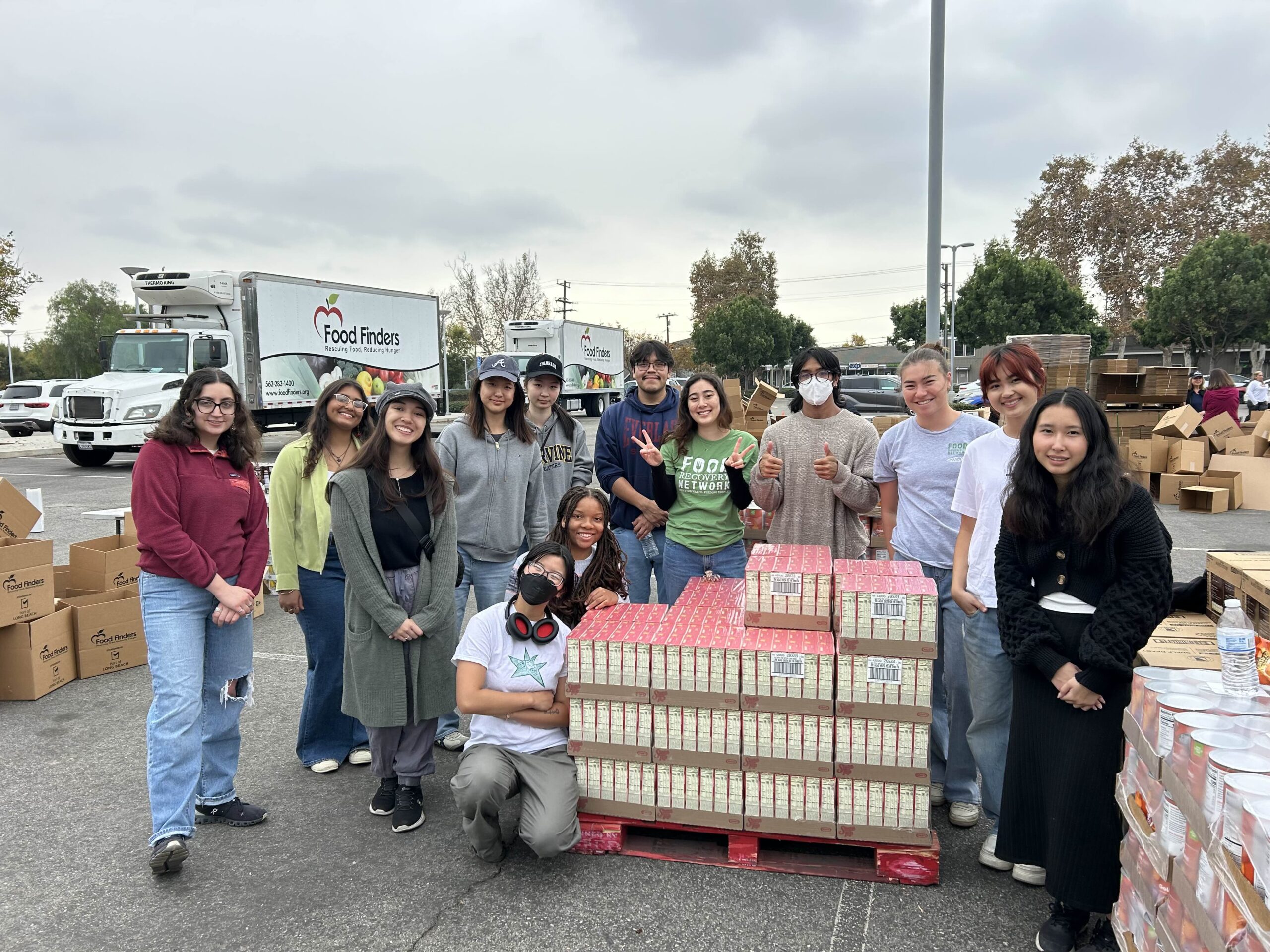
UC Irvine students collect nearly 300 pounds of leftover produce from a nearby farmers market every weekend and take it to a local food pantry. Courtesy of UC Irvine Food Recovery Network
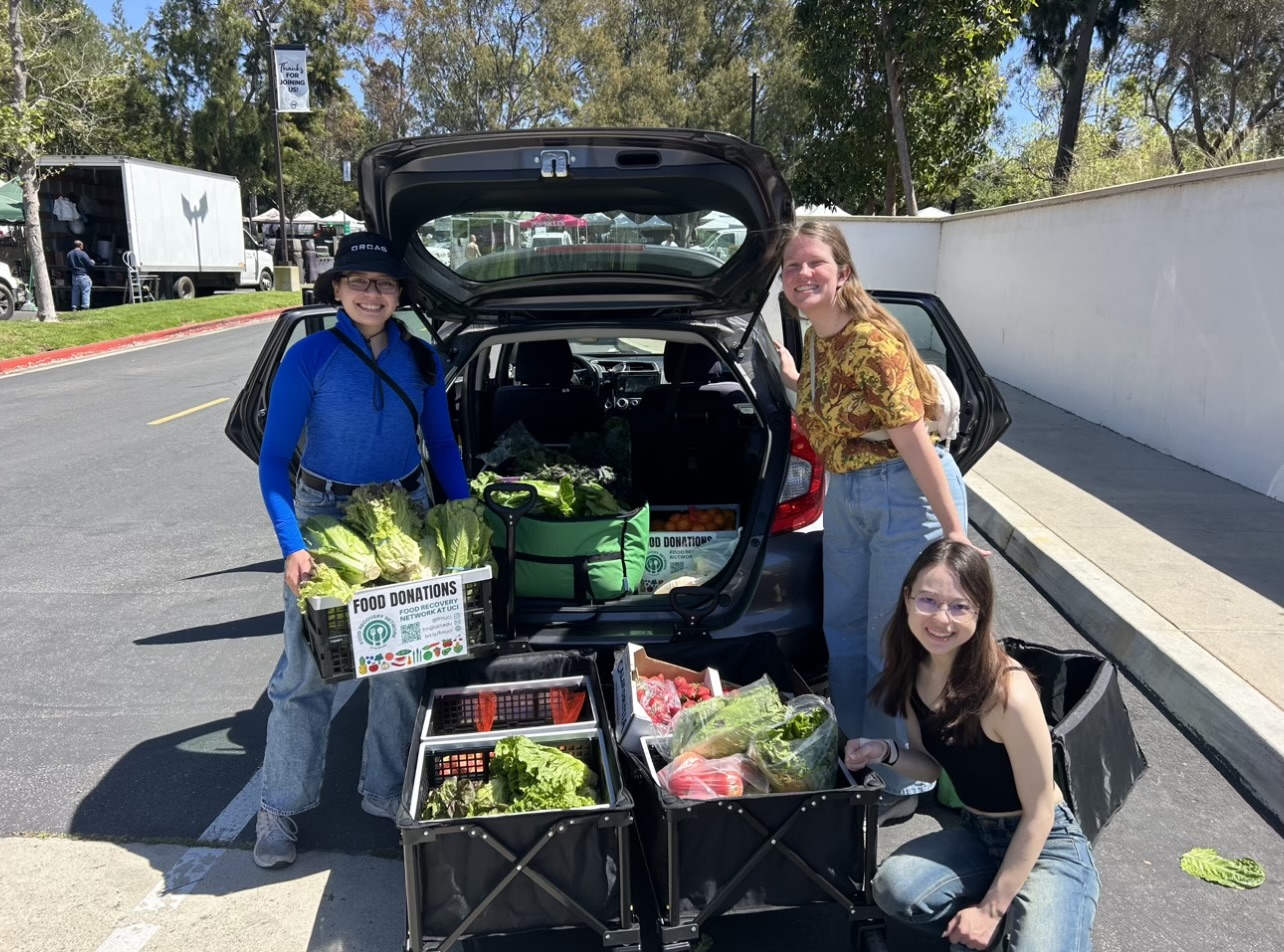
UC Irvine students collect nearly 300 pounds of leftover produce from a nearby farmers market every weekend and take it to a local food pantry. Courtesy of UC Irvine Food Recovery Network
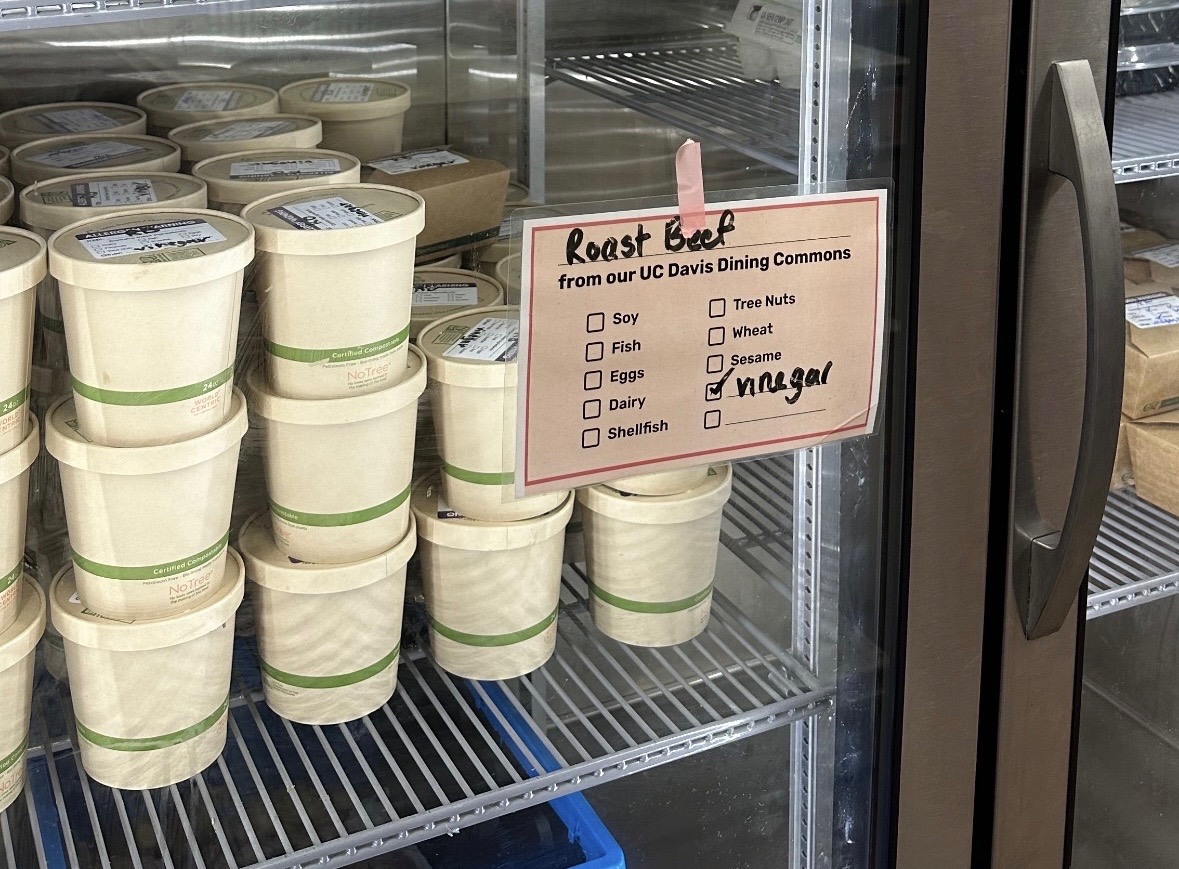
A refrigerator is packed with food for students to choose at the UC Davis’s food pantry. Courtesy of UC Davis Food Recovery Network
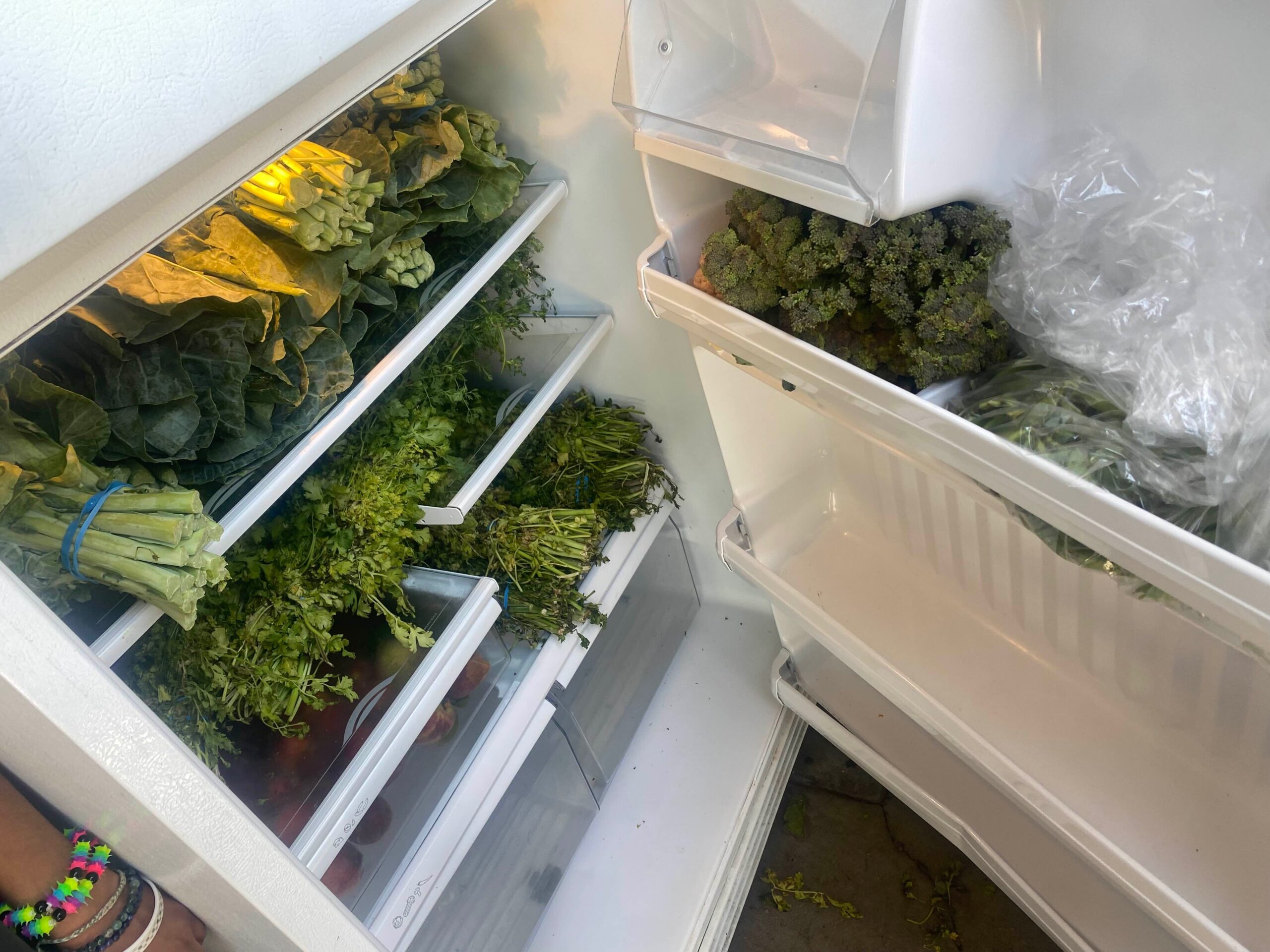
A refrigerator packed with vegetables at UC Davis’s student pantry.Courtesy of UC Davis Food Recovery Network
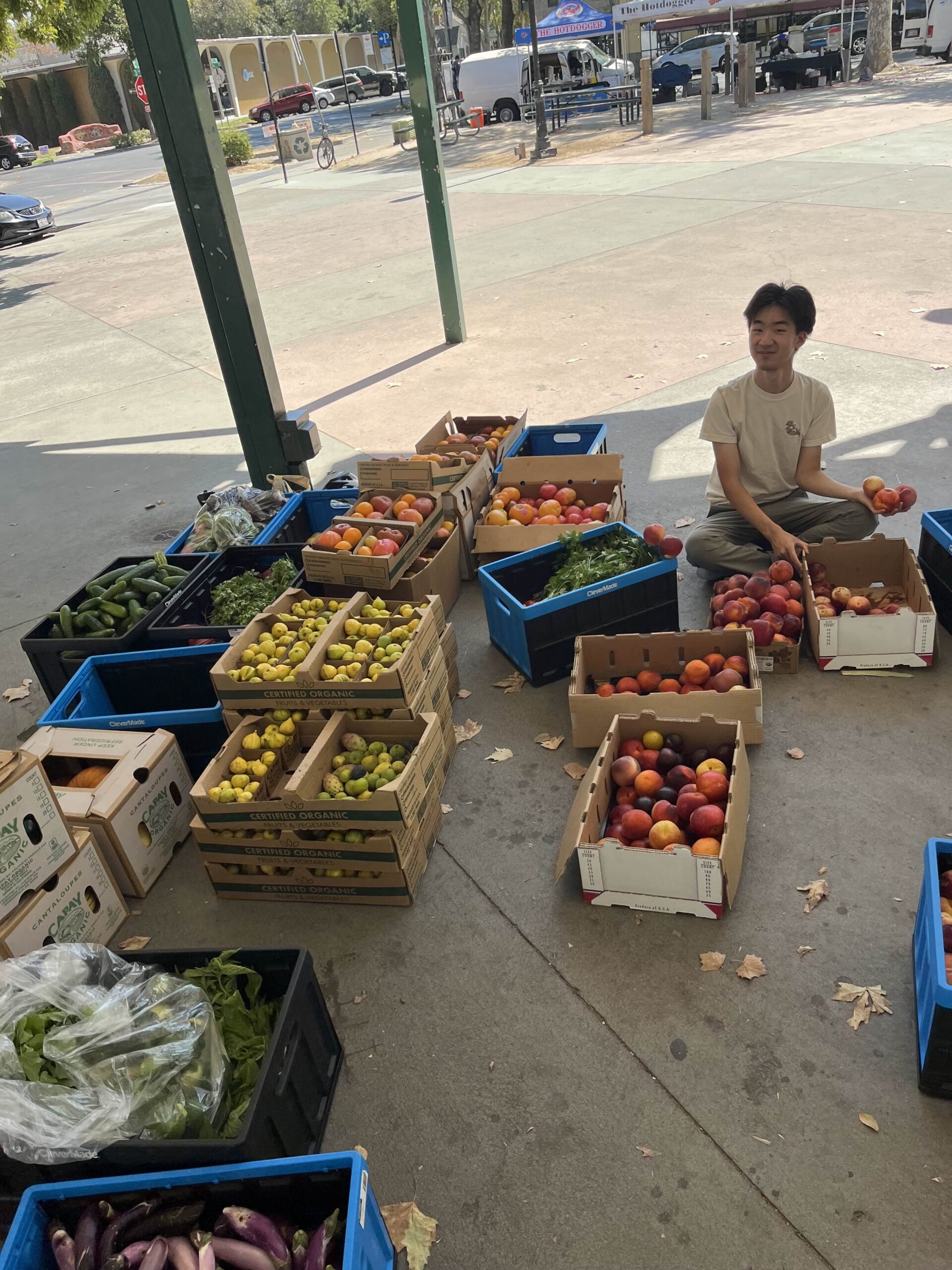
A student sorts fruits and vegetables at UC Davis’s food pantry. Courtesy of UC Davis Food Recovery Network
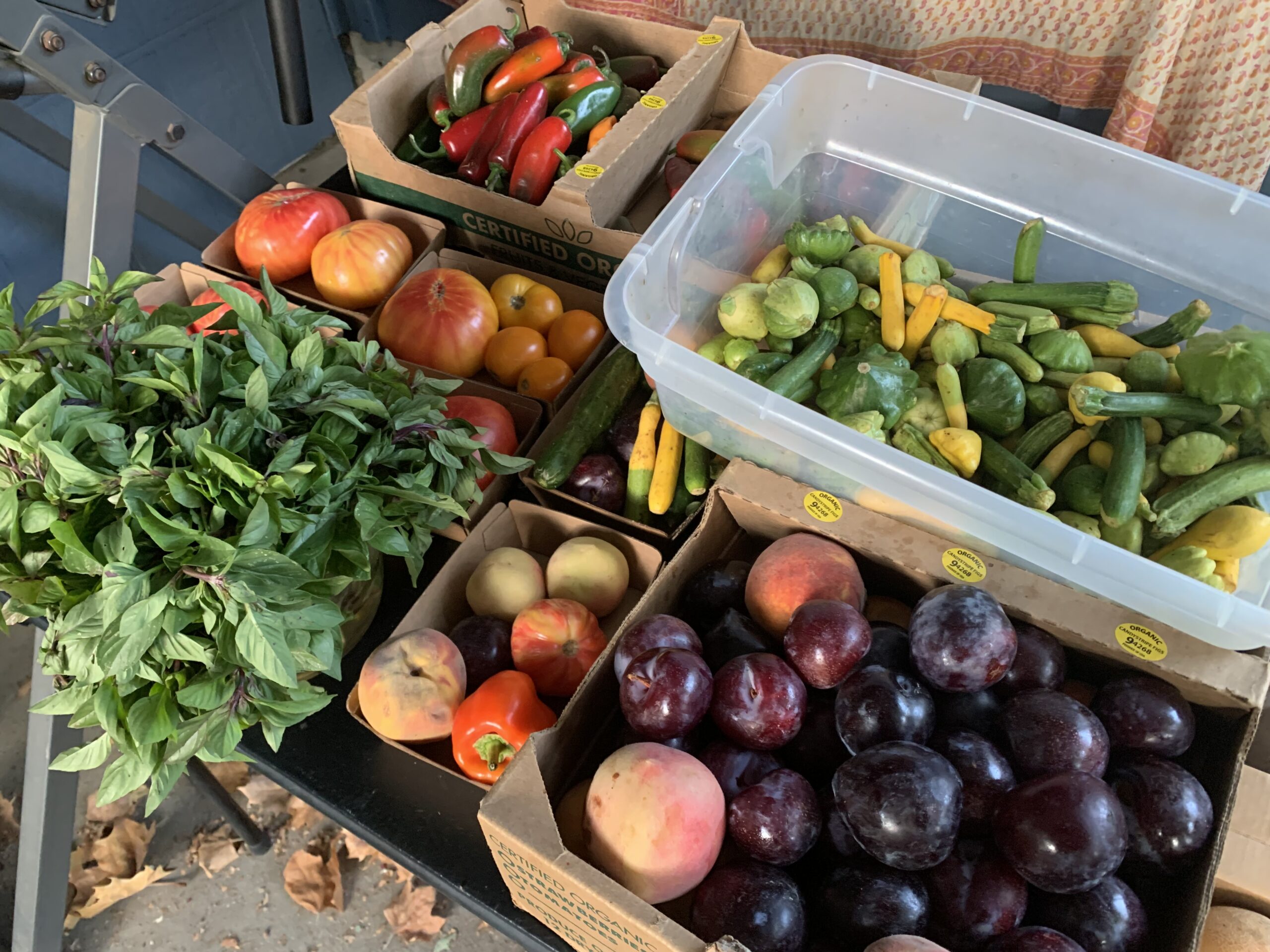
Fruits and vegetables for students to choose at t UC Davis’s food pantry.Courtesy of UC Davis Food Recovery Network
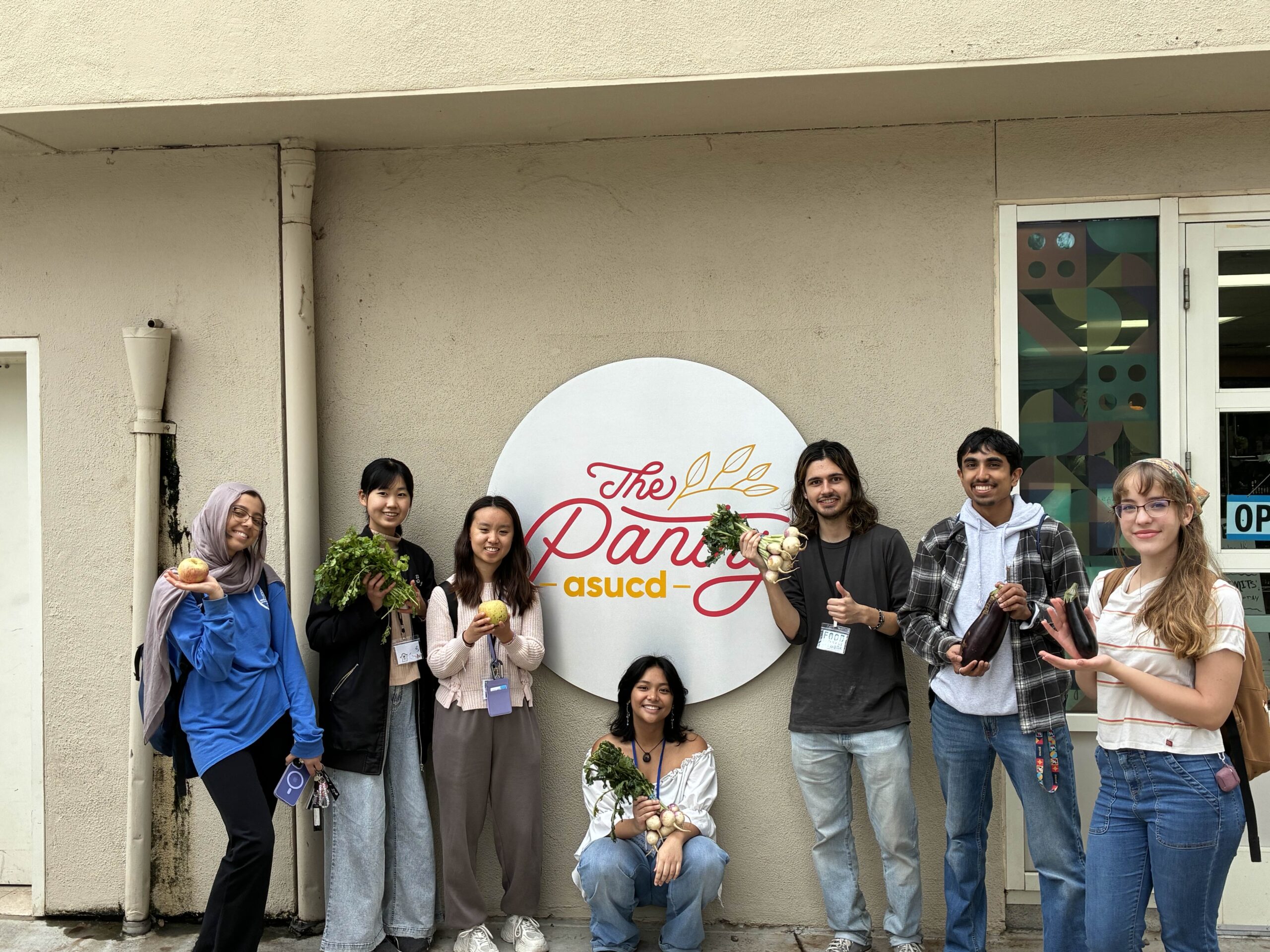
Students in UC Davis’s Food Recovery Network show off their veggies and fruit that will be given away at their food pantry. Courtesy of UC Davis Food Recovery Network
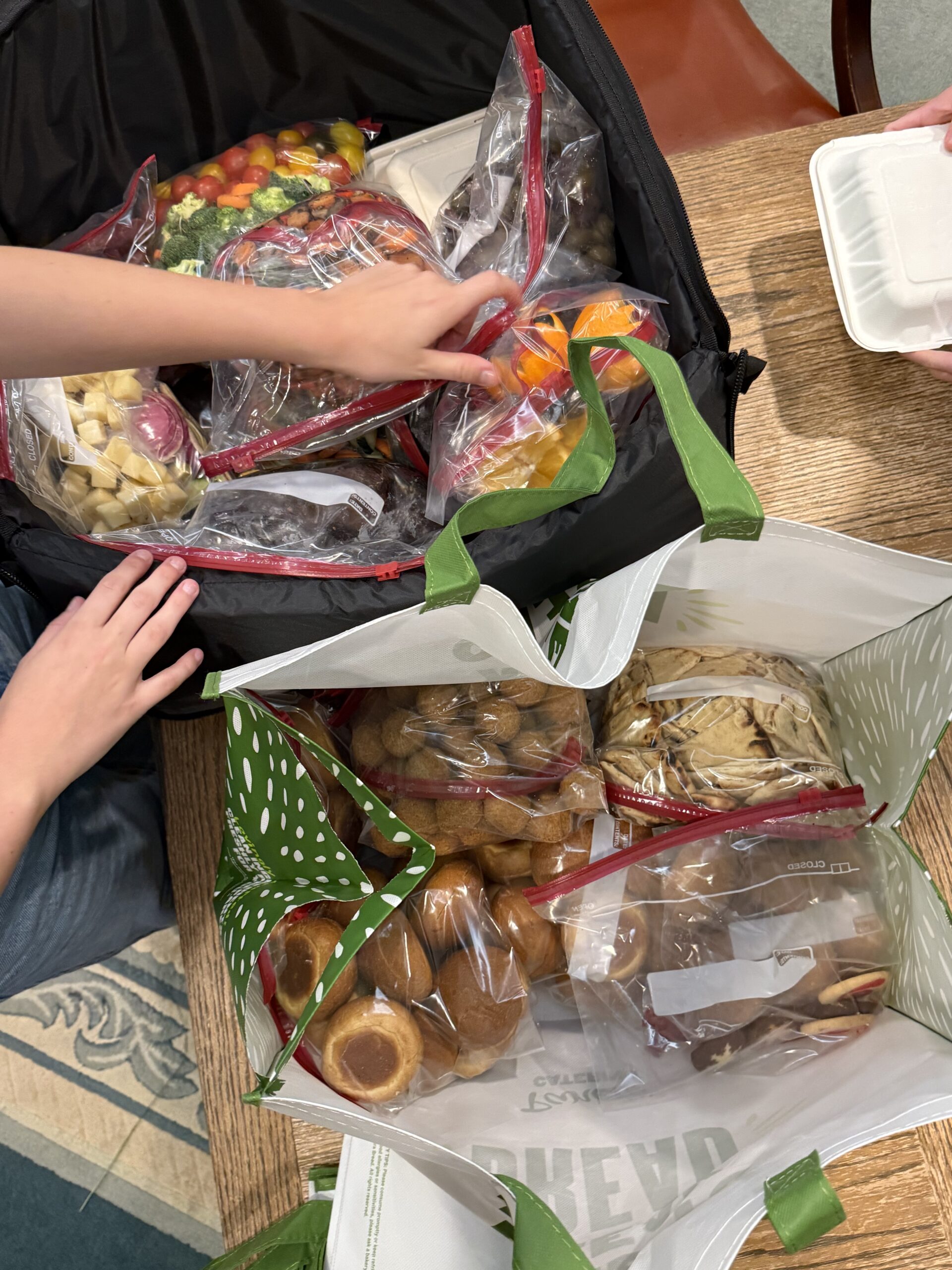
Food is package and prepared to distribute to fellow students at Pepperdine University. Courtesy of Pepperdine Food Recovery Network
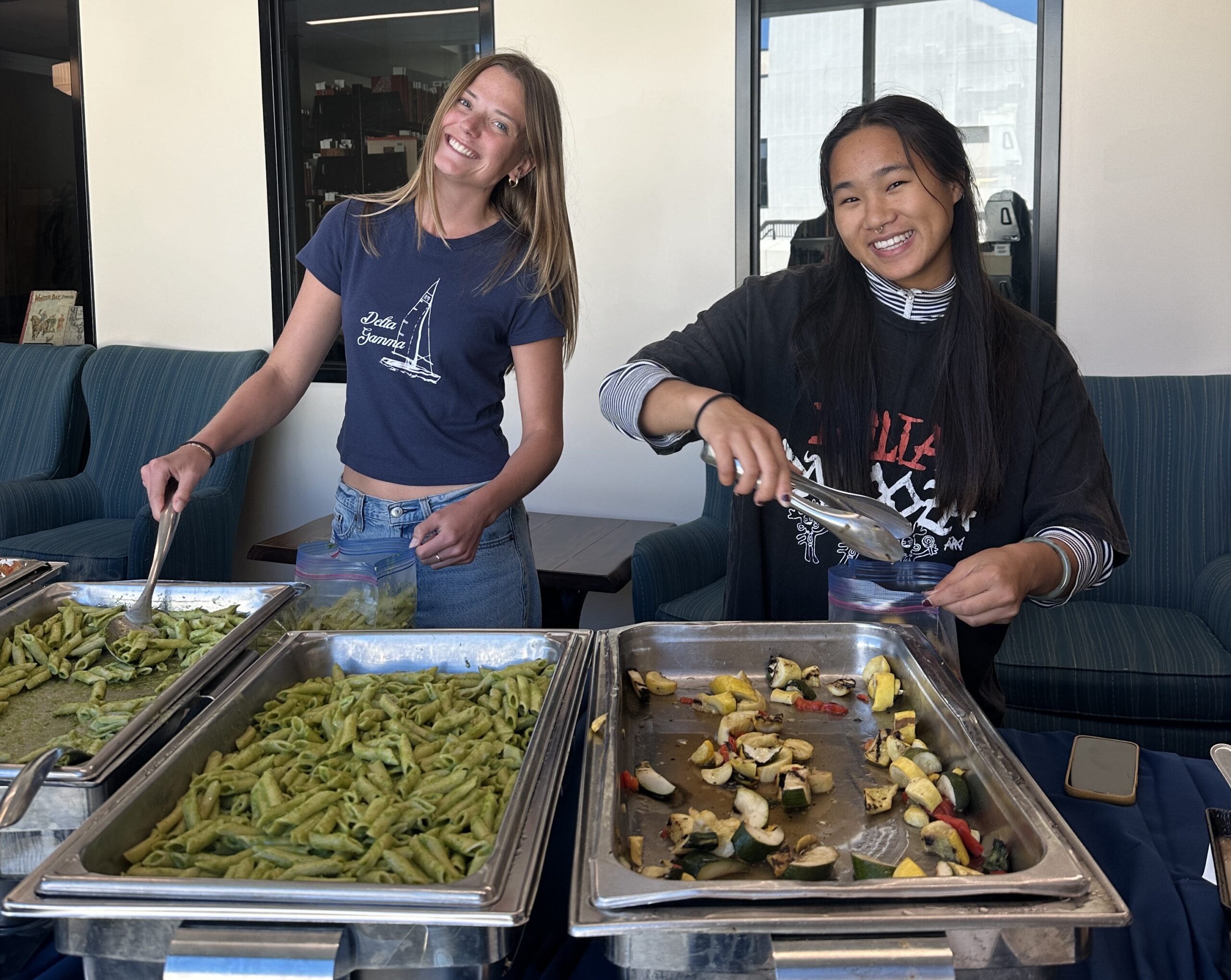
Students serve food at Pepperdine’s Food Recovery Network. Courtesy of Pepperdine Food Recovery Network
“Students will tell us, ‘I really needed this resource. I didn’t really know where my next meal was going to come from, but I learned about FRN and it alleviated a lot of stress,’” Hawkins said.
The FRN at Pepperdine University recovers uneaten food weekly from its on-campus cafeteria and Starbucks and distributes it to community members in need through the local Methodist church and Malibu Community Assistance Resource Team.
Belle Li, a fourth-year sustainability and Hispanic studies student and president of the club, said the club recovers 600–800 pounds of food from the dining halls per semester.
Li said that most food-waste mitigation on Pepperdine’s campus is fully student-led, adding that the university is not transparent about how much food it wastes.
“Having people at the university who are dedicated to educating students would be ideal to help create better awareness on food waste,” Li said. “Let the students who want to do something do something, instead of making it harder for students who are putting in the effort and time.”
At UC Irvine, students collect nearly 300 pounds of leftover produce from a nearby farmers market every weekend and take it to a local food pantry. Katie Maddux, a fourth-year environmental science and policy student and the chapter president of FRN at UC Irvine, said the organization is also working with the university to recover food from on-campus dining halls.
“From my experience — talking with my friends and classmates — when it is up to us to budget our food and meal plan and cook everything, we tend to not go for the fresh produce options,” Maddux said. “But if that’s what’s made free and available, it would help improve the nutrition of a lot of students.”
Maddux added that greater opportunities for free food on campus at UC Irvine is integral to student success.
“If there was more food recovery on campus, that could be really beneficial for students, if they just have the opportunity to go and grab food, no questions asked,” she said.
University administration is slow to help, students say
Student leaders hope to expand their organizations, but they’ve faced roadblocks. They say they have faced a lack of funding, communication and assistance from the university administration.
Tong said that though UCLA Dining has been helpful, UCLA’s central administration provides no funding to the organization and is slow to communicate.
“It feels like we’re running on fumes, just because it can be hard to manage our lives as students and our commitment and responsibility to do all of this,” Tong said.
Tong said that something as simple as a campus dishwasher could alleviate work for the organization’s members, who hand-wash 30 reusable trays after each distribution event. She added that the initiative to introduce the reusable trays took months because of delays by the school administration.
“We’re always just awaiting approval from UCLA administration,” Tong said. “I wish that the various people in administration would ask us what they can do to support us rather than always asking us for our statistics and using our work for their benefit.”
Li echoed Tong’s sentiment, adding that she had to find the chef at Pepperdine’s cafeteria on her own, which delayed the collaboration by three years.
“A lot of students want to do initiatives that are very good and very service-oriented, but a lot of the problems that we run into is those in power in our school just keep deflecting until you give up,” Li said.
Cabugao said FRN at UC Davis learned that the university was not giving the organization all the food that could be recovered. She added that the university could help the organization by providing a list of food allergens and space to store the food.
“A lot of things are done with the intention of keeping things as economically profitable as possible, and that includes not providing to students who could really benefit,” Cabugao said. “It is a real shame that people think so much more about the profits, rather than whether or not people are actually eating.”
At UCSD, Hawkins said the university is not doing enough to support students who are food insecure.
“Their ‘support’ of students is to just refer them to our programs,” he said. “But what they fail to tell the students is that they aren’t even supporting us. We’re constantly having to request more funding.”
For months, Hawkins said FRN has been asking the university’s chancellor and student body president to visit their pantry.
UCSD, UCLA, UC Davis and Pepperdine media relations did not respond to requests for comment on their relationships with the food recovery organizations.
“They’re not on the ground, seeing the day-to-day operations, seeing how long the line for the pantry is,” Hawkins said. “Sometimes we run out of food, and our shelves are stocked up on Monday, but by Thursday, they’re depleted. If the university really wanted to better our program, they would fund us and actually come in and look at the resource and see how they can better support students.”
Natalia Mochernak is a second-year student at UCLA majoring in communication and Spanish. She is a member of EdSource’s California Student Journalism Corps.