
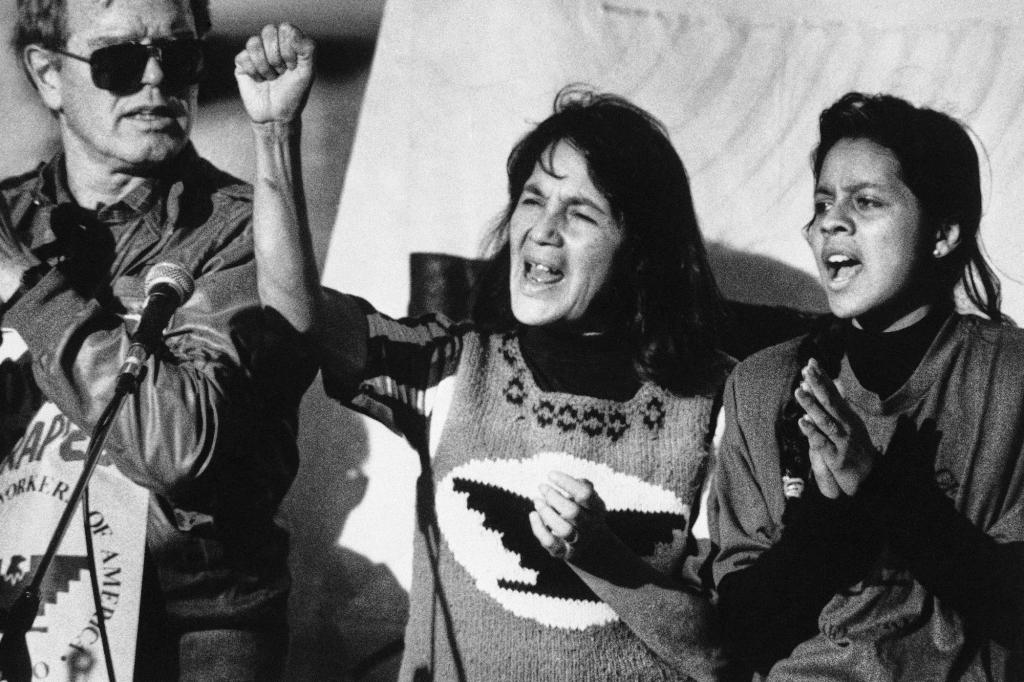
I thank Dolores Huerta for telling the painful truths in her life. At age 96, it’s a blessing to know that while there is life, there is integrity, there is some release from our burdens even if they are long held.
And yet, how sad it is women — so many of us — bear such burdens, from childhood, to adulthood, stretching into old age. This is a legacy, perhaps as old as humankind, that transcends generations. The effects on abuse survivors differ in their intensity, unpredictability and duration. Trauma can pervade us, and we may have little control but to pass it along in intimate ways, as we pass along our ways of coping, our ways of hiding our pain, especially when wounds begin young.
Today it is easier to recognize that if threat, intimidation and control are effective to silence those who bear the brunt of maltreatment, those who benefit from our silence will remain complicit in such abuses. I applaud the supporters of farmworkers (and their unions) for standing in solidarity with Dolores Huerta. But remember the UFW officials who pressured her and other girls to stay quiet — for the sake of the cause. It’s the same message; the sake of the cause is a pretense that allows perpetrators to continue to wield their power to hurt others. While it’s true that leaders are complex, fallible human beings, repeatedly committing sexual abuse rises above mere mistakes, mere failings. It contains cruelty, harm so deep it touches whole communities, whole families, whole generations within families.
The response to social injustice cannot advance when its leaders employ the same methods of harm within their own homes or communities. Sexual abuse and rape result in trauma. Perhaps it is a human predicament that those with heart, those who anguish over right and wrong, suffer most from harm experienced in life. Perpetrators seem to let those dilemmas slide off, like Teflon.
Countless stories elucidate the ways perpetrators and those near them (whether in ethnic, religious or political communities) respond when girls and boys tell about abuse. Young people are not believed (who wants to admit a friend, a colleague, a trusted partner could hurt a child in such a way?). Perhaps the fear of shame visited upon not only the victim, but those close to them keeps others quiet.
Dolores Huerta indicated she did not speak out until she realized she was not the only one. That’s the way things were in my family — it took those in the next generation to tell before we talked about it in my generation. Then among ourselves, we raged against our tormentor, but the seeds of harm were already planted, baked into our personalities, our habits. Our silence had been experienced as shame in the family. Don’t tell, and if by chance you do tell, you won’t be believed anyway, and you may be blamed. That’s the threat — and it is real.
The cycle continues. I hope this is different for Dolores Huerta and other girls who are survivors and their families.
To reduce domestic maltreatment in our society, we know how to support and nurture our children and families. We know how to plant seeds of resilience for families with social bonding incentives, with home visitations, inclusive classrooms, with outcome-proven prevention and intervention programs, adult education, trauma-informed counseling, with effective communication skills reinforced by adults who model for children. The tragedy is that these supports are not prioritized, therefore not widely disseminated.
That the farmworkers’ cause continues today clearly demonstrates that the quest for justice and dignity remains larger than the crimes of some men. We are reminded that the struggle continues despite the anguish of betrayal and pain we feel, precisely because we are truly one family, one humanity.
As bad as these new revelations are, perhaps they open a window to more communication, deeper understanding about trauma, and its relationship to our responsibilities in life.
Dolores is a tribute to all of us to continue the struggle for justice and humanity — not to be caught up in an ideology for a cause that is greater than our basic human needs for kindness, dignity and belonging. If all our personal interactions embody those beliefs, Dolores will be proud of us.
Covarrubias is an educational psychologist and lives in Bonita.