
Sierra Club San Diego supports the goal of investing in new fire stations. But how and where we build matters just as much as what we build.
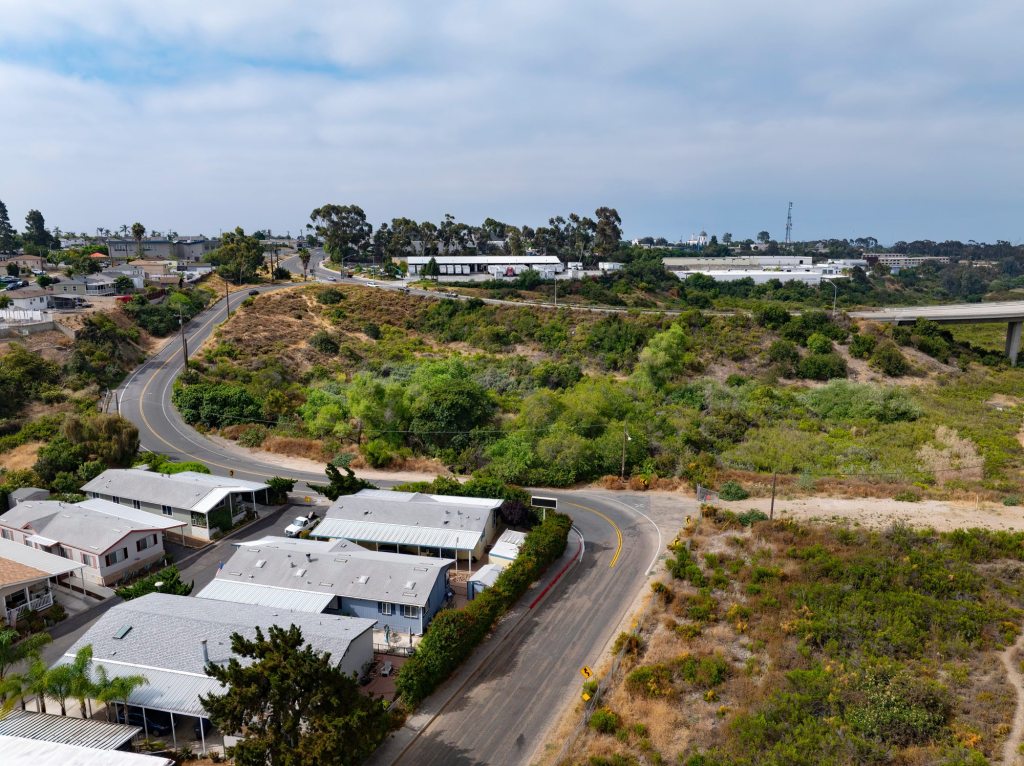
The proposed Fairmount Avenue fire station is a good project in the wrong place. It impacts a sensitive canyon, affects a quiet retirement community and fails to meet environmental standards. The Draft Environmental Impact Report (DEIR) for the proposed Fairmount Avenue fire station violates California law and would set a troubling precedent.
The California Environmental Quality Act (CEQA) requires that agencies rigorously evaluate a reasonable range of alternatives for a project that may be safer, cheaper and more environmentally sound. This Draft Environmental Impact Report does not meet that standard.
Instead of analyzing multiple potential fire station sites, the report focuses on only one alternative location on Home Avenue — and then dismisses it based largely on outdated information. The city relies on a nearly decade-old estimate of roughly $576,000 to remediate historic burn ash contamination on that alternative site. But that figure predates major advances in cleanup technology and fails to account for available state and federal funding.
That is not rigorous analysis — it is a cursory elimination.
Meanwhile, the site the city has selected — at 47th Street and Fairmount Avenue — comes with serious environmental concerns. It sits within a sensitive canyon in the Chollas Creek watershed, requiring extensive grading and posing risks to biological resources, stormwater systems and potentially cultural resources.
The question is: Are alternatives being evaluated fairly or filtered out to justify a predetermined outcome? Several viable sites were dismissed prematurely or without adequate analysis. A large parcel at Beech Street and 38th Street was ruled out because its owners were unwilling to sell, based on outreach conducted a decade ago. But the property has since changed hands. The city made no documented effort to revisit the opportunity.
Other sites along Federal Boulevard were rejected due to factors like deed restrictions, noise or potential conflicts with future projects. But these challenges are not unusual — and in many cases, they are routinely addressed through design, mitigation or negotiation. Fire stations across San Diego operate near freeways, airports and other high-noise environments. Co-locating public safety facilities is common practice.
Perhaps most concerning, two large parcels located within 500 feet of the proposed site — properties that are already graded or developed — were not analyzed at all. These sites may offer similar service benefits with fewer environmental impacts. The draft environmental impact report provides little evidence that such solutions were seriously considered.
The California Environmental Quality Act is clear: Alternatives cannot be rejected simply because they may be more complex, uncertain or require additional effort. If cost is cited as a barrier, it must be shown to be truly prohibitive — not just inconvenient.
Equally important, the Draft Environmental Impact Report fails to provide basic comparative data that decision-makers and the public need to evaluate tradeoffs. There is no meaningful analysis of response times across sites. No lifecycle cost comparison. No clear assessment of whether alternative locations could meet project objectives while reducing environmental harm.
Without that information, conclusions about feasibility are at best speculative. San Diego residents deserve better.
This is not about stopping a fire station. It is about building one the right way and in a good location — through a transparent, evidence-based process that protects both public safety and the environment.
Sierra Club San Diego calls on the city of San Diego to recirculate a revised Draft Environmental Impact Report that includes a fair evaluation of multiple feasible sites. If that does not happen, the decision should not be made behind closed doors at the staff level. It should go before the full City Council, with the opportunity for public input.
The California Environmental Quality Act exists to ensure that we do not sacrifice long-term environmental health for short-term convenience. When done properly, it leads to smarter, more resilient projects that serve communities for generations.
San Diego can — and should — build this fire station. But it must do so in a way that reflects both the urgency of public safety, the responsibility of environmental stewardship, and respect for the laws of California.
Right now, the city has not struck that balance or followed the law.
It still can.
Rilli is deputy director of Sierra Club San Diego. Andersen, Ph.D., is vice-chair of conservation of Sierra Club San Diego.