
FRESNO COUNTY – Following outcry over a special type of compost used by the San Joaquin River Parkway Trust, Fresno County has introduced a new law banning the spread of reduced human remains, also known as human compost, on some public and private lands.
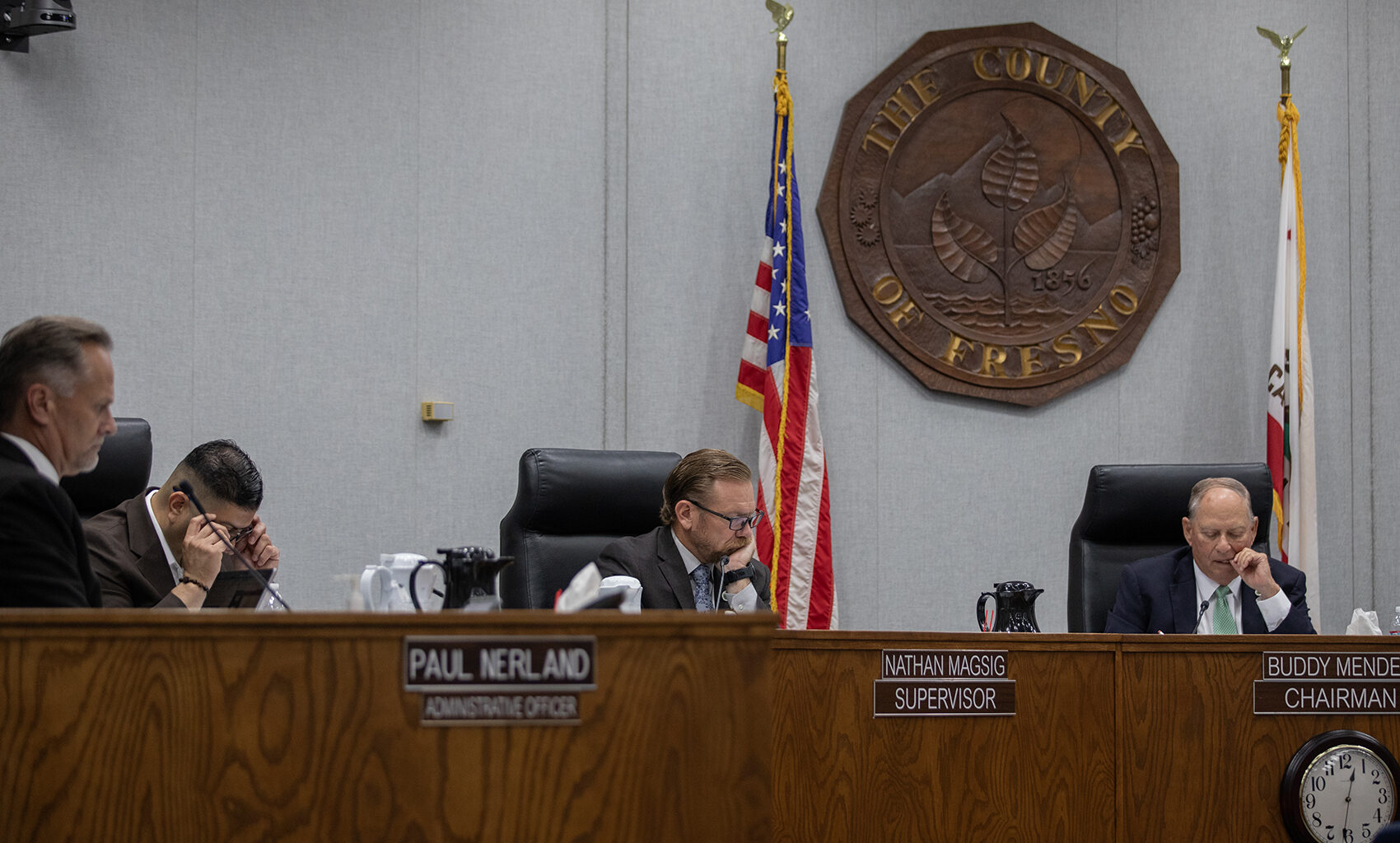
The Fresno County Board of Supervisors unanimously approved the first reading of an ordinance on April 7 that prohibits the use of human compost on all public land within the unincorporated areas of the county and on private land where food is grown for human consumption. Supervisors said the ordinance attempts to balance property rights with public health and safety concerns.
“I think for me, it’s a sacred thing, and I’m one who believes that when it does come time to spread human remains, it’s something that should be done in a manner that pays respect to individuals,” Supervisor Nathan Magsig said. “On a health side, … I did have concerns, so I appreciate this ordinance that’s before us.”
Reduced human remains are made through a process known as natural organic reduction (NOR), where the body is placed in a container with organic materials like mulch, wood chips and straw. The natural decomposition process is then recreated and sped up as microbes break the body down.
The practice is currently allowed in 13 states, according to the National Funeral Directors Association, and will become legal in California next year. Although the process is not permitted in the state at the moment, there is no existing state law that specifically bans the spreading of the soil/compost that is made from natural organic reduction.
Beginning Jan. 1, 2027, state law will regulate the spreading of reduced human remains in the same way it regulates cremated remains.
People will be able to scatter remains in areas where no local prohibition exists, they have the written permission of the property owner or government agency and remains are not in a container or distinguishable to the public.
This means the new law in Fresno County — housed under the section of the county ordinance code that regulates the land application of biosolids — would be considered a local prohibition under state law. People could still scatter reduced human remains on private property, however, so long as it is not on or near where food is grown for human consumption.
Supervisor Brian Pacheco asked to include extra clarification of what the ordinance means by food grown for human consumption. As a farmer, he said he didn’t want to see any unintended consequences from the ordinance that could jeopardize agricultural practices, particularly in the organic industry.
The board agreed that the prohibition would only extend to crops that go from farm to table. If someone were to use human compost on soil for cotton or on alfalfa grown for cattle feed, for instance, the ordinance would not apply.
Violations of the ordinance would be enforceable as a misdemeanor, punishable by a fine and/or imprisonment, as well as by an administrative citation. Violations would be cited with escalating penalties of up to $1,000 for a first offense, $2,000 for a second offense within the same year and $5,000 for subsequent violations.
The ordinance initially also included language allowing for civil enforcement of any violations by affected parties, meaning private citizens could sue over the scattering of remains in a prohibited area. In response to public comment that brought up concerns over that provision opening up the possibility of frivolous lawsuits, the board agreed to remove it.
The second hearing of the ordinance is set for April 21 and, if approved, it will take effect 30 days later.