
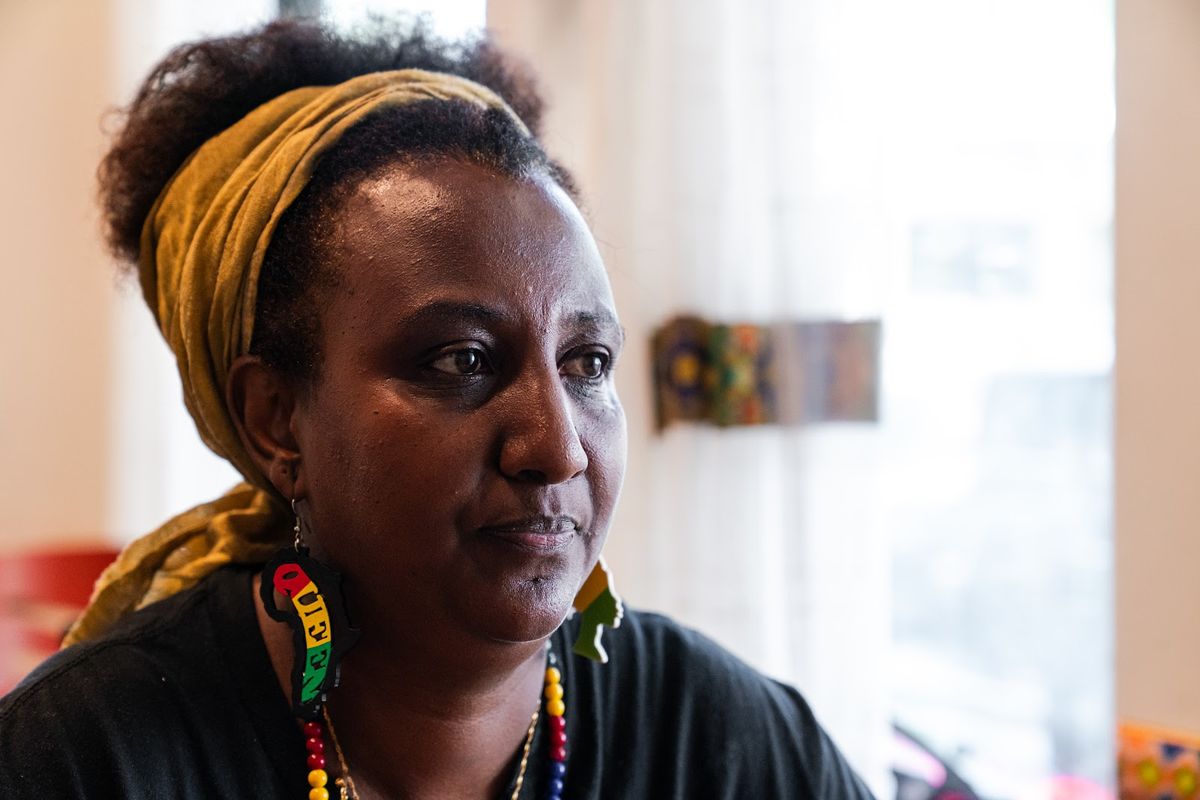
“I haven’t increased my rates yet,” she said. “But eventually, you have to raise them to survive.”
For communities already struggling with high food prices, those increases could create additional hardship.
“A lot of the communities, especially the less fortunate ones, are depending on the food banks,” Gant said.
Experts say lower-income consumers often are hit hardest when food prices rise because they spend a larger share of their income on groceries.
“Low-income consumers spend a larger share of their income on food,” Kiesel said. “If prices rise for the items they buy, they often have fewer alternatives.”
Kiesel said consumers with higher incomes often are able to change their purchasing habits when prices rise.
“Higher-income consumers might switch from fresh produce to canned goods or shop elsewhere,” she said. “But many lower-income households already buy the lowest-cost options.”
Experts and farmers say smaller farms, particularly Black-owned farms, often are more vulnerable to market shocks because they operate with fewer financial resources.
“A lot of times they’re more vulnerable because they don’t really have the support that they need,” Gant said.
Chanowk Yisrael, founder of Yisrael Farms in Sacramento, said the deeper issue is the agricultural system’s dependence on external inputs such as fertilizer. When those costs rise, he said, farms can quickly find themselves in financial trouble.
“When input costs rise, then the margins collapse because the system was never self-sustaining to begin with,” he said.
Yisrael’s farm takes a different approach, relying on compost made from neighborhood food scraps, chicken manure, and plant material rather than purchased fertilizers.
“Instead of asking how we absorb the higher costs, the real question is how do we eliminate dependency over time,” he said.