
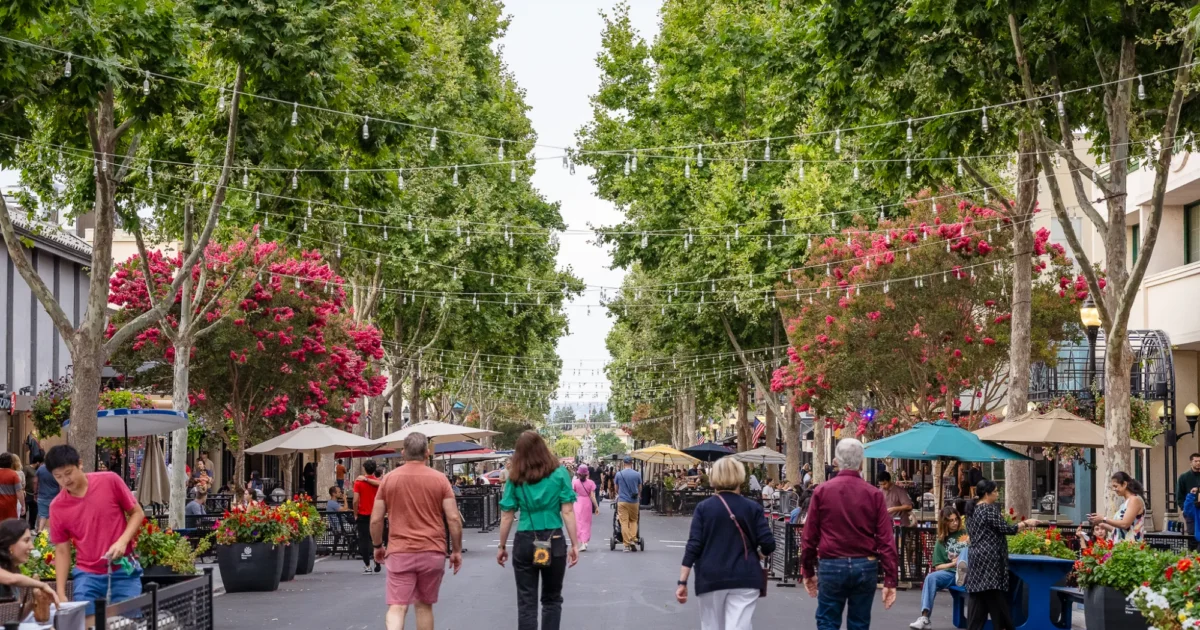
Mountain View is looking to implement an “entertainment zone” in the downtown area ahead of the World Cup this summer, which would allow for the open consumption of alcohol on streets and sidewalks during city-designated events.
A local ordinance creating the proposed zone — which would cover five blocks of Castro Street and portions of surrounding streets — is scheduled to come before the City Council on April 14. If approved, the ordinance would be implemented as an 18-month pilot program that would go into effect May 28, according to Amanda Rotella, the city’s economic development strategist.
“We want to really increase revenue for businesses and use this as a greater economic catalyst,” Rotella said at a Tuesday meeting of the city’s Downtown Committee. “We want to continue to amplify Mountain View as a vibrant cultural hub where people want to come and spend time and spend money.”
Entertainment zones have so far been mostly concentrated in big cities like San Francisco and San Jose. However, smaller cities, including Palo Alto, are starting to take notice. In 2024, the state Legislature passed Senate Bill 969, allowing municipalities to establish entertainment zones.
The basic idea is that brick-and-mortar businesses can let patrons take alcoholic beverages off the premises, provided they stick to specified areas that allow for open consumption. These businesses also need to have an existing alcohol license, according to the city staff report.
Mountain View is considering creating an entertainment zone that would only be activated during city-sponsored events, according to Rotella, who added that the World Cup was a big impetus to get it up and running this summer.
“Given how fast we had to move for the World Cup, I had to take the easiest path forward,” Rotella said. “By limiting it to city events, this allowed us to move really quickly.”
The zone would cover Castro Street from West Evelyn Avenue to Church Street. It also would include the plaza outside City Hall, as well as portions of Villa Street, West Dana Street, California Street and Mercy Street, according to the staff report.
The zone would be allowed to operate from 8 a.m. to 11 p.m. seven days a week, although Rotella noted this does not mean the zone would be in use the whole time. Rather, the city is looking to establish broad parameters so that events can be scheduled flexibly.
“As soon as the entertainment zone hours have ended, it goes back to being a normal street,” Rotella said. “Normal rules apply, and police can enforce alcohol being outside of the businesses.”
Similarly, it is unlikely that there would be a lot of events requiring all five blocks of Castro Street to be turned into an entertainment zone, according to Rotella. The idea is just to get approval for the possibility, she said.
Downtown committee responds
The downtown committee, an advisory body to the city council, unanimously supported the proposition of an entertainment zone, with several members encouraging city staff to make the pilot program as accessible as possible for local businesses.
Committee Chair Mike Kasperzak, who previously served on the city council, urged staff to consider expanding the program to benefit more businesses.
“It’s going to be great for businesses that are in those blocks, but nobody else is going to see the benefit if we’re not moving things around the downtown core,” he said.
Kasperzak also noted the city should evaluate the pilot program early on, instead of waiting 18 months before making a formal recommendation. A delay could “kill the effort” for local businesses, he said.
Rotella assured the committee that information would be collected continuously and adjustments could be made during the pilot program. She also noted that the program would have some expenses that the city plans to evaluate, like an expanded police presence and an increased number of trash receptacles.
“One of the things that we will be looking at is the economic benefit versus the cost that we might incur from pursuing this,” Rotella said.