
Crashing on couches, borrowing clothes, begging for prescription refills and facing confusing piles of post-disaster paperwork. Then there are the feelings — anxiety fueled by images of smoke and flame, by smells and sounds. Deep loss. Deep fear. Joy at being alive.
Such is reality now for the roughly 25 residents driven from their apartments by an early morning fire on March 31 that burned two buildings on Ninth Street in West Berkeley. Many are Latino, longtime Berkeley residents, with large families in the Bay Area and in Mexico. They fled to the street around 3 a.m., learning hours later — while huddled in their pajamas on the sidewalk — that their homes were gone.
Ever since, they’ve been navigating a new world of displacement — a stress-laced place of stacking unknowns, many residents said. And one that doesn’t pause the need to get to work, care for family or handle other pre-fire responsibilities and routines.
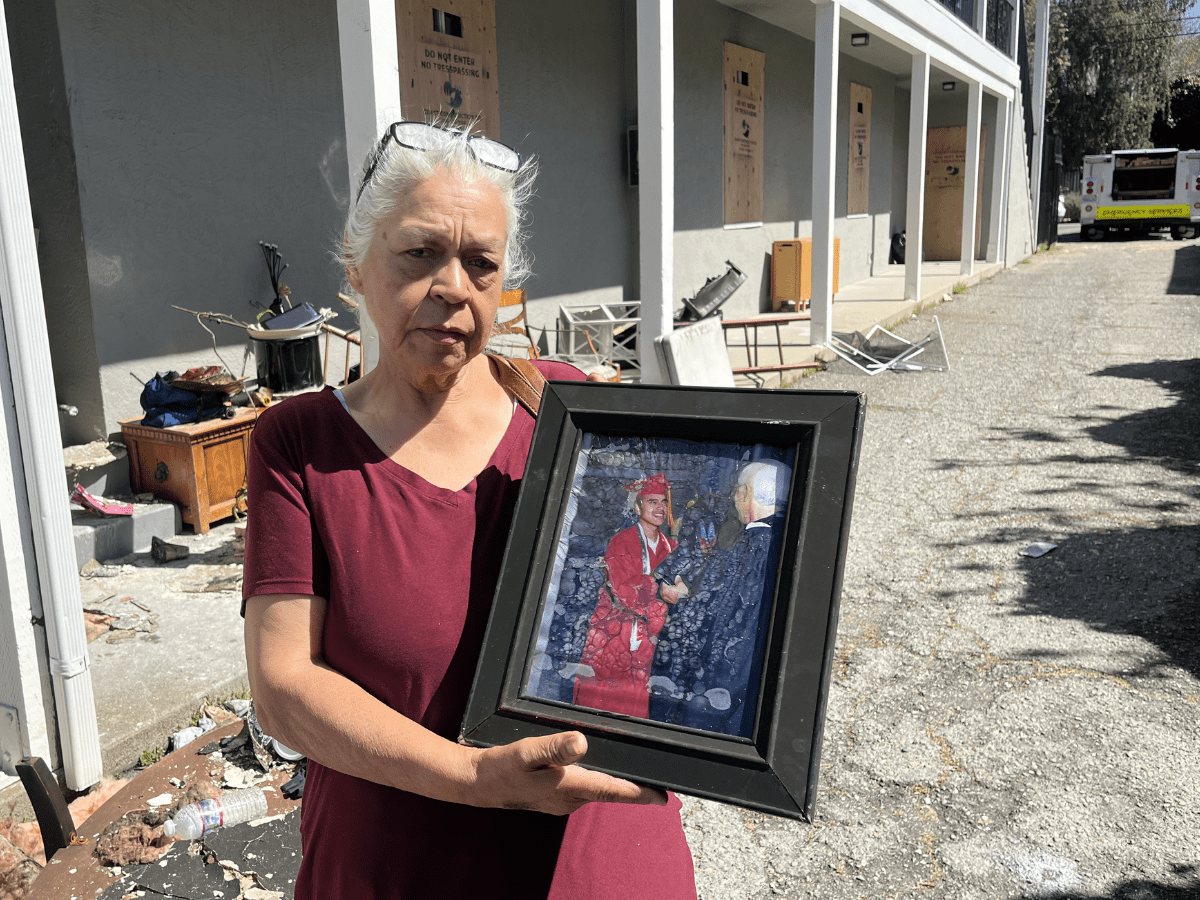
“I’m sad. I don’t feel good in my heart. We lost everything. We have zero,” said Raquel Sánchez, 69, a housecleaner who lived in the building for more than 30 years and is now staying with a son in Napa. “It’s too long of a drive for me,” she said of her new commute.
Like many residents, Sánchez returned to her apartment in the days after the fire, sifting through blackened piles of belongings dragged outside by firefighters, grabbing what she could.
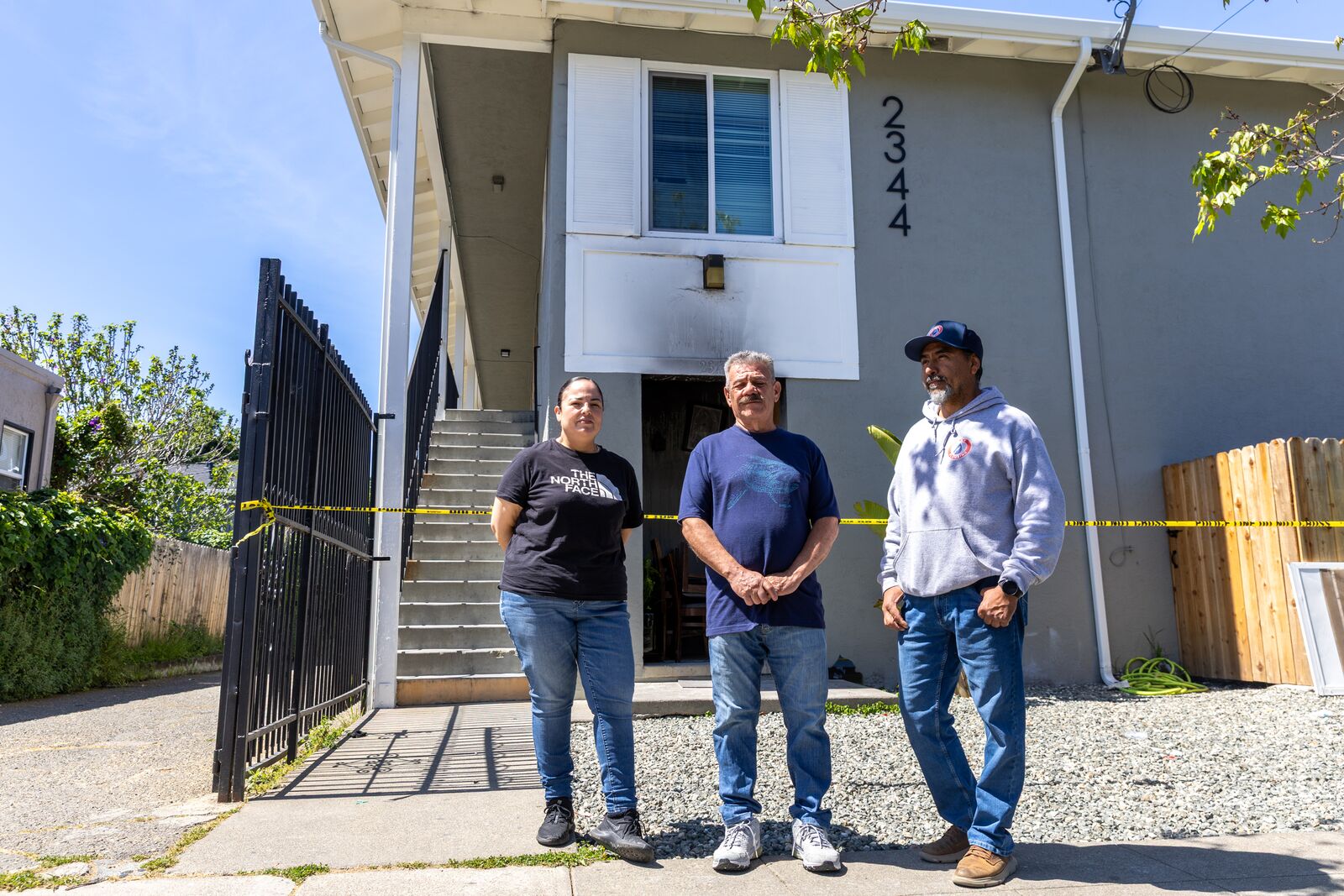 Andrea Garcia, Antonio Flores and Jesus Antonio Cárdenas stand in front of their apartment building on Tuesday. The three have lived in the building for more than 15 years, and are among the dozens of people displaced by the fire. Credit: Estefany Gonzalez for Berkeleyside
“You don’t know what you have until you lose it,” said Jesus Antonio Cárdenas, 53, owner of Bay Plumbing, who lived in the same building for around 15 years with his wife and two daughters. “It’s sinking in.”
Still, he says, no one was seriously hurt. “That’s the most important thing.”
Until air quality is deemed nonhazardous, and the building cleared for safe entry, residents are not allowed inside. Assessments are ongoing, said the Berkeley Fire Department, with some units already red-tagged, indicating major structural damage, others yellow-tagged, with lesser destruction, and a couple green-tagged, or unaffected by the fire. Residents must work with the department for permission to enter, based on their unit’s condition.
Help is offered in stages, starting on the sidewalk
The fire affected a pair of similar, two-story, side-by-side apartment buildings on the 2300 block of Ninth Street, between Bancroft and Channing, with a total of 12 units, six in each building.
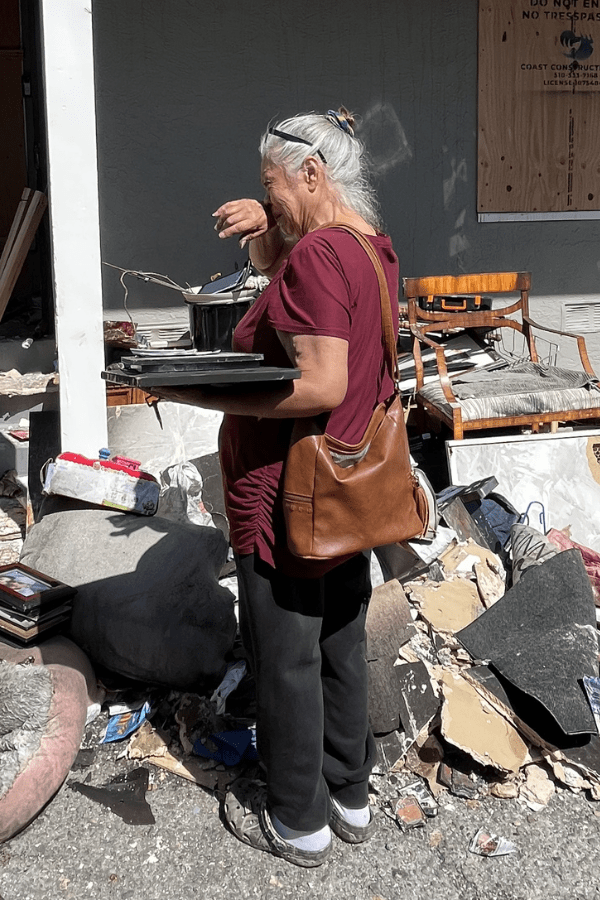 Raquel Sánchez, crying outside her apartment building two days after the fire. Credit: Kate Darby Rauch for Berkeleyside
The southern building, where Sánchez lived, was severely damaged. The northern building was less affected, and a few residents have already returned.
The cause has not yet been determined, a Berkeley Fire Department spokesperson said.
Residents of the more damaged building have been told by their landlord that repairs could take up to a year, according to several tenants.
Berkeleyside left multiple messages for the southern building’s property manager, 2BLiving, and its owner, Channing Investor LLC, with no response. There has also been no response from the owner of the northern building, Dvir Brakha.
Immediately after the blaze, fire officials said 10 families had been displaced. In an update, the fire department said they aren’t sure of this number. Some extended families lived in more than one unit, and some family members didn’t live there full-time.
According to Mig Rampa, disaster manager for the Red Cross in Alameda County, a total of 26 people were displaced from the two buildings. Rampa arrived shortly after dawn as the building still smoldered.
“We got there quick,” he said.
The Red Cross, a nonprofit funded entirely by donations, plays a major role in local disasters such as fires, Rampa said, beginning with sending volunteers to the scene.
Shortly after 5 a.m. on March 31, the Berkeley Fire Department alerted the Red Cross to the displaced tenants, setting in motion assistance that can last for several weeks, or at least until residents secure temporary housing.
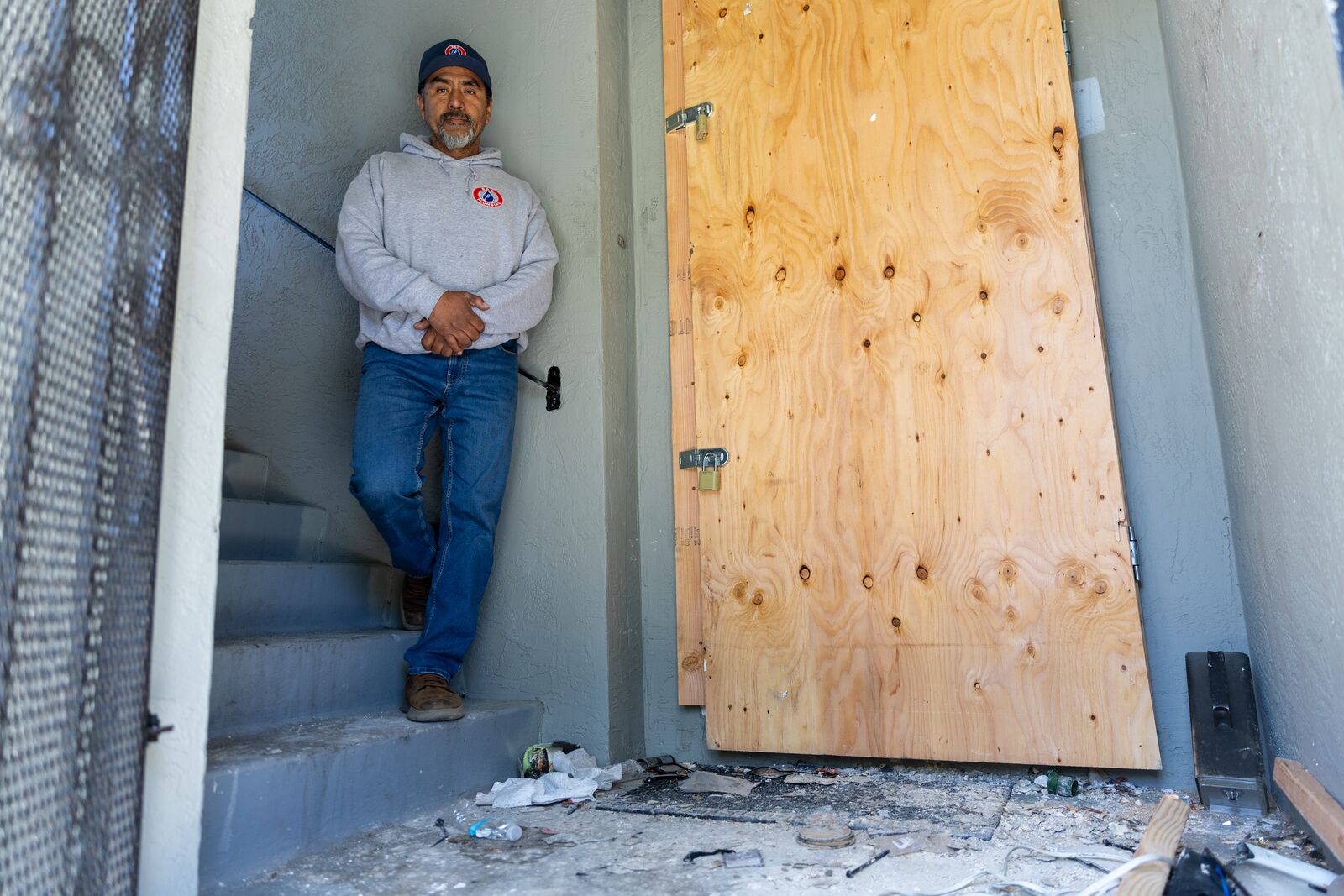 Jesus Antonio Cárdenas stands outside his boarded up apartment unit on Tuesday. Credit: Estefany Gonzalez for Berkeleyside
“They’re probably at the worst time of their lives; we want to make sure they have proper housing to go back to,” Rampa said.
Assistance includes one-on-one case management by trained volunteers who make referrals and explain resources and rights.
Spanish-speaking volunteers are assisting many residents who are not fluent in English.
The Red Cross also distributed $650 debit cards or cash to each displaced family at the scene. The amount is calculated by an algorithm that factors in the extent of damage, and the costs of likely immediate needs per household.
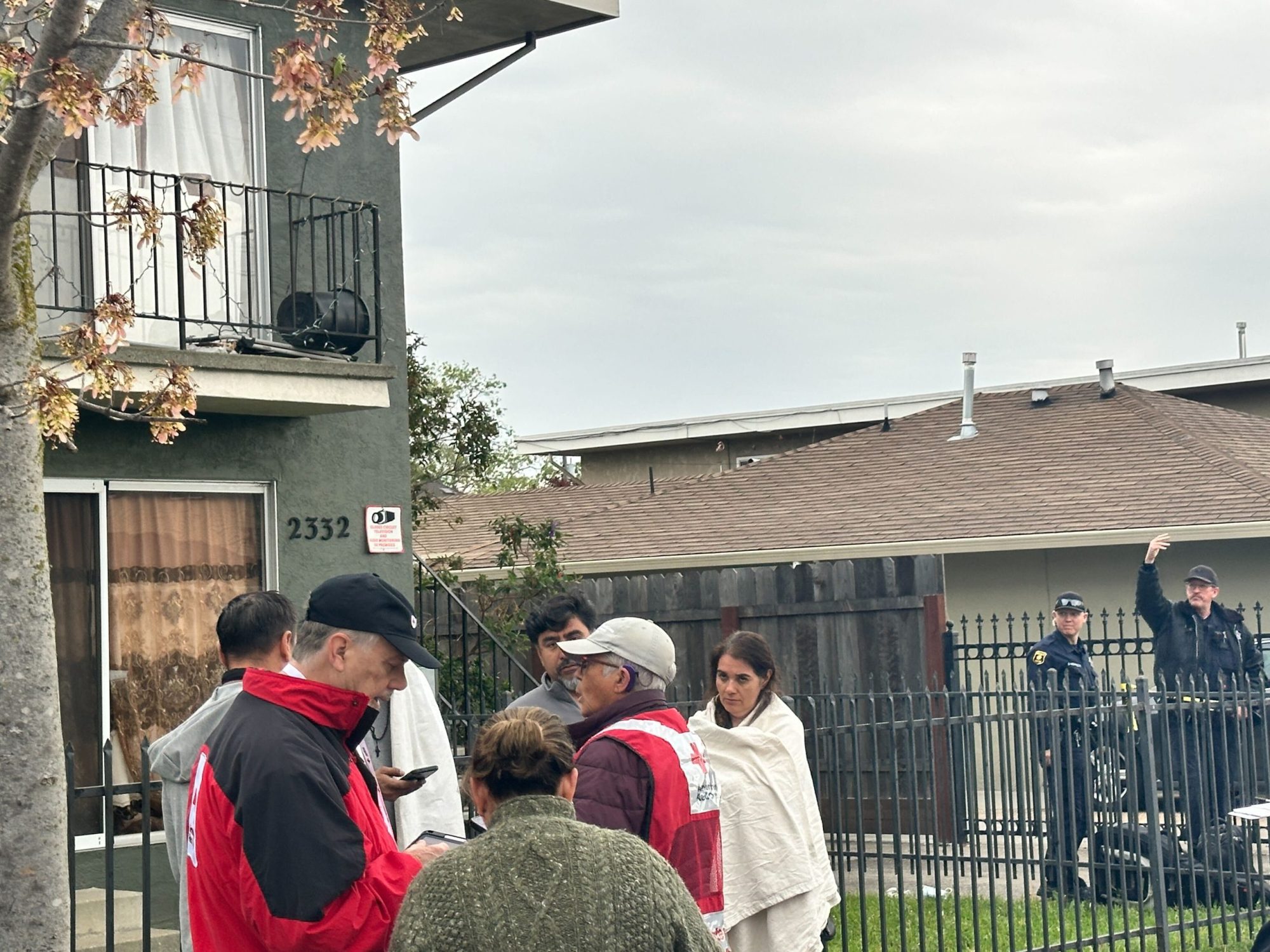 A team from the Red Cross talks to displaced tenants hours after the fire. Credit: Tracey Taylor/Berkeleyside
“The money is for them to do what they like,” Rampa said.
“They also told us our rights, and offered us mental health support,” said Alexa Cárdenas, one of Jesus Cárdenas’ daughters, who was home from college for spring break when the fire broke out.
Through the California Fire Foundation’s SAVE program — Supplying Aid to Victims of Emergency — the Berkeley Fire Department also distributed $250 gift cards.
“This program enables first responders to offer immediate relief and comfort to victims of catastrophic loss due to fire or other natural disasters,” said Deputy Fire Chief Keith May.
The cards are given to residents whose homes sustained at least 25% damage, he said.
Long-term housing is a pressing concern
The prompt financial assistance helped cover urgent needs — food, jackets, cellphone chargers and, for a few, a hotel room. Most residents are staying with family or friends in nearby areas such as Richmond, El Sobrante and Napa.
One of the most pressing concerns is longer term housing.
“Where am I going to pay the same rent?” said Sánchez, whose decades on Ninth Street meant relatively low rent under Berkeley’s rent control. She said she was paying $678 a month for her two-bedroom apartment. According to the city’s rent registry, initial or starting rents at her building range from about $550 to $2,000 a month.
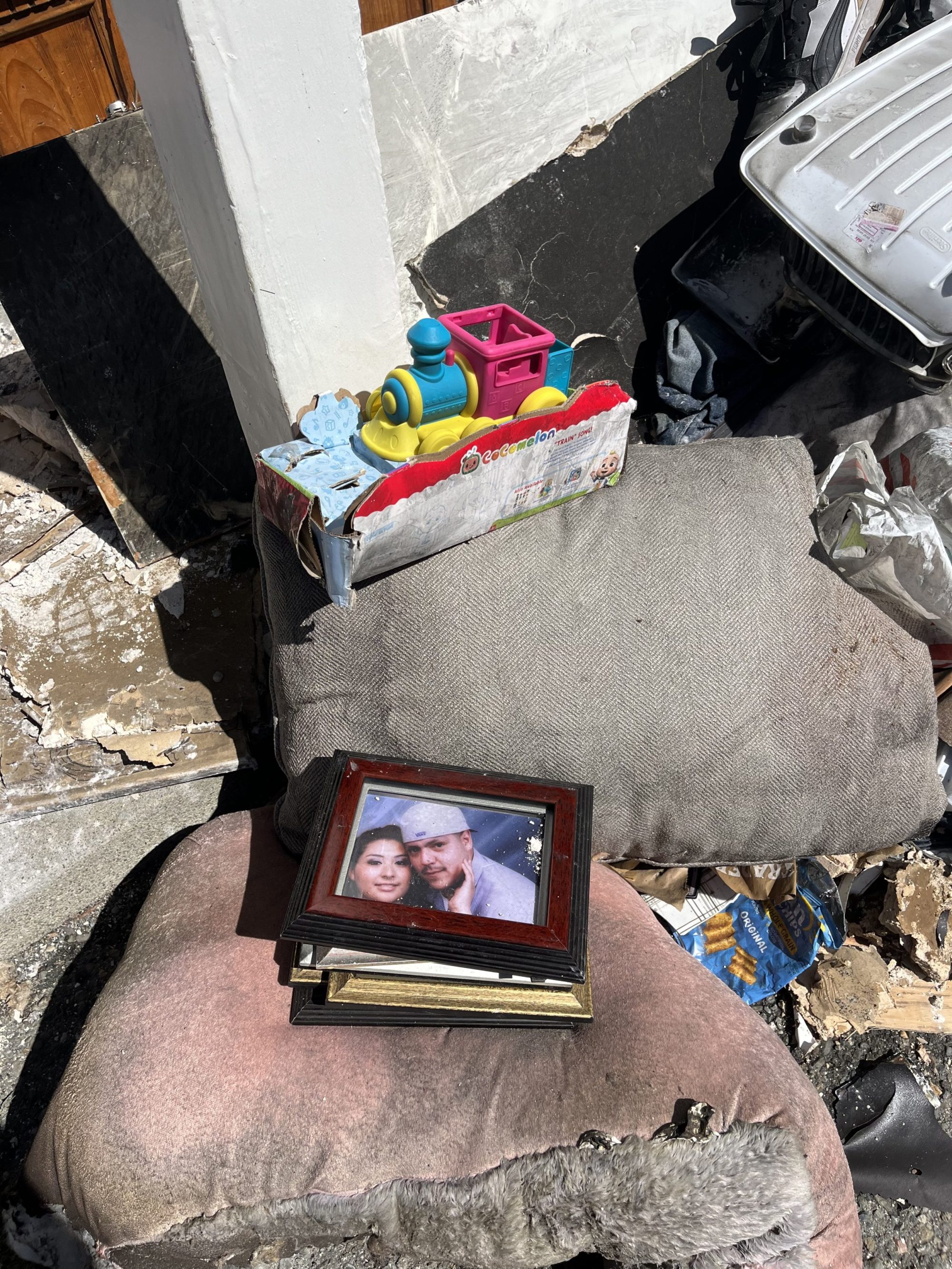 A photo of her son and toys of her granddaughter are among Raquel Sánchez’s fire-damaged belongings, dragged to the front of her apartment after the March 31 fire. Credit: Kate Darby Rauch for Berkeleyside
“Realistically, the most important thing is finding a place to sleep; we’re staying at my sister’s [in Richmond] and it’s not the same as having your own place,” said Antonio Flores through his nephew Eduardo, who was translating from Spanish.
Antonio Flores and Jesus Cárdenas, brothers-in-law, lived in different upstairs-downstairs units with family in the now gutted building.
Flores, 65, a retired custodian at Berkeley’s International House, lived in the building for about 20 years. Eduardo, 27, who works for his uncle Jesus Cárdenas’ plumbing company, also often stayed with Flores.
“My uncle has no clothes. Today we went to a store and bought a toothbrush and toothpaste,” Eduardo said.
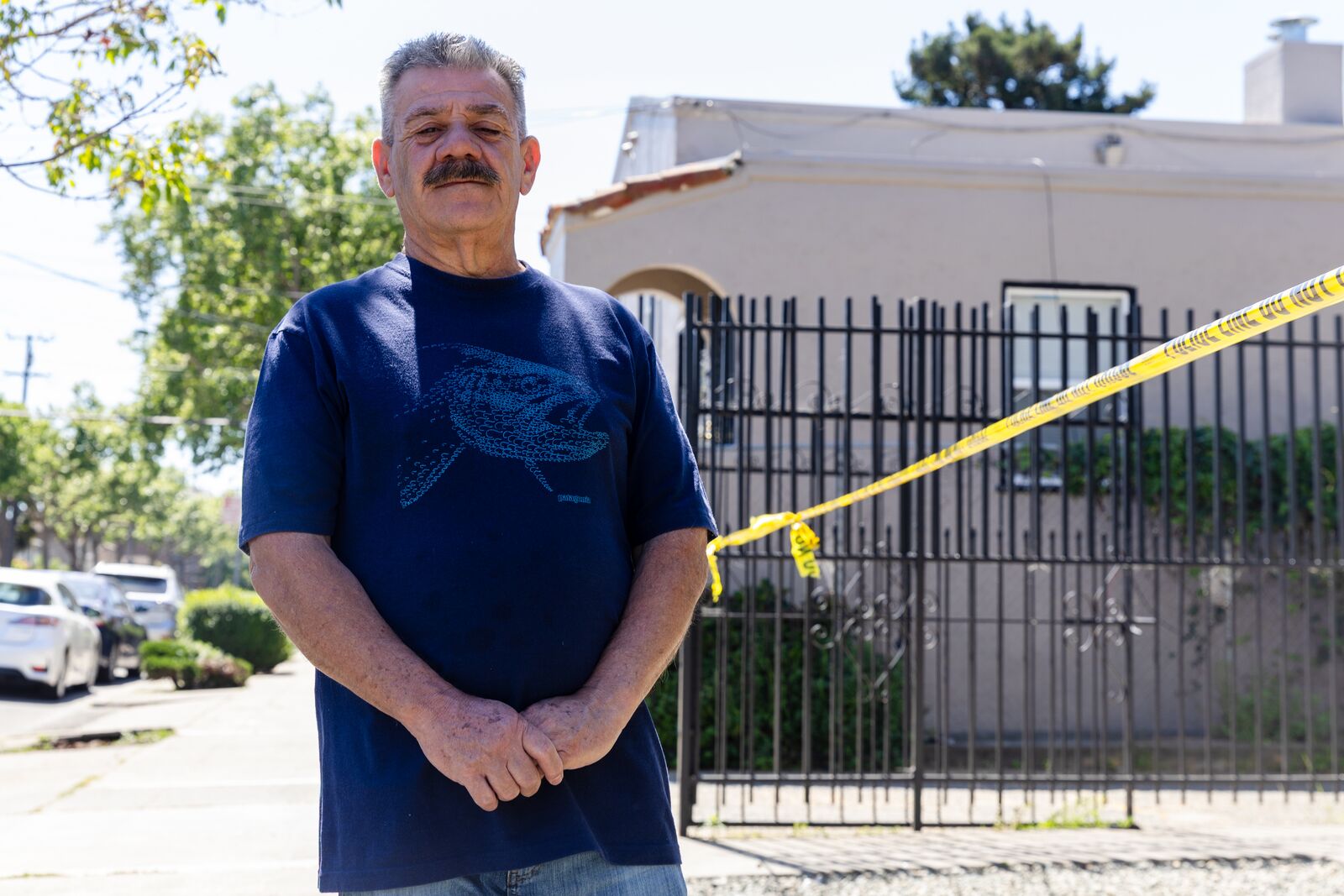 Antonio Flores, 65, outside his building. Credit: Estefany Gonzalez for Berkeleyside
Apartment manager handed out $900 checks but many residents are afraid to cash them
The property manager of the southern building has been in regular contact with tenants since the fire, several residents said.
But he’s giving conflicting information, they said.
Some said he told them the landlord would pay any rent difference between their Ninth Street rent and new lodgings for three months, then they’re on their own. Others said he didn’t put a time limit on the rent differential.
The manager also distributed $900 checks, but many residents said they were unsure what accepting the money might mean and feared it could affect their right to return. Some declined or did not cash the checks.
“He offered it to her to help move and store items, but she never accepted it,” said Osbaldo Sánchez, Raquel Sánchez’s son.
Some tenants told Berkeleyside that rent board counselors advised them not to cash the $900 checks without legal guidance and referred them to the East Bay Community Law Center. Berkeleyside has reached out to the law center, and hasn’t yet heard back.
Berkeley tenants get rent subsidy for temporary lodging, right to move back
Berkeley’s relocation ordinance governs tenant and landlord responsibilities when renters must relocate due to damage or emergencies.
Local regulations build on state law, primarily under the Tenant Protection Act.
“At a baseline, tenants have the right to a habitable unit,” said DéSeana Williams, executive director of the Berkeley Rent Board.
The board is assisting all or most displaced residents, including offering services in Spanish, she said.
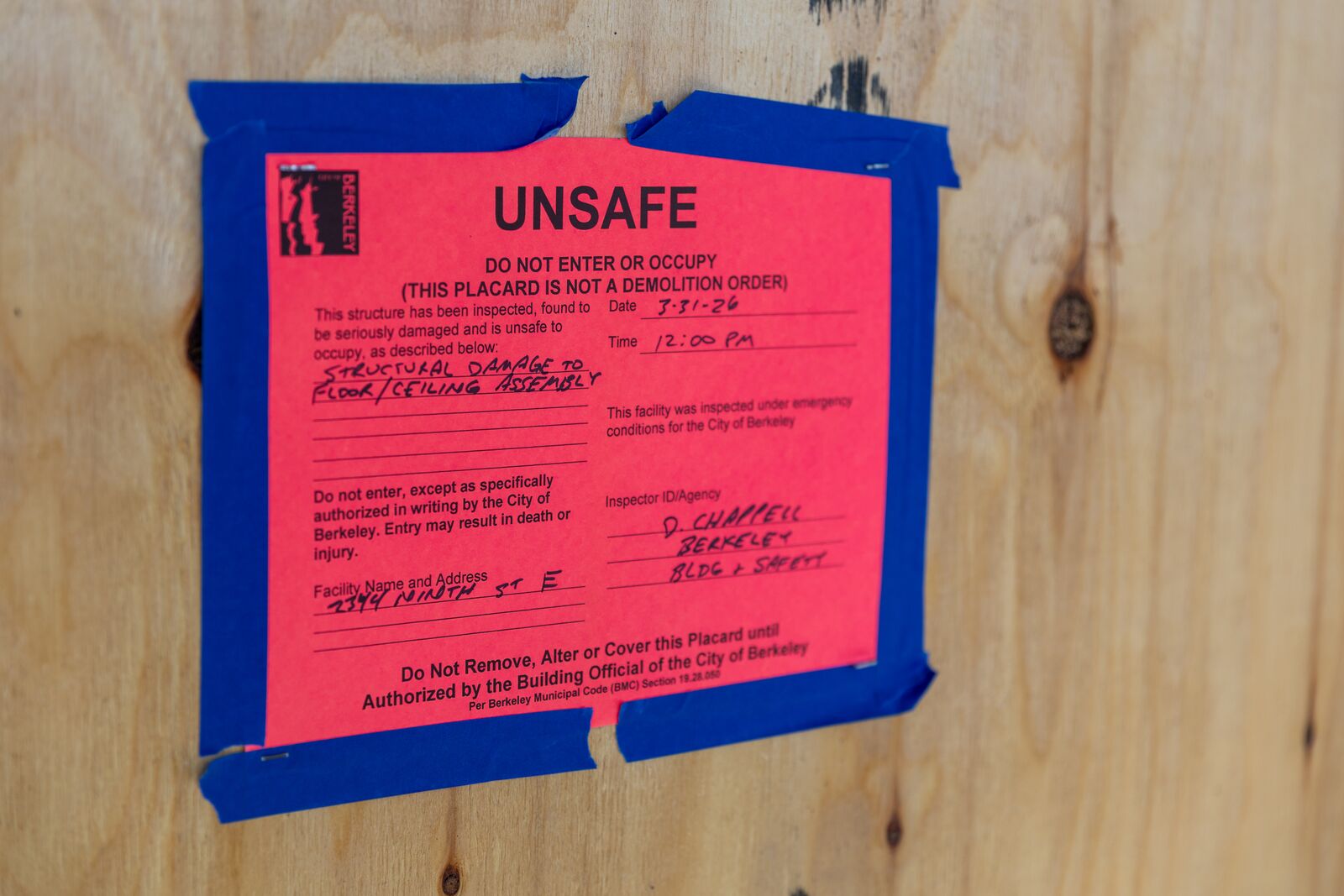 A sign declaring the property unsafe hangs outside of Cárdenas’ apartment. Credit: Estefany Gonzalez for Berkeleyside
Under the ordinance, property owners must pay the difference between a displaced tenant’s temporary rent and their original rent until the unit is habitable — with no set time limit.
Tenants also have the right to return once repairs are complete. In general, they’re continuing their tenancy under the same rent rates as before relocation. But in some situations, rent increases are possible. In most cases, landlords are responsible for relocation assistance, including moving and storage costs.
“The exact rights and responsibilities in any given case will depend on factors such as the extent of the damage, the anticipated duration of repairs and the cause of the fire,” Williams said.
If a building cannot be repaired, different rules apply, but displaced tenants are generally entitled to higher relocation assistance from landlords than if moving back.
A GoFundMe campaign organized by a neighbor had raised over $24,000 at the time of writing. The organizer declined to comment, but said in an update on the crowdfunding site that half the funds will go to residents of the most damaged units, with the rest distributed among other affected tenants.
Praying his ‘Rosa Mystica’ Virgin Mary statuette survived the fire
 Flores looks at a photo of a statuette that was saved from his apartment. Credit: Estefany Gonzalez for Berkeleyside
Finding housing is a constant worry for Antonio Flores, now staying with family in Richmond.
But another concern weighs heavily: the fate of his collection of small religious statuettes tied to his Catholic faith. Often referred to simply as “la Virgens.”
Among them is a treasured Rosa Mystica statue — a special symbolic name for the Virgin Mary — brought to California decades ago by his mother from the family’s home pueblo Tepatitlán de Morelos in Jalisco, Mexico. She has a handmade crown, Flores recalls.
“What my uncle wants most is to go inside and retrieve the statuettes,” Eduardo Flores said.
“They aren’t important to most people, but they hold a lot of memories of my grandmother.”
Eduardo added: “We would make fun of him because he had so many figures in there, it was like a church.”
Antonio Flores has some hope. He was in Mexico visiting a sick sister (with Eduardo) when the fire broke out, and firefighters told him his bedroom — where the statues were kept — may be less damaged than the rest of the apartment, which was ruined.
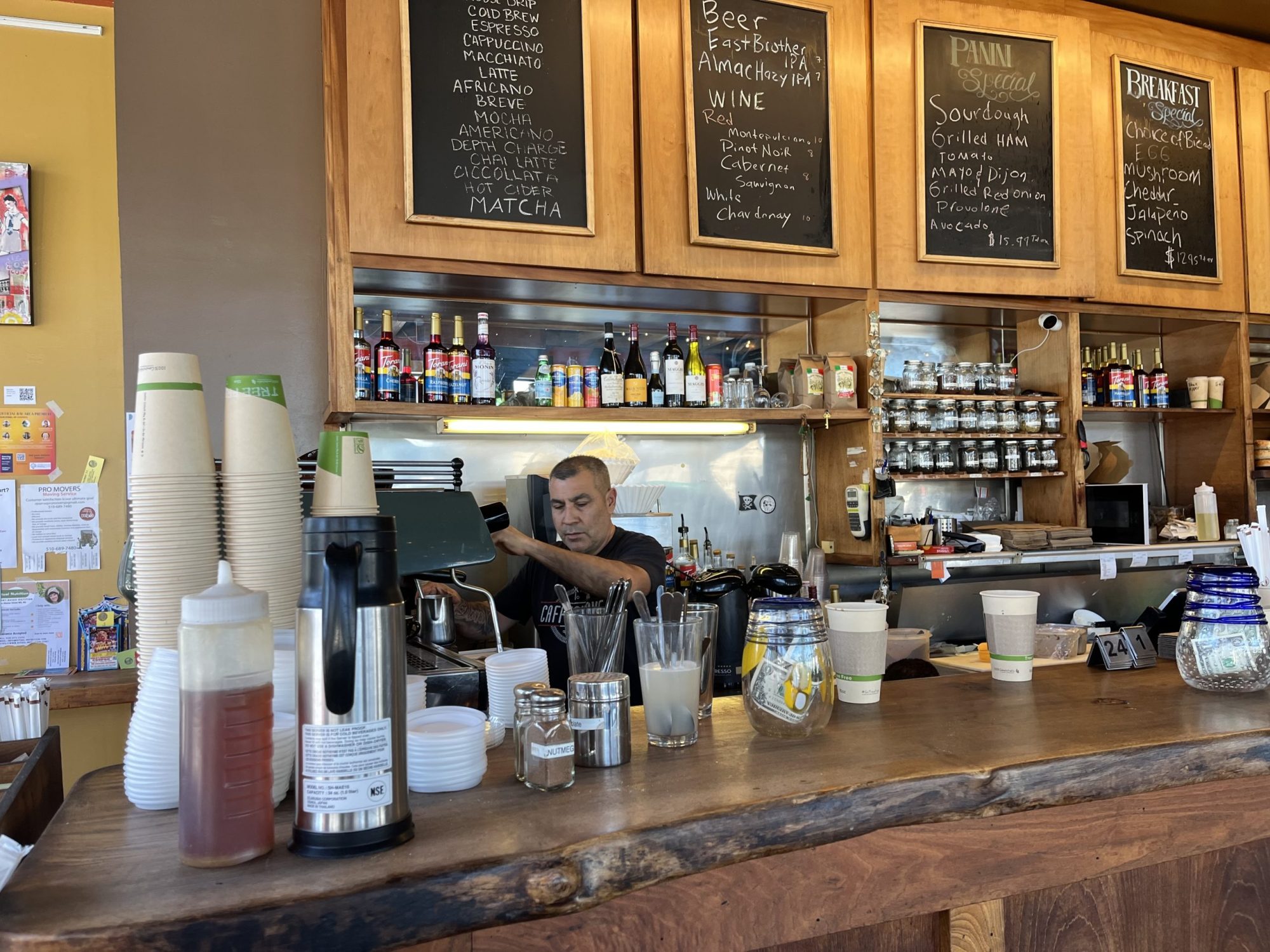 Luis Flores, back at work at Caffé Chiave days after the fire. Credit: Kate Darby Rauch for Berkeleyside
His brother, Luis Flores, who works at the nearby Caffé Chiave, was in the apartment the night of the fire. “We took some things out, our papers, a photo of my mom. It was so quick,” Luis Flores said. There was no time to go into his brother’s room.
Residents do not yet know when — or even if — they will be allowed back inside.
“We’re kind of lost because [the city says], ‘We’ll let you know in a week or two,’” Eduardo said.
They should start learning more soon from the fire department, a spokesperson said. Short visits accompanied by fire department staff are allowed now in yellow-tagged units.
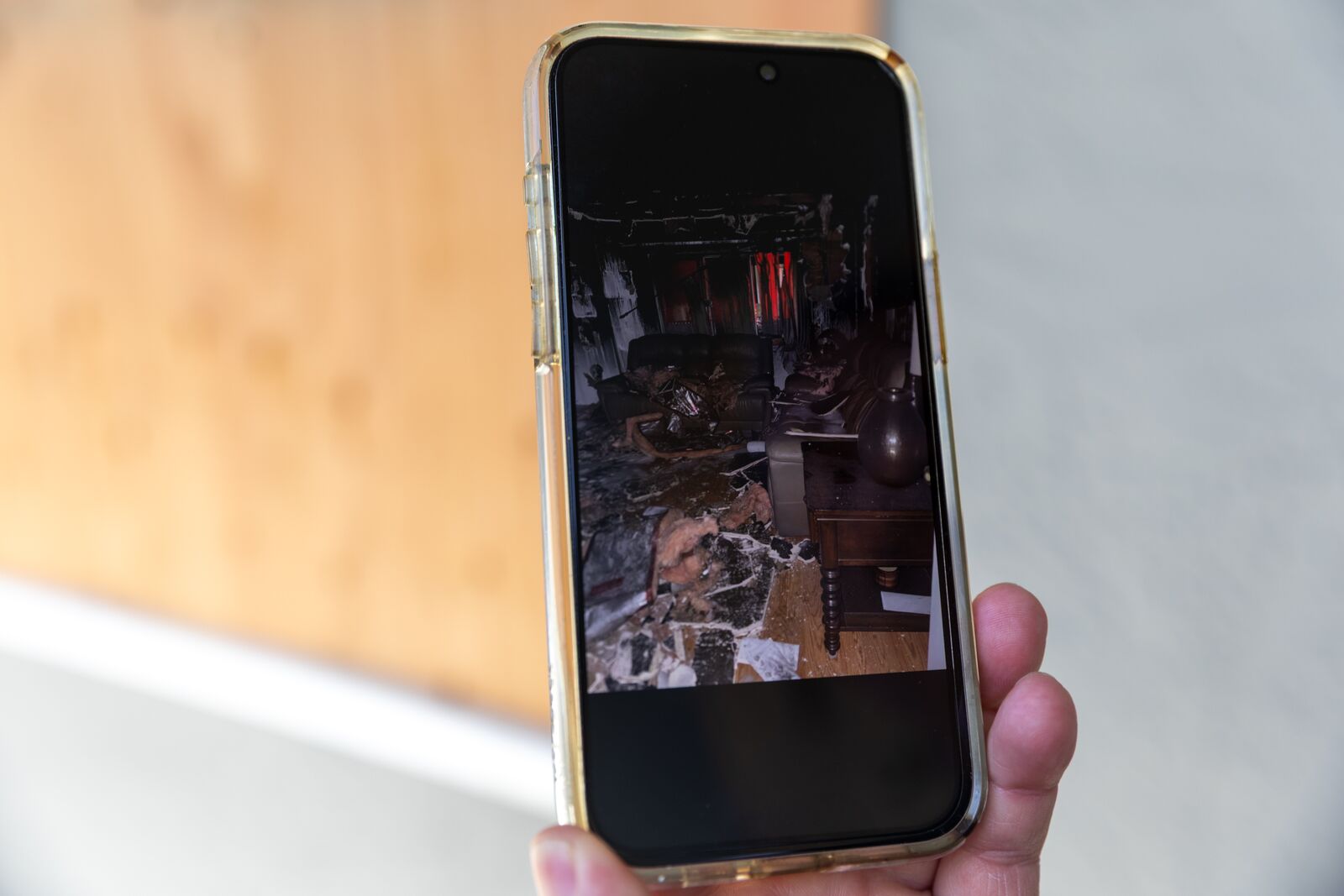 Antonio Flores looks at a photo of the fire damage in his apartment. Credit: Estefany Gonzalez for Berkeleyside
When Antonio and Eduardo Flores returned from Mexico, they rushed to the building: scorched walls, boarded-up windows, the smell of soot. Toilets and refrigerators were being removed by work crews.
They peered into their apartment as best they could.
“We saw inside, and it was kind of like a burst of reality.”
Related stories
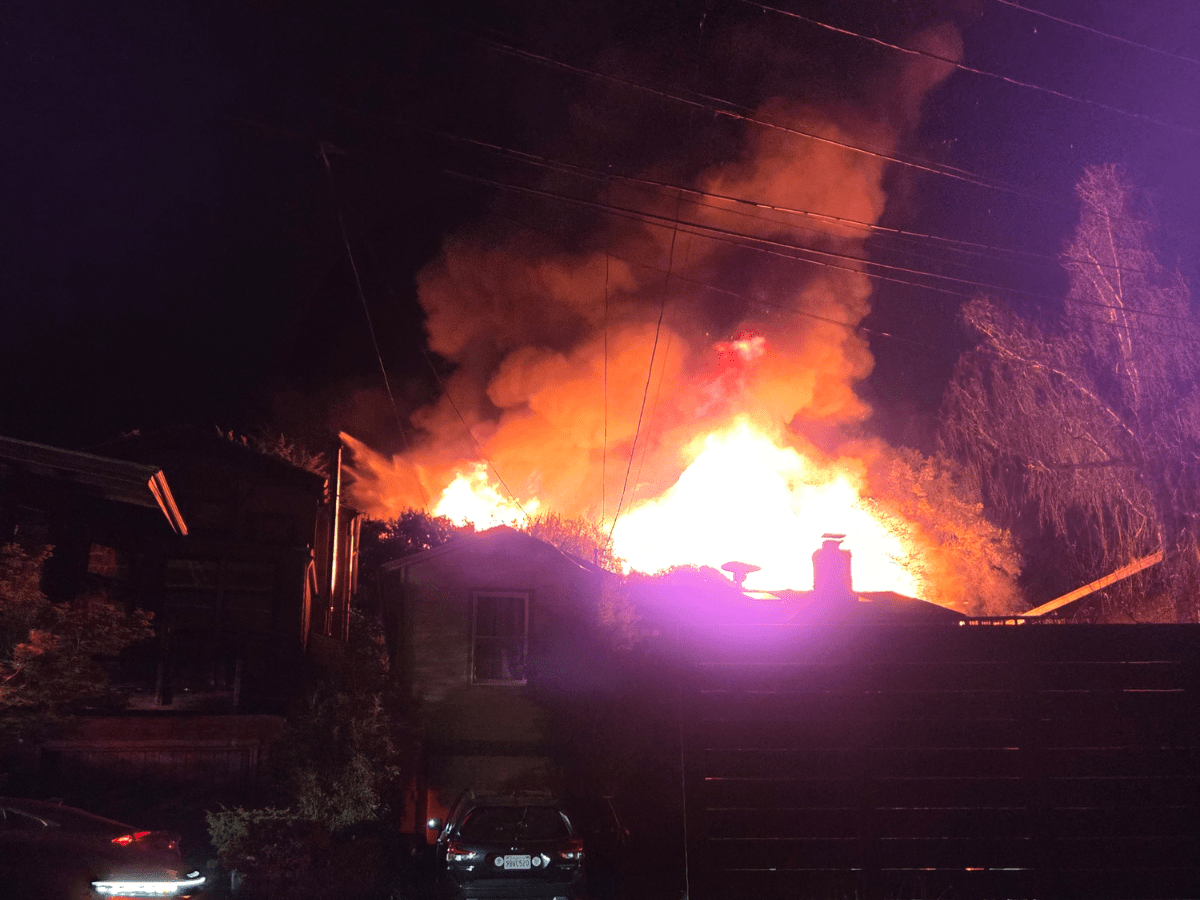
Berkeley Hills fire last month started in a wood pile outside a home
April 9, 2026April 9, 2026, 12:49 p.m.
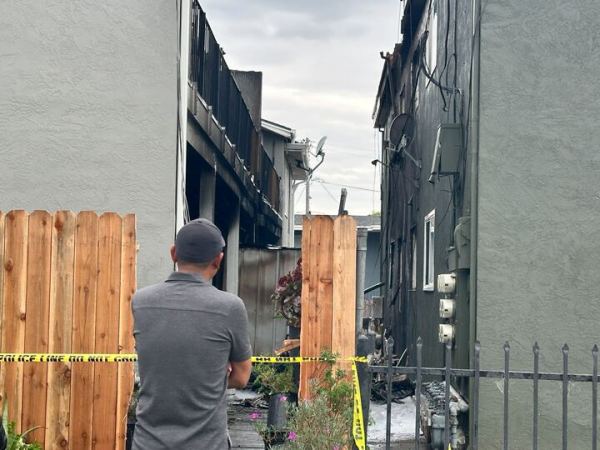
West Berkeley fire torches 2 apartment buildings, displaces 10 families
March 31, 2026March 31, 2026, 7:36 p.m.
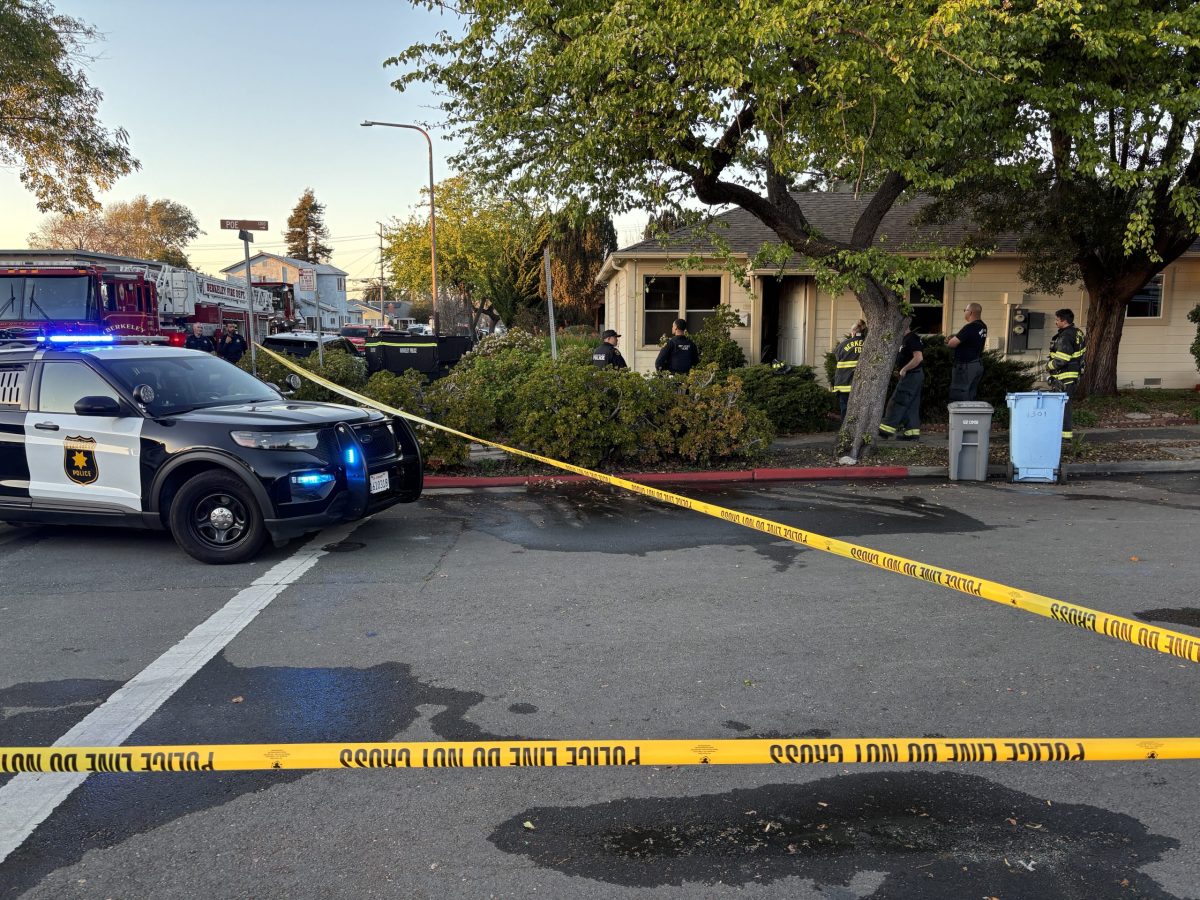
Berkeley woman killed in Poet’s Corner fire identified
February 25, 2026Feb. 25, 2026, 1:33 p.m.
“*” indicates required fields