
The creation of this content included the use of AI based on templates created, reviewed and edited by journalists in the newsroom. Read more on our AI policy here.
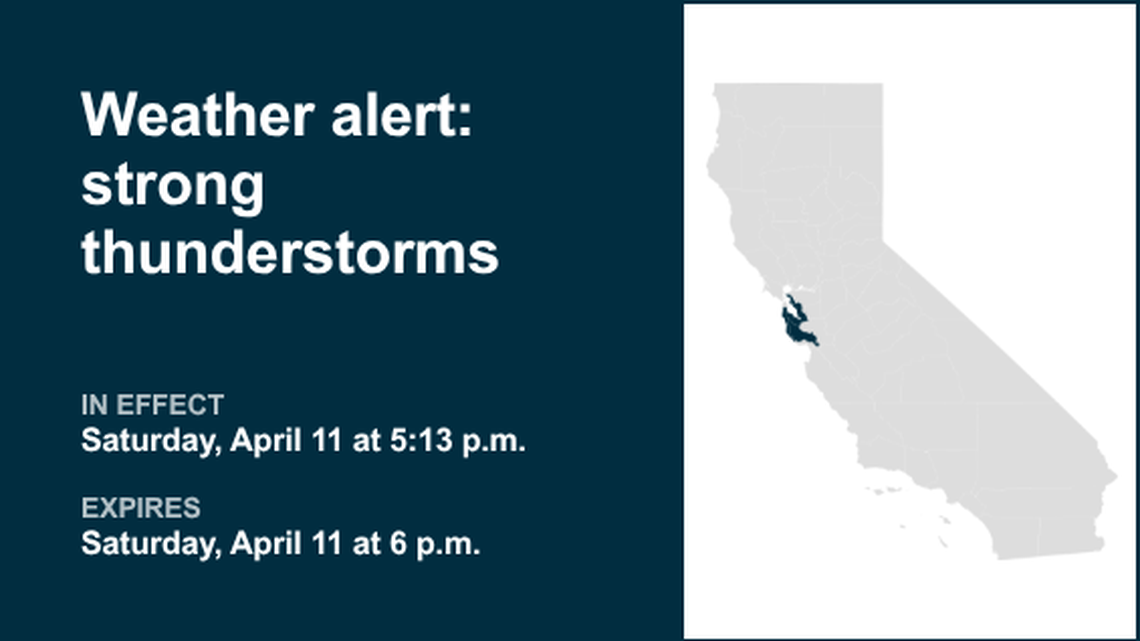
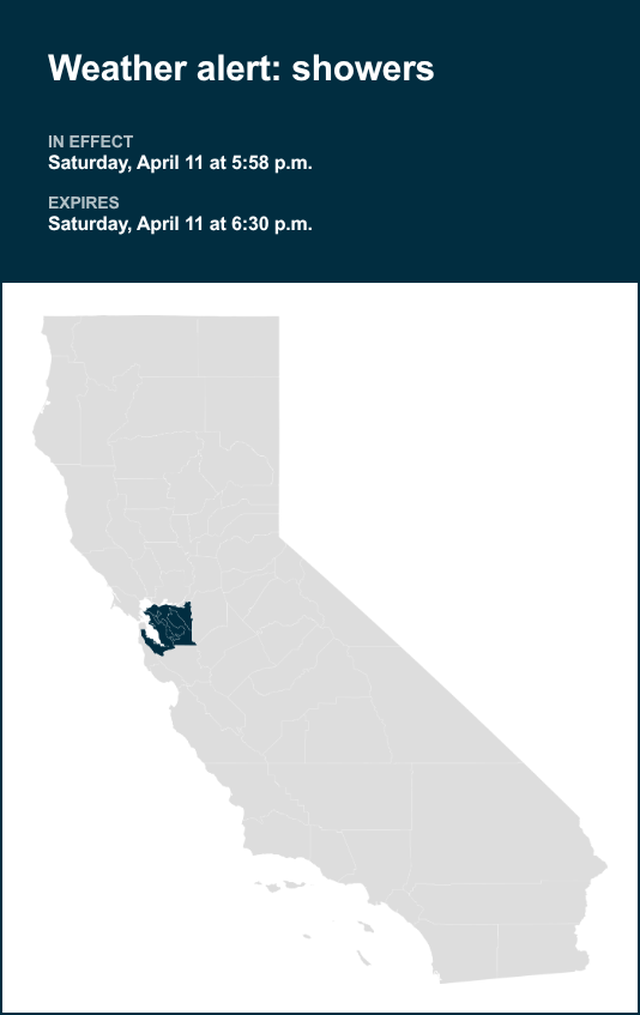
An updated report from the NWS San Francisco CA was issued on Saturday at 5:58 p.m. for showers until 6:30 p.m. The alert is for San Francisco Bay Shoreline, East Bay Interior Valleys and East Bay Hills.
Residents can be ready for wind gusts of up to 50 mph.
“At 5:58 p.m., Doppler radar tracked a line of showers and embedded thunderstorms extending from the west Delta to near Hayward, moving northeast at 50 mph,” explains the NWS. “Gusty winds could knock down tree limbs and blow around unsecured objects.”
Locations impacted by the alert include Oakland, Fremont, Hayward, Concord, Antioch, San Leandro, Livermore, San Ramon, Pleasanton, Union City, Walnut Creek, Pittsburg, Dublin, Newark, Danville, Martinez, Oakley, Pleasant Hill and Lafayette.
The NWS comments, “Monitor the weather situation closely and be alert for threatening weather conditions. Heavy rainfall may result in isolated flooding. Be sure to avoid flooded areas and regions prone to flooding.”
This alert is in effect until 6:30 p.m.
 Rainy weather driving tips Switch on headlights – Even during daylight hours, using headlights can enhance visibility and signal your presence to other drivers.On the road – Drive in the middle lanes and stay on high ground. Rainwater tends to stockpile on the edges of roads.Avoid puddles – Driving into puddles or low rainwater areas can lead to vehicles hydroplaning or losing control.Don’t tail large vehicles closely – Trucks or buses can kick up a water spray that obstructs visibility.Steer clear of flooded areas – When coming to a flooded road, turn around and head back. Flash flooding currents are strong and can sweep drivers off roadways. Driving through deep water can also affect a vehicle’s mechanical and electrical systems.
What is hydroplaning?
Hydroplaning is when a vehicle starts uncontrollably sliding on wet roads.
This happens when water in front of the tire builds up faster than the vehicle’s weight can push water out of the way. The water pressure then causes the vehicle to rise and slide on a thin layer of water between the tires and the road, making the driver lose control. The three main causes of hydroplaning are:
Vehicle speed – When a vehicle’s speed increases, the tire-traction grip and ability to control the vehicle decreases. Drive at a reduced speed during wet weather.Water depth – The deeper the water, the sooner a vehicle loses traction on the road. It doesn’t matter how deep the water is, even a thin layer can lead to hydroplaning.Tire tread depth – Checking your tire tread before hitting the road is important, as low or no tread can lead to sliding.
In the event of your vehicle hydroplaning, here’s what to know:
Ease off the accelerator – Step off the gas to slow down the vehicle until the tires find traction.Turn into the skid – Turning into the skid can help the vehicle’s tires realign to regain control.Make sure the tires reconnect with the road – During the skid, wait until the tires reconnect with the road and then gently straighten the wheels to regain control.Brake gently as needed – Brake normally if the vehicle has anti-lock brakes and pump brakes gently if in an older vehicle.
Source: The National Weather Service
United Robots California
This story was originally published April 11, 2026 at 5:18 PM.