
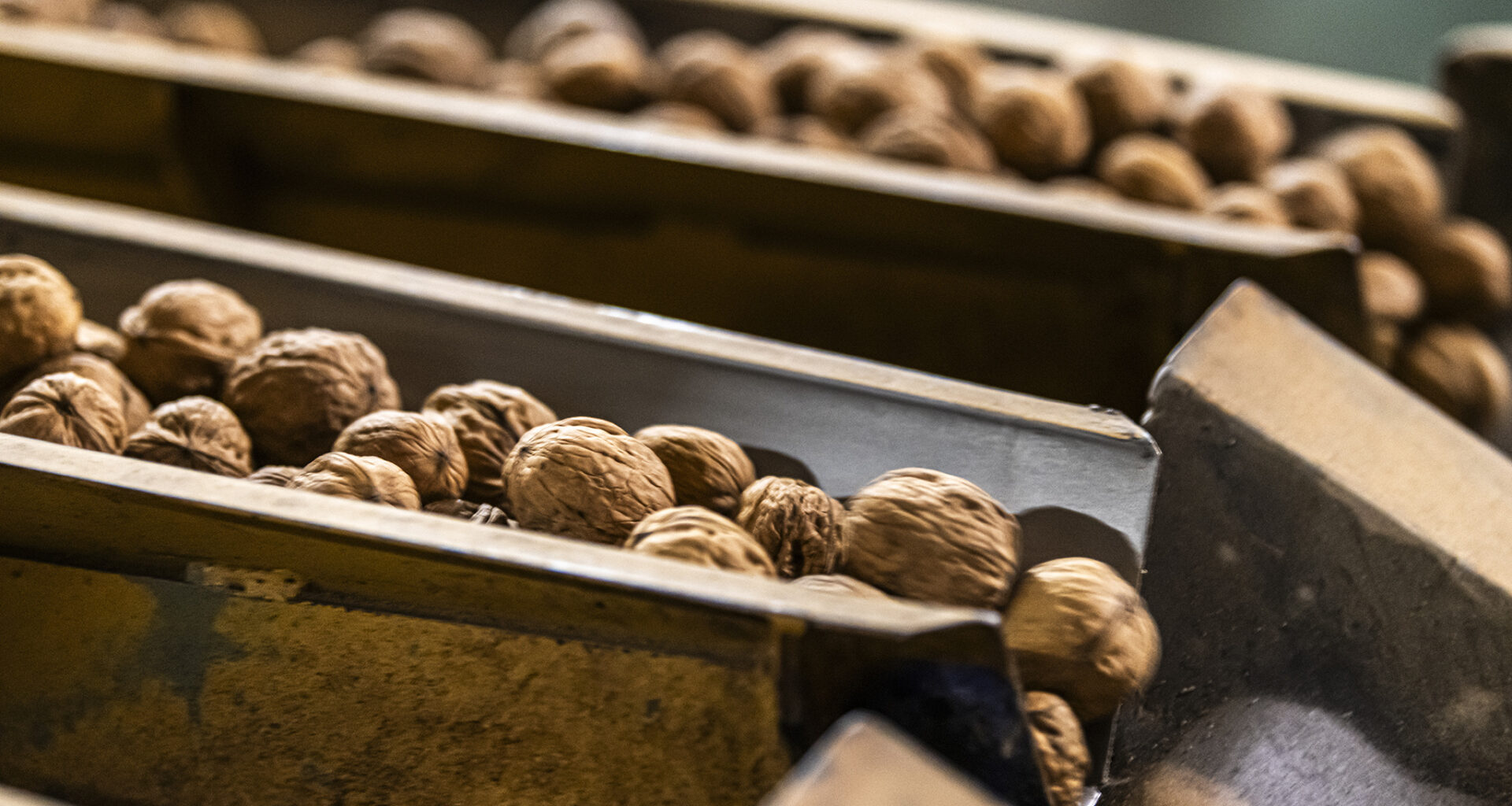
California’s walnut farmers have been hit hard by trade disruptions from President Donald Trump’s war in Iran, with orchard growers losing out on millions of dollars’ worth of orders and leaving some walnut shipments still lost at unknown ports.
California is the second largest global producer of walnuts, and the Middle East is one of the state’s major export areas. This year’s crop was already being shipped internationally when Iran shut down the Strait of Hormuz on Feb. 28, immediately blocking ports that were already set to receive California walnuts.
Robert Verloop, the executive director of the California Walnut Commission, said that blockade set off a chain reaction, in which hundreds of shipping containers filled with California walnuts were scattered at various ports around the world when the freight traffic in the strait stopped.
“We’ve had scenarios where boats have stopped in Singapore, China, India, even the Panama Canal and just take the containers off of it because they know they’re not going to make it to their final destination,” Verloop said. “That’s one reason it’s hard to track where they are, because it could be literally anywhere in the world.”
The severe disruption of trade has also left California growers with over 100 canceled orders since the start of the war, which Verloop estimated were worth at least $12 million.
The impact on the state’s walnut industry is just one of the many economic pain points that Americans are feeling following Trump’s decision to join Israel in bombing Iran. Consumers are facing surging inflation, higher rates for car and home loans and skyrocketing gas prices.
California’s farmers have been hit particularly hard, as the diesel they rely on has hit record highs in California, with an average price over $7.70 per gallon last week, according to AAA. The war has also sent fertilizer prices to record highs. Though, one group of California farmers may see some benefits from the war: The state’s booming pistachio industry is seeing higher prices because the bombing has derailed pistachio growing in Iran.
However, walnut growers will keep getting squeezed from both sides with higher costs, fewer sales and, in some cases, literally missing walnuts.
“The great unknown is, ‘Where are my walnuts and where can I take them?’” Verloop said. “Some markets are going to be saturated because they’ve received more walnuts than they should have received.”