
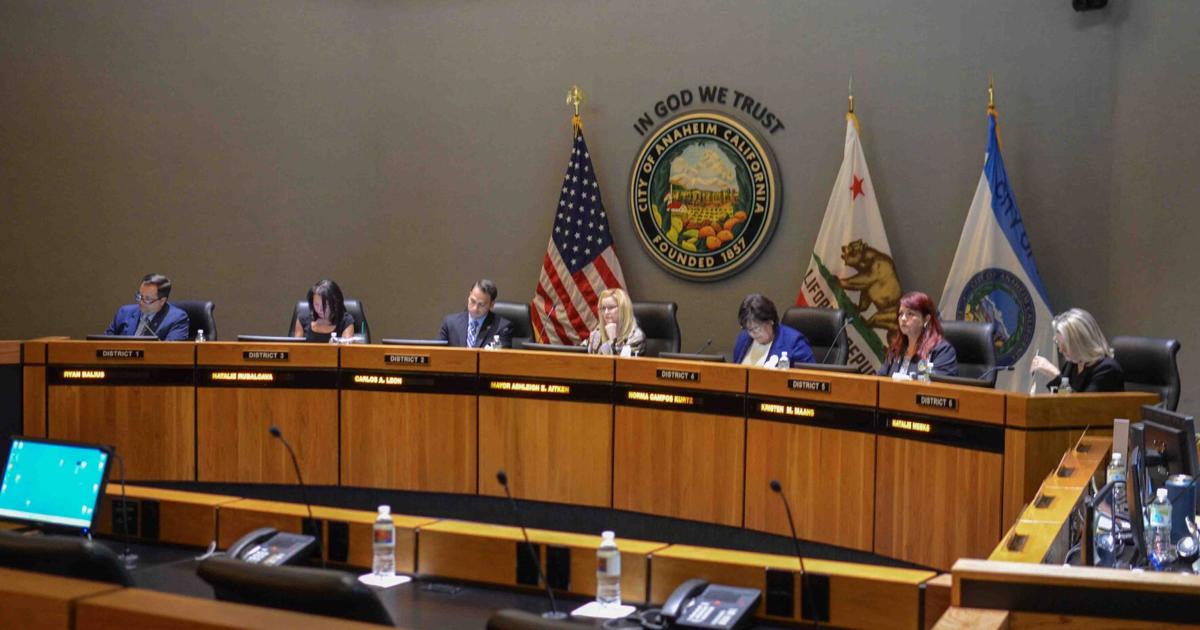
The Anaheim City Council voted unanimously to update the Anaheim Transit Master Plan Tuesday night for the first time since 2007. The proposed plan aims to implement new infrastructure and technology surrounding public transit in the city.
After receiving a Sustainable Transportation Planning Grant from the California Department of Transportation in 2024, Anaheim’s public works departmenthas since constructed a “vision document” for long-range planning. The presentation shown at the April 7 meeting detailed more immediate goals for electronic bus signs, real-time bus departure information, bus-only lanes and far stops.
For long-term development, the department proposed capital infrastructure, such as the east/west transit connector between the Anaheim Regional Transportation Intermodal Center and the Resort/Convention Center, a project that has been continuously brought to the council. This would connect, via public transit, the ARTIC and future development to the Anaheim Resort.
Other recommendations include published timetables with routes of public transit, along with a digital application for accessibility to such, implementing bus-only lanes and queue jumping along major streets to increase bus efficiency.
Joseph Alcock, the principal transportation planner for the city of Anaheim, identified the eight most frequently used Orange County Transportation Authority bus routes, suggesting more frequent service. The document aims for buses to arrive every 15 minutes, seven days a week.
Councilmember Natalie Rubalcava said the less frequent service is noticeable on weekends, endorsing the upgrade in transit frequency.
“Oftentimes I see my residents on Saturday and Sunday waiting for buses that come every hour instead of every 15 minutes as they usually run,” Rubalcava said.
The plan also aims to increase Metrolink service frequency on routes during off-peak hours in Anaheim, specifically looking to benefit the area surrounding popular entertainment centers.
“(We are) working with Metrolink to advocate for more off-peak service to serve the Anaheim area,” Alcock said. “So that people that work non-traditional commuter schedules and those looking to partake in the entertainment venues at the Honda Center would be able to do so through transit.”
The upgrades, especially those featuring additions to bus stops, were originally focused primarily on the resort district to prioritize transit near tourist-heavy areas. Beginning with OCTA-funded pilot projects for the busiest 100 stops, the staff is currently studying funding options to update other areas of the city.
Short-term improvements like bus-only lanes and queue jumping could be prioritized to be completed before the Los Angeles 2028 Summer Olympics, if funding is provided through the event’s committee.
In an effort to receive technical and public feedback to guide additions to ATMP, the Community Working Group solicited feedback from civic organizations and neighborhood groups. The Technical Working Group, which includes key transit stakeholders like OCTA and Caltrans, held technical meetings to solicit transit stakeholders.
A public survey with 182 responses, not representative of any major group, largely echoed the same comments made by both — the call for more accessible transit to connect major activity and employment areas.
ATMP’s vision document was predominantly constructed before Anaheim Transportation Network ceased transit services on March 31, 2026. However, this does not dramatically impact the proposed upgrades.
The next phase of ATMP is to complete the technical analysis phase, then transition into “Stakeholder and Public Engagement.” This is where stakeholder meetings, advisory councils and public workshops will be held to determine the most effective financial strategy and implementation.