
Moneywise and Yahoo Finance LLC may earn commission or revenue through links in the content below.
Keeping up with home maintenance like trimming trees, cleaning out gutters or fixing loose steps is often seen as part of being a responsible homeowner. But in some cities, routine upkeep can come with unexpected costs.
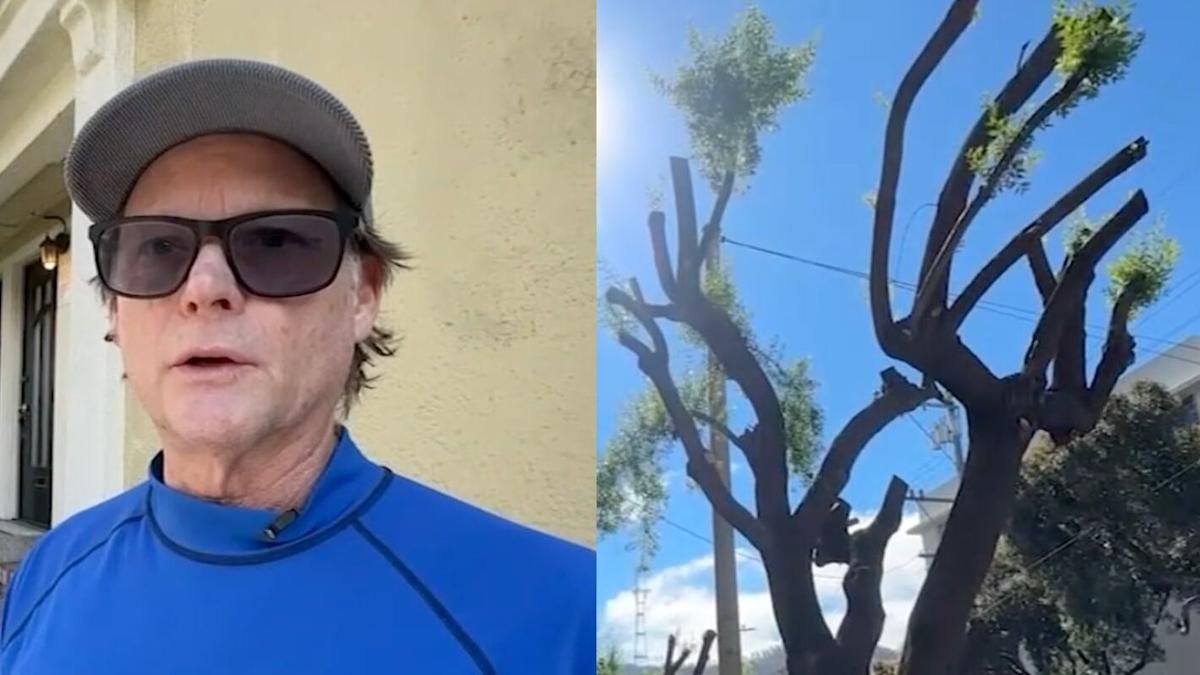
Paul Dennes, whose family has owned their Panhandle home in San Francisco for more than three decades, was trying to secure insurance coverage. In an email from his broker, Dennes was told he would need to trim the trees near his home to qualify.
Dennes took matters into his own hands, cutting back five trees outside his unit, including branches he said were brushing against the building and nearby power lines.
“I wanted to get them out of the power lines. I didn’t want to be responsible for that,” Dennes told ABC7’s 7 On Your Side (1).
But instead of fixing the issue, Dennes was hit with the first of several fines just two days before Christmas — fines from San Francisco Public Works that would eventually total $50,000 for illegal tree pruning.
City officials said the trees were located within a public right-of-way, placing them under the department’s jurisdiction. The agency initially proposed fines of $10,000 per tree, arguing the damage was significant enough that the trees would need to be removed entirely.
Under the StreetTreeSF program (2), which was approved by voters in 2017, the City and County of San Francisco assumed responsibility for maintaining more than 125,000 public street trees. While tree rules vary by location (3), unauthorized pruning typically involves cutting or trimming a tree without permission or in a way that violates local regulations.
In Dennes’ case, inspectors said the trees had been “topped,” meaning large branches were cut back to stubs, damaging the canopy and shortening the tree’s lifespan.
“As stewards of San Francisco’s urban forest, it is our job to hold people accountable when they harm or damage a street tree,” Public Works told ABC7 (1).
That level of oversight reflects the value cities place on their urban forests. A large-scale study of California’s street trees found their collective asset is worth about $2.5 billion (4) and generates roughly $1 billion in annual benefits, including energy savings and improved air quality. For every $1 spent on maintenance, cities see nearly $6 in return.
Story Continues
Christopher Campbell, a certified arborist and owner of CC Tree Design, said fines like these can come as a surprise.
“I know that the fines have been going up. $10,000 a tree seems like a lot of money,” he told the news outlet.
Campbell added that penalties at that level can feel excessive, and said confusion around tree ownership and maintenance is common, with many homeowners only realizing the rules after facing consequences.
Fines for unauthorized tree work aren’t unusual in U.S. cities, but the scale and intent can vary. In Washington state, King County is suing homeowners and real estate agents accused of removing more than 140 trees on protected public land to improve their views (5).
According to the complaint, dozens of trees were cut, topped or stripped — in some cases by contractors without permits. Officials say the work posed safety risks and are seeking more than $2.3 million in damages, noting the forest could take generations to recover.
That’s why it’s important to remember that trees near residential properties aren’t always privately owned, even if they appear to be. Cities treat them as regulated public assets with strict rules on how they can be altered.
Dennes’ situation, however, appears less clear-cut. He said he trimmed the trees to meet insurance requirements, not to change the landscape.
“It feels like bullying,” he said.
The situation faced by Dennes and his family shows how important it is to find an insurance company that understands your needs. With Insurify, you can shop around for a better provider using their easy comparison platform.
If you’re experiencing issues with your insurer, you can feel confident in the companies recommended by Insurify. Insurify allows you to instantly view quotes from top-rated providers to ensure you aren’t paying a hidden “loyalty tax” to your current insurer.
Just answer a few basic questions, and Insurify will show you the most affordable deals in as little as 3 minutes.
Not only is the process 100% free, but you could also save up to 15% by bundling your car and home insurance.
If you’re uncertain about who’s responsible for the trees around your home, officials say tree rules are available online, including a street tree map, as well as through outreach like mailers and notices.
Dennes said he was never aware of them, particularly as the home’s primary owner at the time was his 94-year-old father. As it stands, Public Works has reduced the penalty to $6,475, as long as Dennes follows through with a city-approved pruning plan with a certified arborist.
And if you ever find yourself in a similar situation, the safest move is to assume the tree isn’t yours to touch until you’ve confirmed otherwise. Even if it sits right outside your home, many cities treat street trees as public property, meaning any pruning or removal typically requires approval or a permit. Taking a few minutes to check with your municipality or submit a request can save you from costly fines and unintended damage.
Finally, it is a safety concern if a tree’s branches are interfering with power lines, so it’s best to contact your local utility provider or city services rather than handling it yourself. Most municipalities also offer online tools to help confirm ownership and responsibility before any work is done.
Join 250,000+ readers and get Moneywise’s best stories and exclusive interviews first — clear insights curated and delivered weekly. Subscribe now.
— With files from Victoria Vesovski
We rely only on vetted sources and credible third-party reporting. For details, see our editorial ethics and guidelines.
ABC7 (1); San Francisco Public Works (2), (3); Elsevier (4); Fox13 (5)
This article provides information only and should not be construed as advice. It is provided without warranty of any kind.