
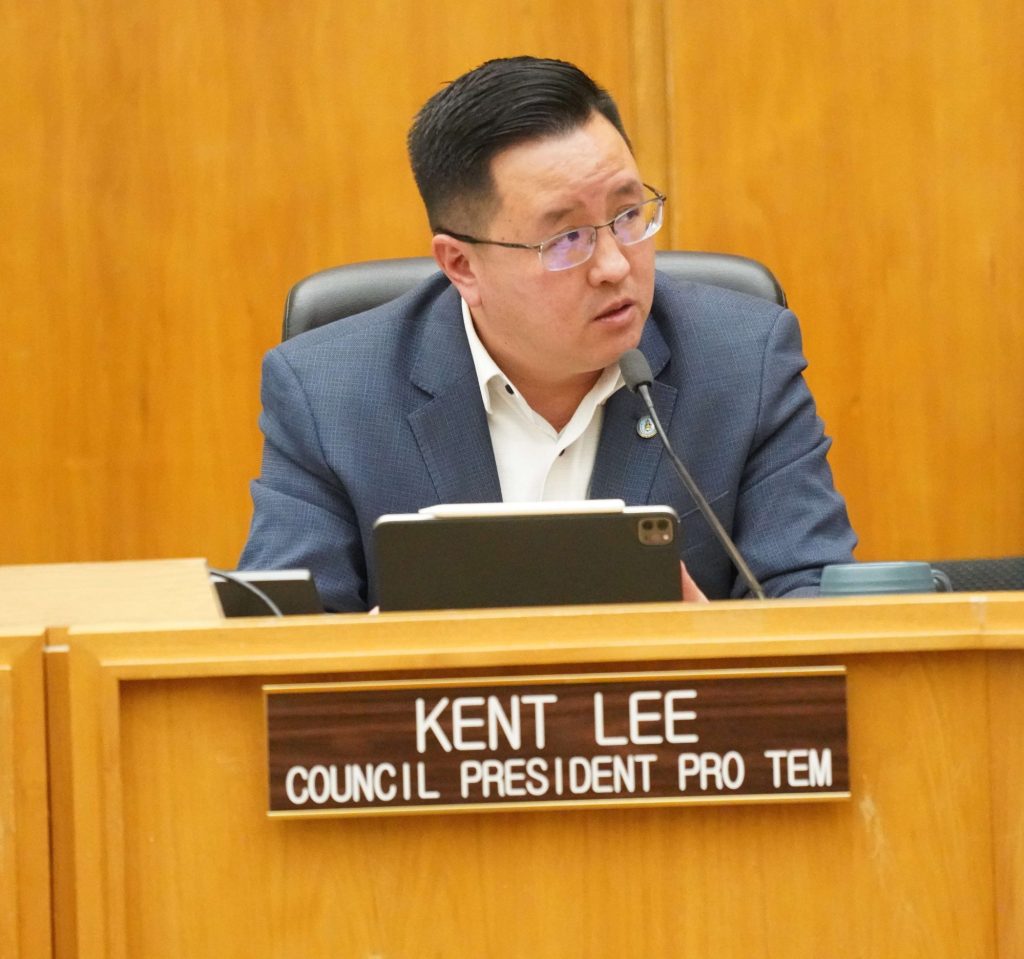
1. What is your view of how elected leaders won approval of first-ever trash collection fees on more than 200,000 single-family homeowners?
Following voter approval of Measure B in 2022, my colleagues and I recognized that the status quo was not sustainable or equitable. For more than a century, general fund dollars — paid by all taxpayers — subsidized trash collection for single-family homes, while many other residents paid additional fees for their own private services. At the same time, service quality was declining, including missed trash pickups, while new state-mandated composting increased costs — reinforcing the need for a more sustainable funding model.
As the city considered this year’s budget, we faced a significant structural deficit and the risk of deep cuts to core services like police, fire, libraries, and parks without new revenue. In that context, the decision was not just about equity — it was about fiscal sustainability and protecting essential services.
Where the city fell short — and where we must do better — is transparency. As estimated costs increased significantly beyond initial expectations, residents deserved a clearer explanation of why. Major decisions like this require not only sound policy, but also trust — which depends on consistent, honest communication with the public.
2. What is your view of the imposition of parking fees at Balboa Park and do you think the mayor and council did enough to control costs before taking this step?
The council’s priority was always to ask visitors to contribute to maintaining one of our region’s most significant public assets while minimizing impacts on residents.
While I stand by that principle, the city failed in implementation. The rollout lacked clarity, consistency and adequate communication — undermining trust and creating confusion for residents, visitors and institutions alike. That failure is separate from the policy itself and reflects a broader need for stronger execution and accountability.
A key issue was that the administration’s assumptions around revenue and implementation proved flawed, limiting the council’s ability to align policy goals with operational realities while balancing fiscal tradeoffs.
This is why I have proposed re-establishing a chief operating officer to oversee city operations. We need leadership focused on execution, coordination and accountability — ensuring that policies adopted by the council are implemented effectively and transparently.
Ultimately, we did not get this right, and we must do better.
3. Voters gave landslide approval in 2006 to a “managed competition” process in which some city services can be outsourced and strongly supported pension reforms for most city workers in 2012, but elected leaders have pursued neither policy in recent years. Would you?
City services should be delivered as effectively and efficiently as possible — whether through city employees or strategic partnerships. In many cases, city workers bring valuable institutional knowledge and deliver the same work for less, when services aren’t driven by profit.
We have seen success using outside contracts to supplement city capacity — such as in development plan checks and streetlight repairs — helping reduce backlogs and improve service delivery. Moving forward, we should continue taking a pragmatic approach leveraging both internal expertise and external support where appropriate.
On pension reform, the 2012 effort to reform pensions was ultimately overturned by the courts, resulting in significant costs to re-implement the system over a decade later. Compensation remains a key issue in recruitment and retention, particularly as public sector wages and benefits differ significantly from the private sector. Building and retaining a high-performing workforce requires a balanced approach to compensation, benefits and operational flexibility.
4. What is the single issue you feel deserves more attention?
San Diego faces a series of structural challenges — from housing affordability to infrastructure backlogs to a growing budget deficit. Across all of these issues, the single most important priority is restoring public trust through transparency, accountability, and thoughtful decision-making.
Residents deserve to understand how decisions are made, how their dollars are spent, and what outcomes they can expect. That means strengthening oversight, improving transparency in the budget process, and ensuring accountability across departments.
In my time on the council, I have focused on asking tough questions, pushing for clearer answers, and advancing solutions that are both fiscally responsible and grounded in real-world implementation.
San Diego’s challenges are complex, but with thoughtful leadership and a commitment to accountability, we can make meaningful progress.
Go to www.kentleeforsd.com for more information on the candidate.