
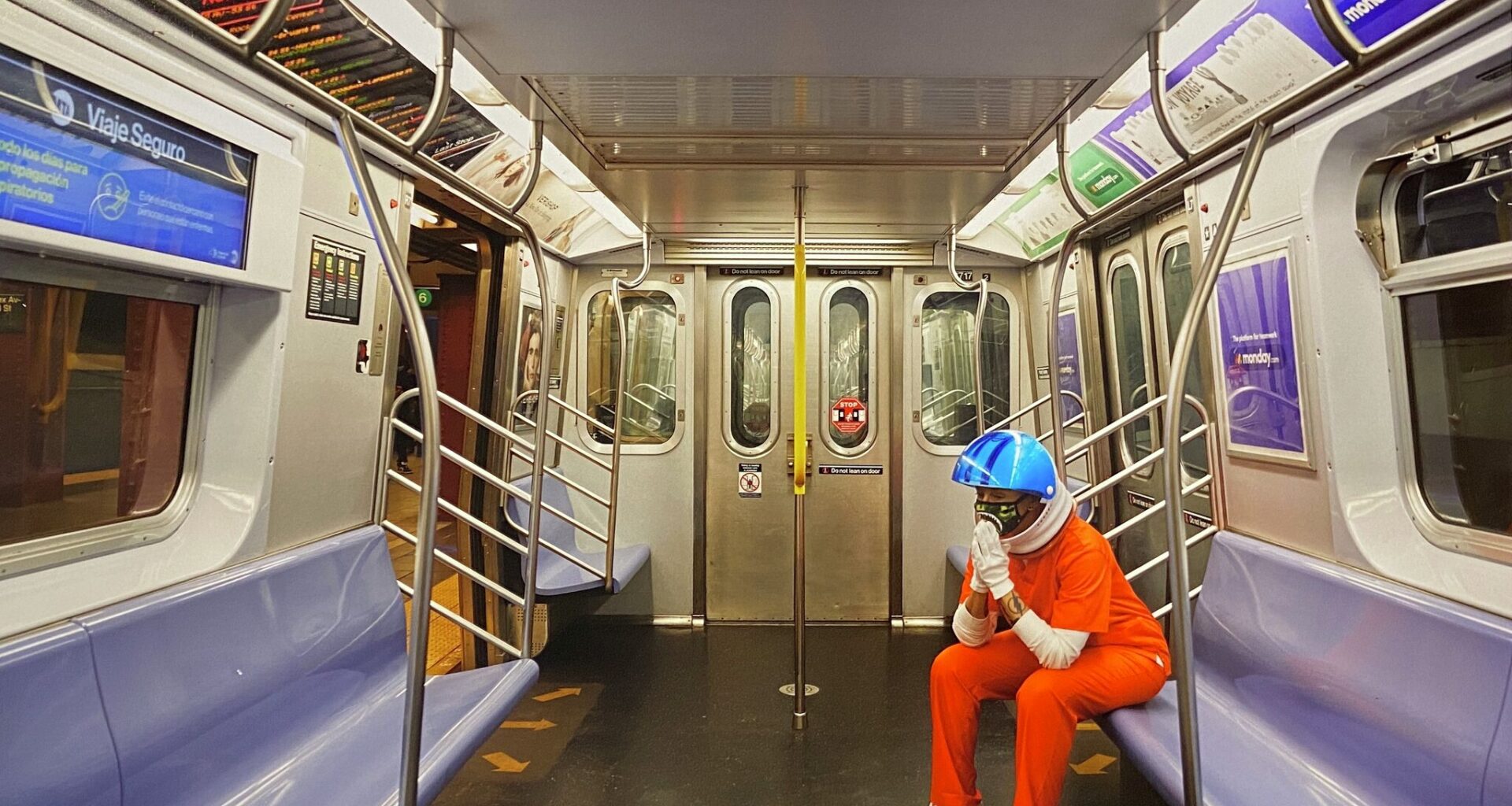
New York photographer Lola Flash has created images that show the intersections of politics and identity, history and activism for more than four decades. Now Jenkins Johnson Gallery is celebrating that body of work with “Lola Flash: Believable,” an exhibition at its Minnesota Street Project gallery.
The show, which comes to the Bay Area after presenting the work at Jenkins Johnson’s New York space last year, brings together work spanning her career, offering local audiences a survey of her evolving engagement with identity, activism and image-making.
In the 1980s and ’90s, Flash used inverted colors in her “Cross Colour” series as part of work documenting the culture around the HIV/AIDS activist organization ACTUP. This show includes works from that series such as “N is for Native American, Provincetown, Mass” (1993) and “Cowgirl” (1994), showcasing the technique, which both heightens the figure and yet obscures much of the subject’s identity and race in the process (dark skin becomes light and light skin becomes dark).
“I’ve always been pushing against those societal structures through my work,” Flash told the Chronicle.
In “Unsung Fire Island,” Flash depicts Black and brown residents and visitors of the New York queer enclave Fire Island, exploring how even in so-called LGBTQ communities, people of color still experience racism.
Also on view is work from “[Sur]passing,” a series that explores the idea of a “pigmentocracy,” “the notion of how lighter and darker skin in people of color have historically produced a hierarchy within which people are treated differently even within the larger schemes of racism,” Flash explained.
Flash’s latest series, “syzygy,” utilizes an Afrofuturist alterego named syzygy, described in the artist statement as a figure “who wanders visually disparate landscapes united by historical complications with the transatlantic slave trade, colonialism, and mass incarceration.”
“I saw the word ‘syzygy,’ which means the alignment of three planets, and I thought about the past, the present and the future being those planets,” said Flash.
It’s a perfect comparison for a show that covers the artist’s own different eras.