
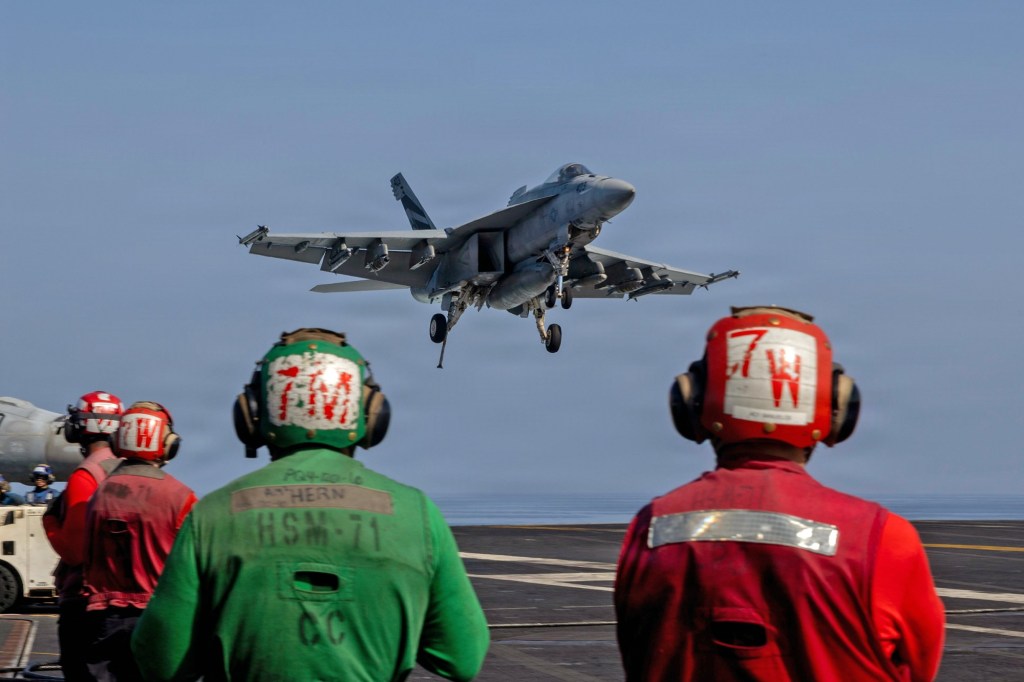
Three San Diego-based warships under the direction of the U.S. Central Command are helping enforce a naval blockade in the Strait of Hormuz, a number that could double later this month when the USS Boxer Amphibious Ready Group arrives in the Middle East.
Centcom says it instituted the blockade on Monday to prevent all vessels from entering or leaving Iranian ports, a move meant to stifle Iran’s movement of oil.
The blockade heavily involves the San Diego aircraft carrier USS Abraham Lincoln and its strike group, which includes the San Diego destroyer USS Spruance, one of the first ships to launch missiles at Iran when the war began on Feb. 28.
A third San Diego ship, the destroyer USS Pinkney, also is in the region, following orders from Centcom, which often takes temporary control of warships to serve U.S. interests in the Middle East, North Africa and Central-South Asia.
The Boxer ready group involves the amphibious assault ship USS Boxer and two transport ships, the USS Portland and the USS Comstock. The ships, which left San Diego in mid-March, are carrying some 2,200 Marines from the 11th Marine Expeditionary Unit at Camp Pendleton.
The Marines said Tuesday that 11th MEU forces were spending part of the day conducting chemical, biological, radiological and nuclear training at sea.
President Donald Trump dispatched the Boxer group to the Middle East because it is able to rapidly place Marines ashore if a ground war erupts.
The San Diego aircraft carrier USS Theodore Roosevelt is in the background, training west of San Diego for possible assignment to the Middle East, the Navy says. The amphibious assault ship USS Essex, which operates out of Naval Base San Diego, is doing the same.