
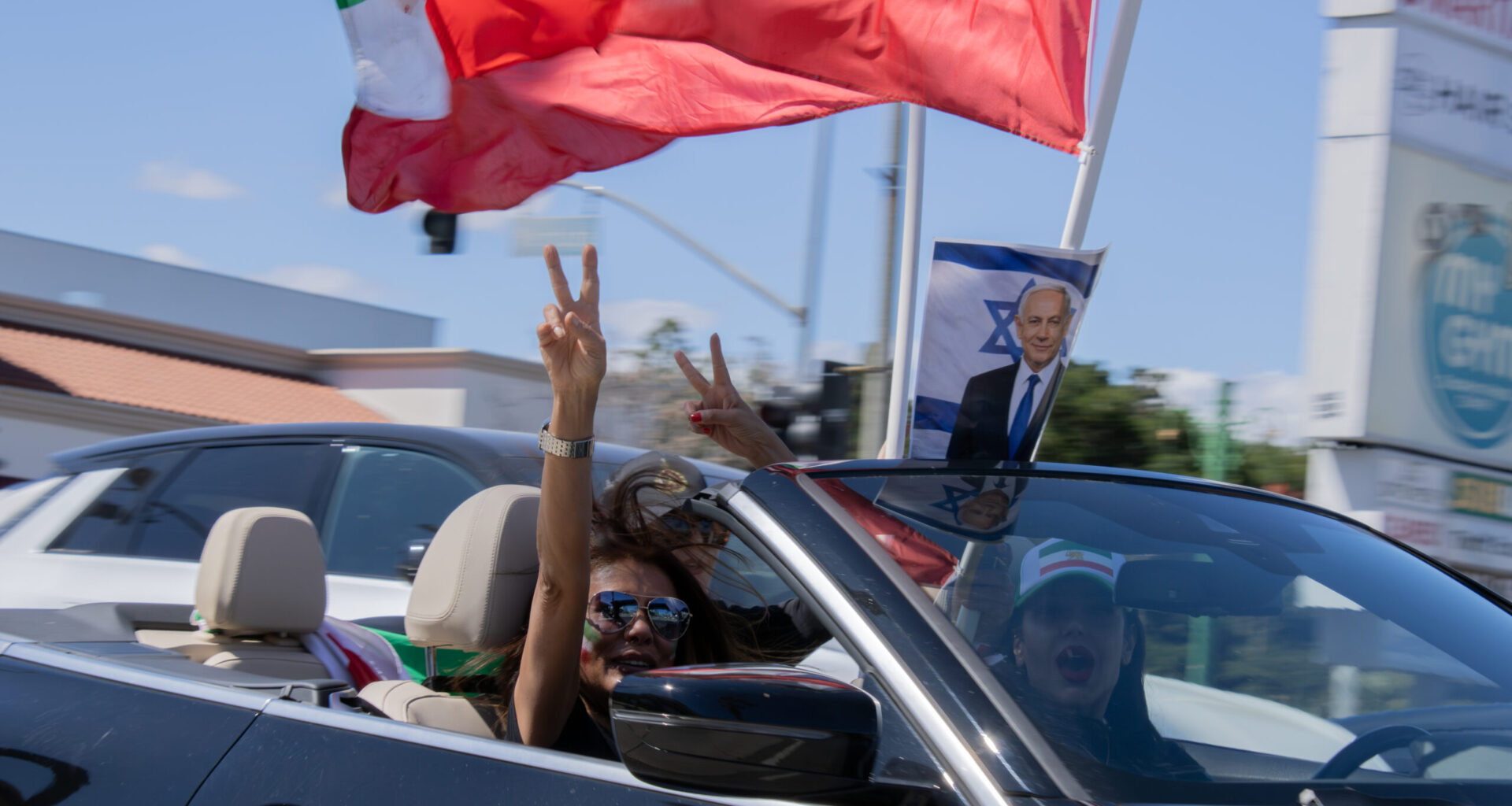
President Trump is receiving a mix of support and concern among Iranian Americans in Los Angeles following threat that “a whole civilization will die”
As U.S. and Israeli strikes killed Iran’s Supreme Leader Ali Khamenei, Americans split sharply over President Donald Trump’s actions – yet, Iranians in Los Angeles were suddenly more united than ever.
Mahyar Ashk, an Iranian junior at California State University, Northridge, felt both shock and happiness when he learned of U.S. involvement in Operation Epic Fury. Like many Iranian Americans, he said he has long hoped for intervention against Iran’s government.
“We’ve been waiting for help from both the United States and Israel,” Ashk said. “We are so desperate for the regime to be over that, you know, we are willing to take anything.”
When going against an oppressive government that has guns in hand, Ashk said his people are powerless without intervention and military support.
Following the killing of Khamenei and several other high officers, Iranian Americans flooded the streets, with thousands gathering in front of the Westwood Federal Building in Los Angeles – home to the largest Iranian population outside of Iran – holding signs thanking the president.
Finally, Iranians who once saw no end in sight now felt a sense of hope. Then came Trump’s threat that the “whole civilization will die.”
Ashk did not believe the president would turn to such extremes and said Trump was likely using the Truth Social post as a tactic to force the Islamic Republic to the negotiation table.
“I don’t think that Donald Trump would do such things,” Ashk said. “But you know, sometimes the worst option is the best option.”
Scroll to continue reading
Councilmember Adrin Nazarian of the Second District of Los Angeles called the threat “crazy.”
“We’re talking about a civilization that’s existed for more than 5,000 years, and he says he’s going to bomb it out of existence?” Nazarian said.
Nazarian fled Iran with his family at the age of eight. He recalled taking shelter as a child in the basement of his family’s apartment during bombings, unsure if he would live to see the next day. The councilmember said, like most Iranians, he would relish seeing the current regime end tomorrow.
But for Nazarian, Trump’s bombing campaign is not the way to freedom.
“The President’s justification for his actions keep changing. It’s about regime change and then it isn’t. Then it’s about nuclear weapons, but he says we’ve already obliterated their nuclear program,” he said. “When this is all over will the people be any better off if their cities are destroyed and the dictatorship is still in place?”
Despite the president’s threat of escalation, many Iranians in Los Angeles are asking Trump to continue the fight.
Long-time political activist and protest organizer Arezo Rashidian said that while reading Trumps’ threat was “hard,” she believes the Truth Social post was an effort to “poke the bear.”
“None of us will sugarcoat that – that was a hard tweet to see,” Rashidian said. “We still stand and want to thank him.”
After years of watching U.S. presidents avoid intervention, Rashidian said she and others feel grateful to Trump for being the first to “weaken” the Islamic Republic.
Now, Rashidian organizes weekly rallies supporting continued U.S. involvement in the Middle East for the Iranian American Protest Organization of Los Angeles, with their next event taking place near Santa Monica’s Third Street Promenade on April 19.
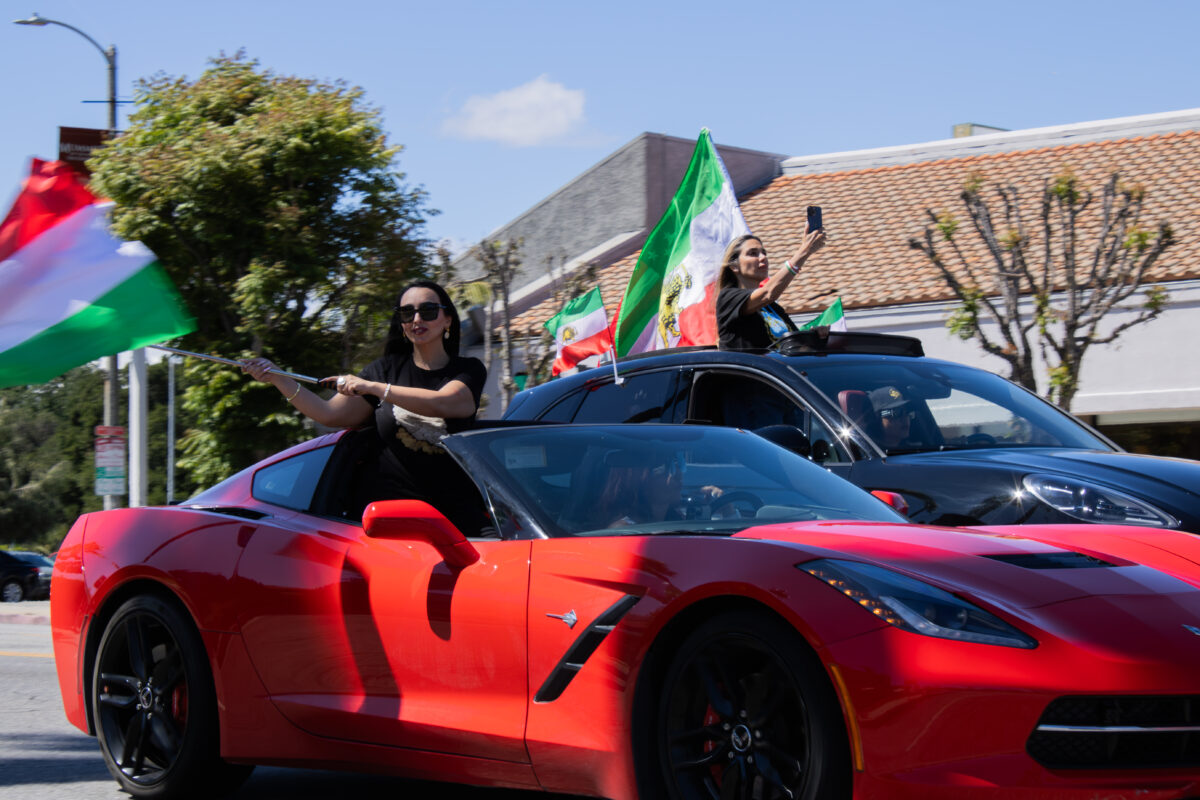 Protestors waving Iranian flags as they drive down Ventura Boulevard in Encino on Saturday, April 11, 2026. Credit: Taylor Parise
On Saturday, approximately 1,000 vehicles were parked at the Westfield Topanga mall in Canoga Park. Flags were strapped to vehicles, and signs were distributed before the group took off down Ventura Boulevard, driving more than eight miles east and shouting “freedom for Iran.”
Kate Dehbashi, a San Fernando Valley organizer who has lived in the U.S. since 2003, has struggled to reach her family in Iran amid a nationwide internet blackout that began Jan. 8. Planning and attending rallies for regime change, she said, is her way of taking back control.
“It really helps us,” Dehbashi said. “Being together and being able to share our thoughts and everything – it just feels good for us.”
Being a part of the diaspora is a responsibility, Dehbashi explained. She acts as the voice of the Iranian people, who are currently being shut off from the rest of the world.
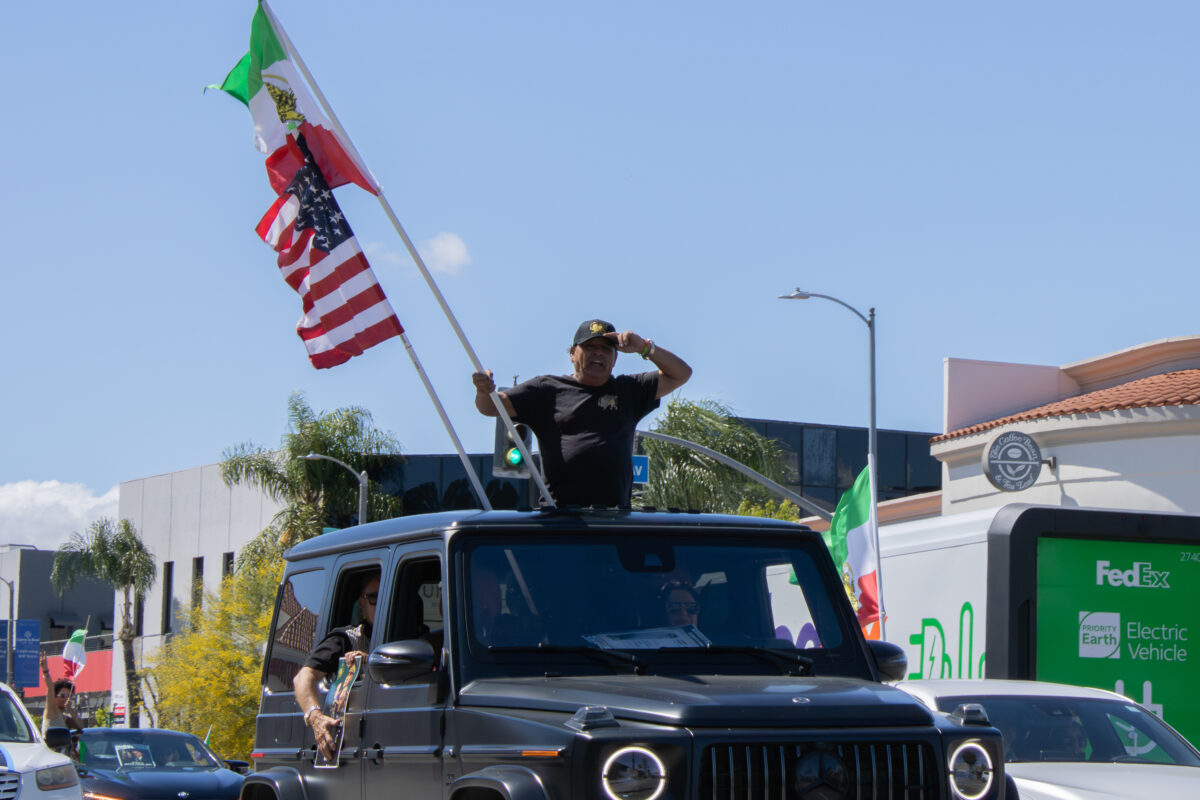 A man standing through the sunroof of a Mercedes-Benz G Wagon as it drives down Ventura Boulevard, holding the Iranian and American flags on Saturday, April 11, 2026.Credit: Taylor Parise
Less than 12 hours after Trump’s threat, the U.S. entered a two-week ceasefire with Iran. Talks in Islamabad collapsed after 21 hours, with Trump saying Iran refused to end its nuclear program — a key U.S. demand.
In an interview with The New York Post on Tuesday, the president said negotiations “could be happening over the next two days.” The remarks come amid public concern over rising oil prices and the risks of continued U.S. involvement in the war.
Ashk said he views the global economy as a temporary cost of a potential long-term regime change. He expressed hope that the war would end soon, calling for American support.
“I know all of us are going through a hard time right now, but it’s totally worth it,” Ashk said. “A free Iran is not only good for the Middle East region, but for the whole world.”