
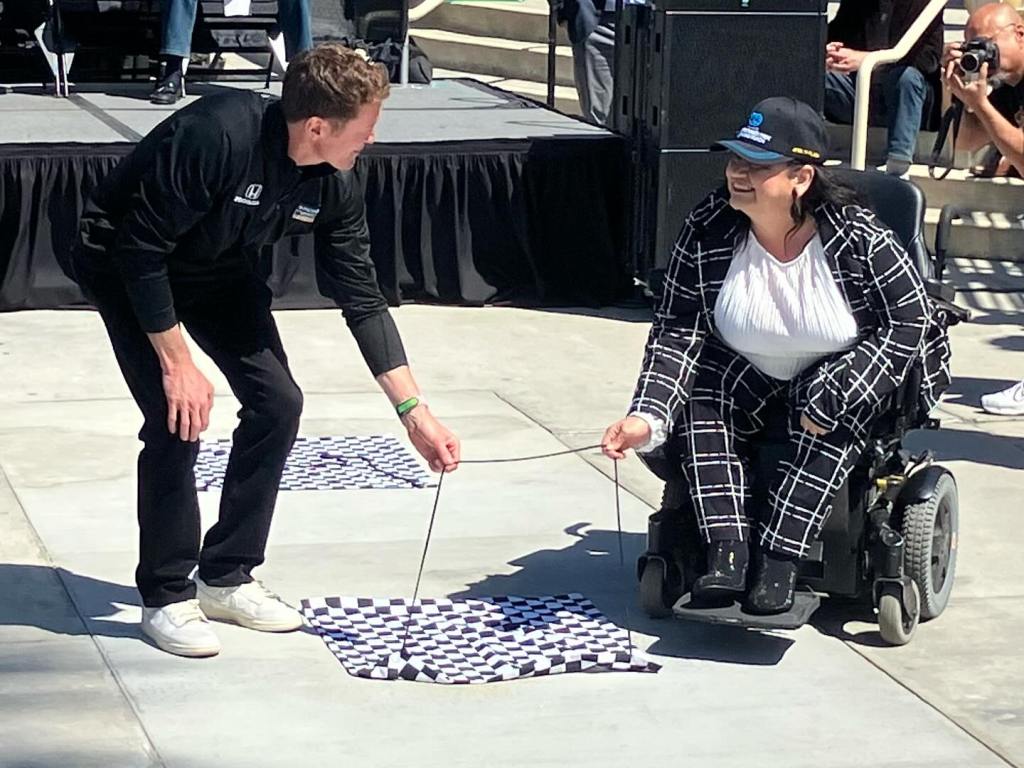
The Grand Prix of Long Beach prides itself on welcoming diverse crowds to the race circuit.
Getting around the concourse, however, typically requires walking — a lot of walking. And, depending on where you are trying to go, climbing stairs, which poses a potential problem for those with disabilities.
But worry not — the Grand Prix, officials say, is accessible to everyone.
The Grand Prix, the 51st iteration of which will take place from Friday to Sunday, April 17-19, has worked with the city and partnered with a company that provides accessibility services to ensure that no motorsports fans are excluded from the event.
“The Acura Grand Prix of Long Beach is committed to creating an event experience that is accessible, welcoming and inclusive for all guests,” Jim Liaw, the president and CEO of the Grand Prix of Long Beach, said in a Wednesday, April 15, statement. “We work to provide accessible parking, wheelchair-accessible seating, transportation assistance throughout race weekend, designated access points and crossings, and additional on-site support services to help fans with disabilities enjoy everything the event has to offer.
“We also maintain policies for service animals and guest assistance,” he added, “to ensure every attendee can experience the excitement of race weekend with comfort, dignity and ease.”
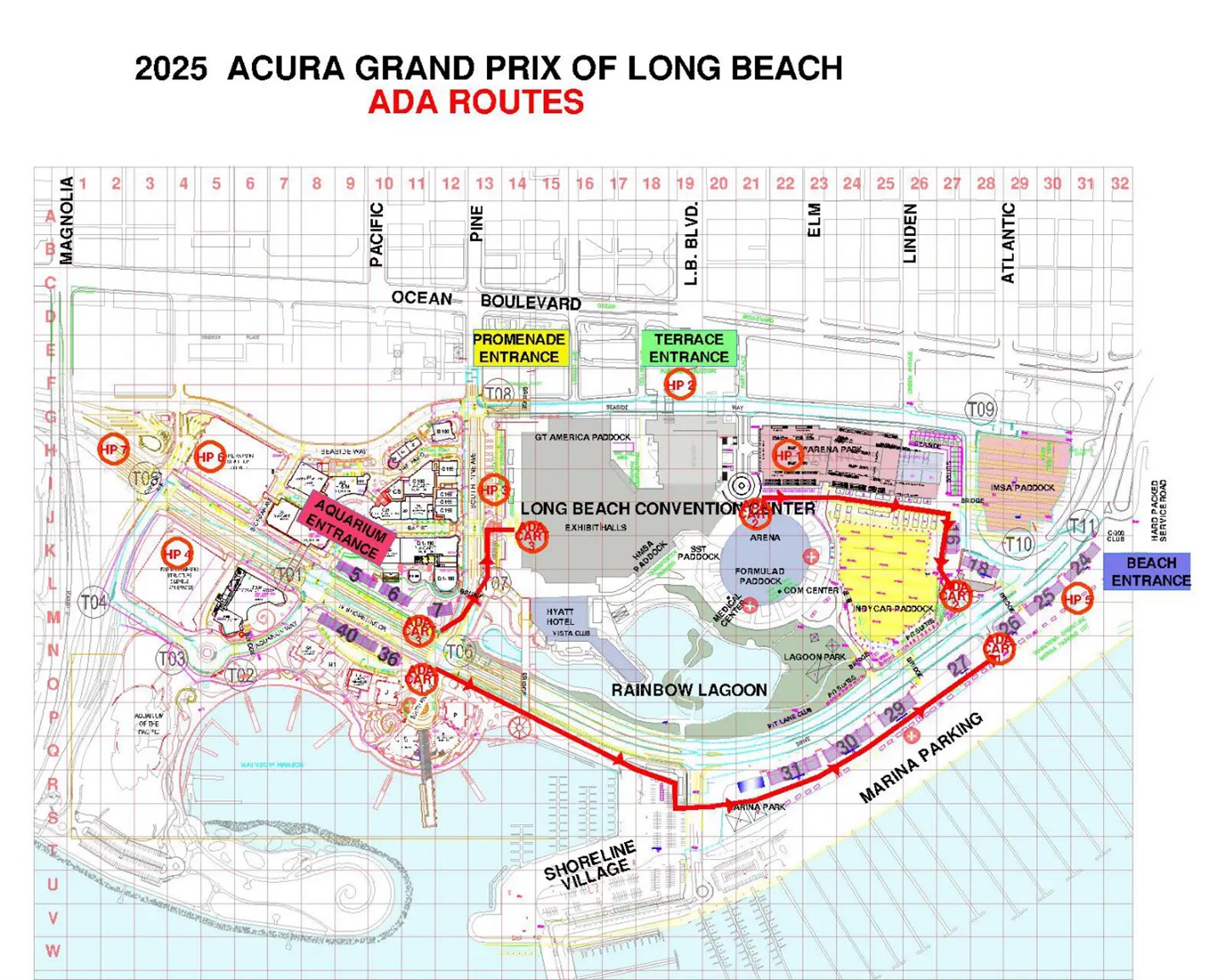
This map shows Americans with Disabilities Act routes (in red) at the Grand Prix of Long Beach. (Courtesy photo)
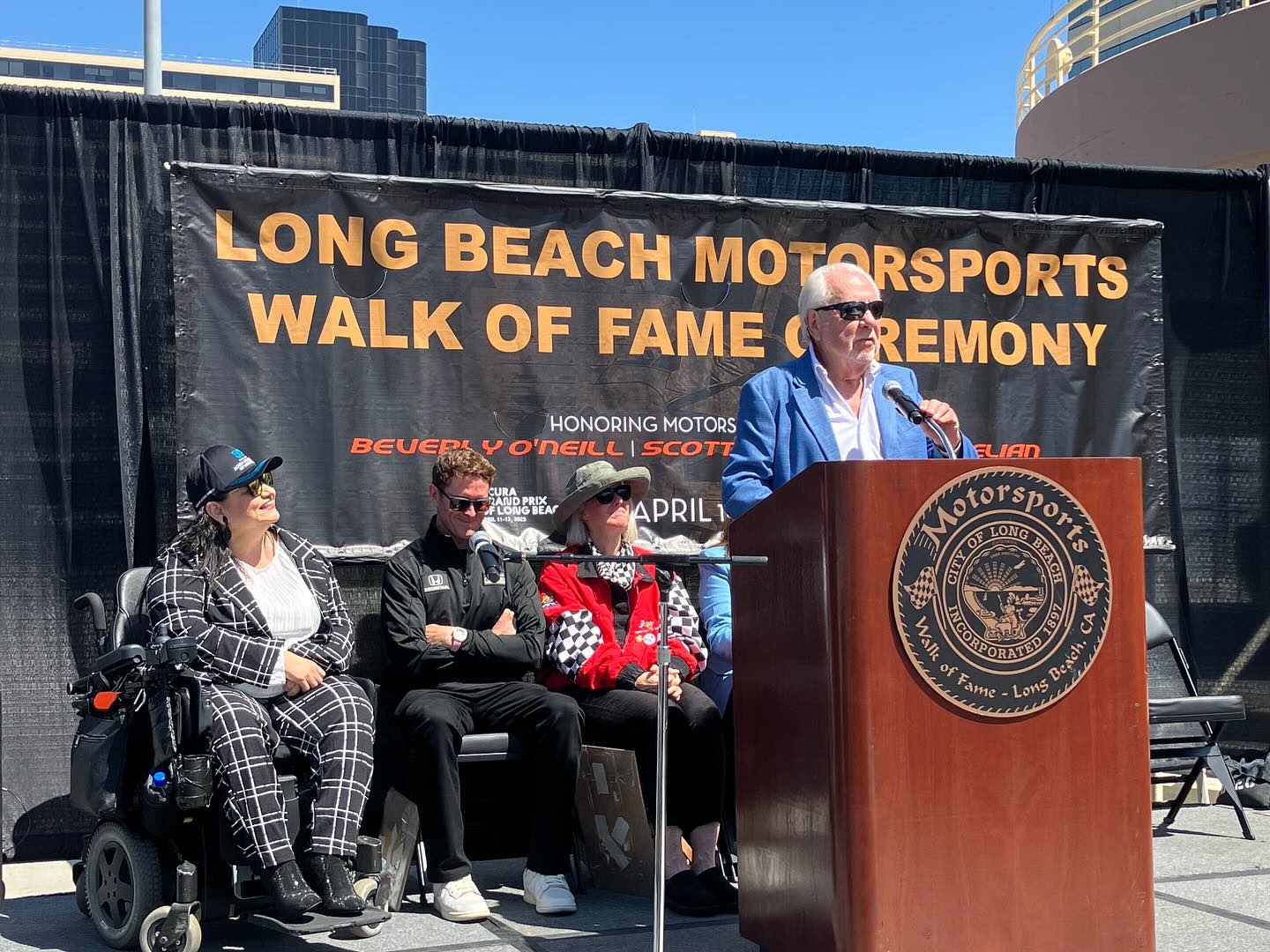
Long Beach Councilmember Mary Zendejas, left, listens to Grand Prix of Long Beach founder Chris Pook speak during the 2025 Motorsports Walk of Fame ceremony. Zendejas, whose First Council District encompasses the Grand Prix of Long Beach footprint, has advocated for greater accessibility at the event and citywide. (Courtesy photo)
Show Caption
1 of 2
This map shows Americans with Disabilities Act routes (in red) at the Grand Prix of Long Beach. (Courtesy photo)
The Grand Prix offers multiple ways to get around the concourse, from grandstand access, golf cart shuttles and public address announcements when foot-crossings are open.
“As a city,” First District Councilmember Mary Zendejas wrote in an email, “we have taken huge steps towards accessibility and ensuring accessibility at the Grand Prix is no different.”
The council member, who was diagnosed with polio when she was 8 months old and who uses a wheelchair, is an advocate for those with disabilities or mobility limitations. Her council district also encompasses the Grand Prix’s footprint.
And state law requires the Grand Prix to be accessible. The Americans with Disabilities Act, including Title II and Title III, establishes accessibility standards for large-scale and temporary events. These standards cover areas such as parking, accessible routes, restrooms and amenities, seating, communication and signage.
“From providing ADA-compliant grandstands, accessible restrooms and designated viewing areas,” Zendejas said in a statement, “I am proud to say that as the elected official representing the Grand Prix area and an avid race fan, navigating the race track in a wheelchair could not be easier.”
Race fans will also find it easier to navigate the Grand Prix thanks to a contract with Accessibility Live, a leader in accessibility services for the live entertainment industry.
The company’s founder, Austin Whitney, injured his spinal cord in 2007. After the injury, he encountered significant barriers while attending a music festival. Friends had to help him attend the event.
Although the event lacked proper accessibility, he still enjoyed it. But inspired by what could have been with better accommodations, he committed to helping everyone access recreation equally.
Drawing from his own experiences, Whitney ensures that no attendee faces the same obstacles he once did — making the Grand Prix more inclusive than ever before.
“Each year, we build upon our expertise,” he said, adding that he applies lessons learned after every event. There’s “never a finish line” when it comes to the company’s continual process of improving, he said.
“We have applied the best practices,” Whitney said, “learned from events like Coachella, Formula 1 races in Las Vegas and Austin, PGA tour events, FIFA Soccer games and major music events.”
Whitney has a law degree from UC Berkeley and is licensed to practice in California — but his passion is making live concerts and sporting events the best possible experience for all. The company has been working with Grand Prix of Long Beach for four years and the work starts months prior to the race. The company makes recommendations on layout, entry and exit gates, and access to carts to help transport people during race weekend.
As longtime race fans likely already know, the best way to get around the concourse is to download the Acura Grand Prix of Long Beach app, buy tickets in an accessible grandstand, reserve disabled parking early, bring the track map with you and plan your day in advance.
Planning is key and officials have sought to make getting around easy. Once onsite, for example, there are multiple golf cart routes and stops; they are marked in red on the track map. During race weekend, the ADA hotline number is 562-624-3681.
Staffers, who operate the phones the entire weekend, can answer questions and help you navigate — but be warned: at times, it is difficult to hear with the engines roaring on the track.
There are four wheelchair accessible grandstands: 7, 16, 26 and 31. And there are four ticket entries that have access to elevators: the “Red” entry at the “Roller Coaster” Bridge; “Yellow” entry (Pine Avenue) on the Promenade at the Birdcage; “Green” entry (Long Beach Boulevard) at the Terrace Parking garage; and the “Blue” entry via a foot crossing at Firestone Bridge, and at Linden Avenue and Shoreline Drive between Grandstands 26 and 27.
To avoid walking up and down stairs on each bridges, there are three different foot crossings that can be accessed when the track is cold and there is a break in racing activity.
The Grand Prix app includes alerts when the foot crossing are open and the public address announcers will also give a warning when the crossings are about open, and then announce when they open. Times vary at times based on-track activity.
The foot-crossing locations include the Firestone Bridge location at Linden Avenue and Shoreline Drive, and Pine Avenue in front of Grandstand 7.
Parking for race fans with disabilities, meanwhile, is limited and must be reserved in advance by contacting the ticket office at 888-827-7333. Each guest must have a valid blue California disabled parking placard or plate displayed. The person to whom the disabled parking placard or plate belongs to must be present in the vehicle as either the driver or a passenger.
As for service animals, they are also permitted but emotional support animals, therapy animals, companion animals and pets are not.
“Any animal whose task is to provide protection, emotional support, well-being, comfort or companionship is not considered a service animal,” the Grand Prix says, “and will not be allowed into the venue. Only service animals that have been individually trained and are under the proper care of their owners will be allowed within the premises.”
For more information on ADA access information, gplb.com/ada-access.