
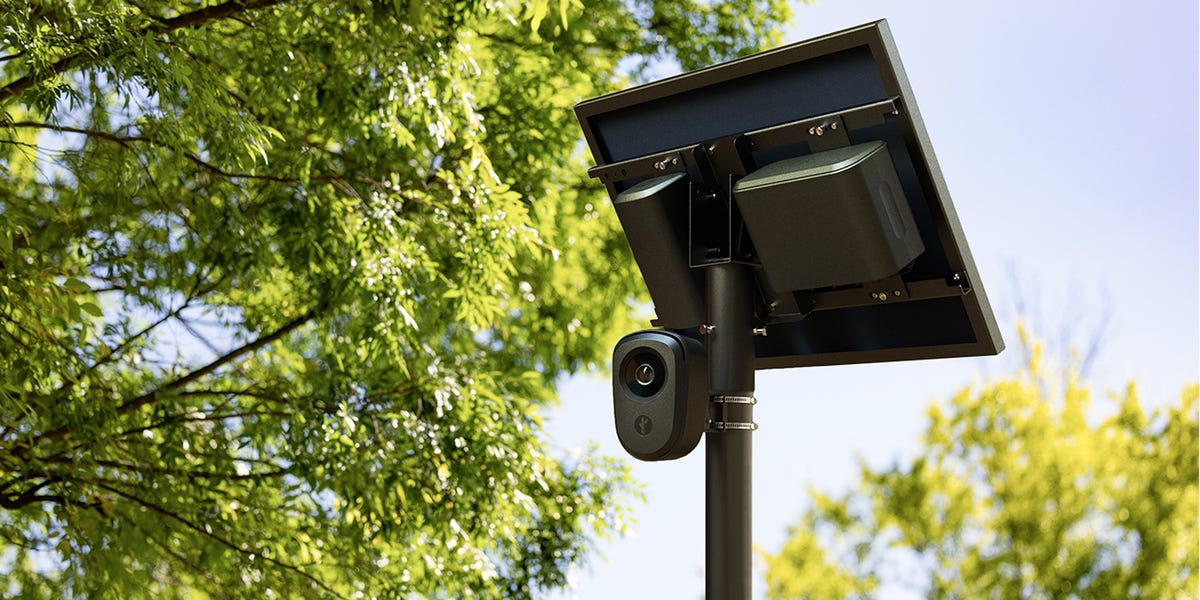
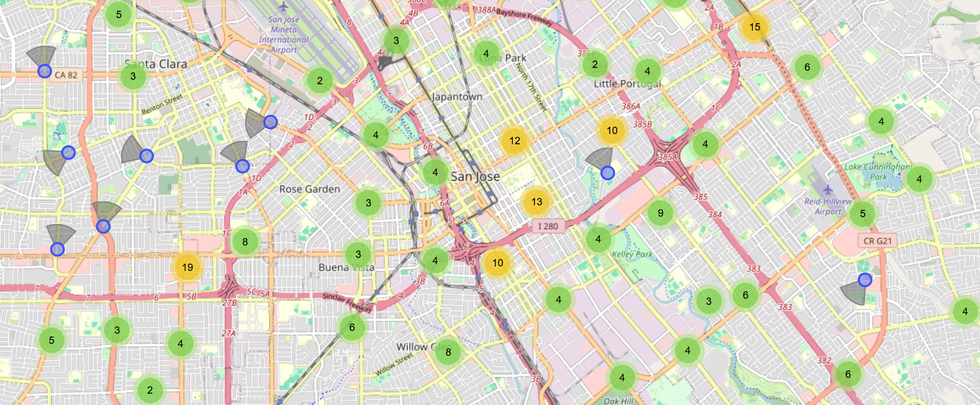
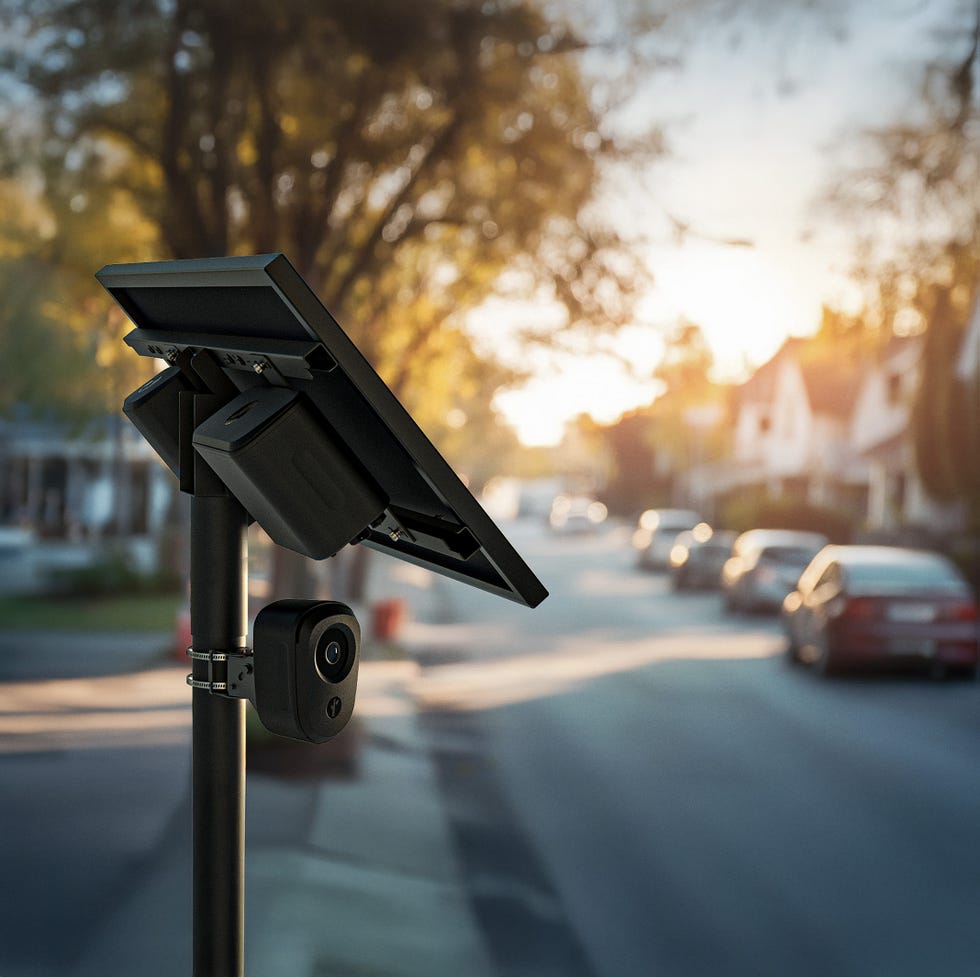
On average, driving through San Jose, California, means sharing the road with about 2.7 automatic license plate reading cameras for every square mile of the city. Across a city spanning roughly 178 square miles, it adds up to a staggering network of 474 Flock Safety cameras quietly tracking just about every passing vehicle. Now, three residents are asking a federal judge to shut it down.
On Wednesday, Tony Tan, Scott West, and Colin Wolfson filed a class action lawsuit in federal court against the city, arguing San Jose’s sprawling surveillance network violates the Fourth Amendment by tracking every driver without a warrant. According to the complaint, each camera logs not just a license plate, but also a vehicle’s make, model, color, and distinctive details like bumper stickers or roof racks, storing that information for 30 days and making it searchable by thousands of government employees across California.
Deflock.me
The Institute for Justice, which is representing the plaintiffs, says San Jose’s database was searched nearly 2.5 million times in the second half of 2025, averaging more than 15,000 searches every day. The lawsuit also claims more than 1000 San Jose employees and staff from almost 300 other government agencies in California can access the system without a warrant, probable cause, or supervisory approval.
And the plaintiffs are not asking for a big payout. Instead, they want the court to force San Jose to delete all captured data within 24 hours, unless police have a warrant or another legally recognized exception. They are seeking just $1 in nominal damages, and a declaration that the city’s surveillance system is unconstitutional. That final demand would be a gigantic victory for privacy advocates, if achieved.
The complaint argues San Jose’s program goes far beyond traditional policing, because it tracks everyone, not just suspects. The plaintiffs compare the city’s use of ALPR data to the kind of long-term GPS or cellphone tracking the United States v. Jones and Carpenter v. United States decisions said generally requires a warrant.
Notably, these cameras might affect enthusiasts even more than the average driver. After all, enthusiasts are more likely to have unique wheels, lighting, wraps, roof racks, or other identifying features that these ALPR cameras track.
FlockSafety.com
San Jose city attorney Susana Alcala Wood told Road & Track that the camera system has been designed to follow the law and protect the privacy rights of citizens. “The city’s ALPR cameras are only mounted in public areas and take pictures of vehicles as they drive on public streets and pass in view of the camera,” Wood said. “The San Jose Police Department has robust, transparent policies in place to ensure that the information is not misused in any way, including policies that prohibit direct access to the data to private entities, out-of-state law enforcement agencies, or federal agencies.”
“Access to our ALPR system is tightly controlled and limited to authorized SJPD personnel only. These policies are routinely reviewed and updated as was the case recently when the City amended its retention schedule reducing the length of time the ALPR data is kept from 365 days to 30 days. In all cases, access to ALPR data by SJPD employees is logged and auditable.”
According to the lawsuit, however, abuse of systems such as San Jose’s “is unfortunately all too common. Officers have repeatedly been caught using ALPRs to stalk people. There have been reports of officers using them to retaliate against critics and even track down a woman in Texas who allegedly had a self-administered abortion.”
Road & Track reached out to the Institute of Justice for comment, but did not receive a response at the time of writing. We’ll update this story if we hear back.
Related Stories