
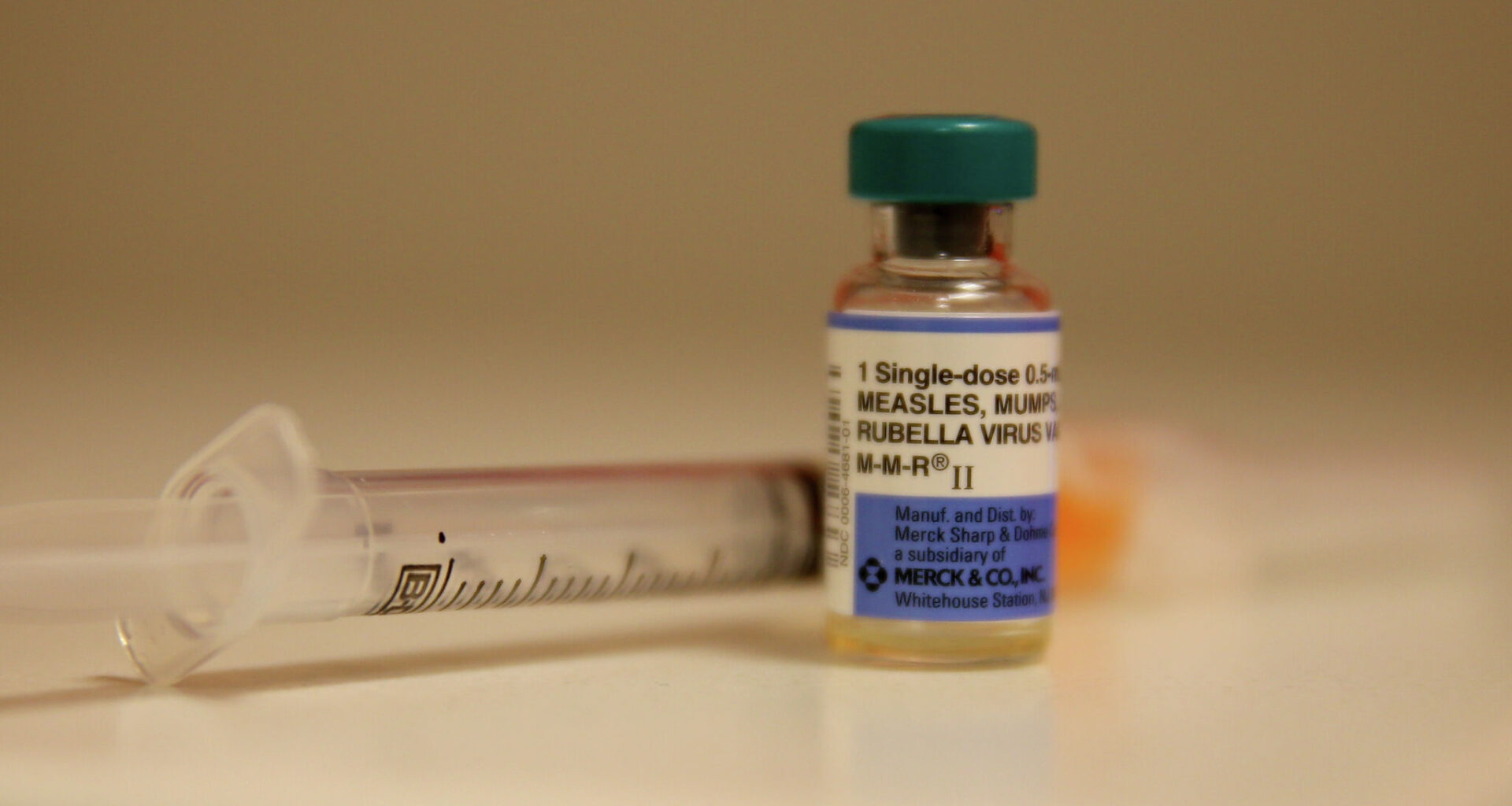
FILE: Photo illustration of a bottle containing a measles vaccine, on Jan. 28, 2015.
Joe Raedle/Getty Images
San Francisco health officials Monday confirmed the city’s first measles case in seven years after an unvaccinated infant was diagnosed with the disease.

The confirmation, announced in a Wednesday news release, marks the first time since 2019 a measles infection was reported in the city. The infant is younger than 12 months old, according to the San Francisco Department of Public Health, and so was below the age recommended for routine measles vaccination. The department said the child was exposed to the disease in another country and became ill after returning to San Francisco. They are now recovering at home, according to the release, and, “The infant’s household contacts all report being vaccinated.” Public health workers are tracing additional exposures.
Article continues below this ad
Measles is a highly contagious airborne disease that spreads through coughing, sneezing or breathing shared air and can linger in indoor spaces for up to two hours, according to the World Health Organization. While many of those infected recover after about 10 days, the disease can lead to serious complications including pneumonia, brain swelling and death, particularly in young children.
UCSF infectious disease expert Dr. Peter Chin-Hong emphasized that the risk to the general public remains low, citing high vaccination rates in the city and limited spread within the household.
“It just means that measles is really everywhere,” Chin-Hong told SFGATE. “Infectious disease doesn’t respect any borders.”
Chin-Hong noted that San Francisco’s measles immunization coverage — likely above 95% — creates strong community protection, making widespread transmission unlikely even in crowded settings. In areas with lower vaccination rates, he added, measles can spread “like wildfire” due to gaps in immunity.
Article continues below this ad
“Chances that those people are passing it on to someone is very, very low in San Francisco,” Ching-Hong said.
The case also highlights a specific vulnerability for infants as measles cases increase in the U.S. Routine measles vaccination through the MMR series begins at 12 months.
“That six months to 12 months period is probably when the baby is most vulnerable,” Chin-Hong said. Infants can receive an early dose of the vaccine starting at six months, but they must still complete the standard two-dose series later in childhood. While maternal antibodies offer some early protection, they do not fully eliminate the risk.
An illustration of a measles virus particle.
Kateryna Kon/Science Photo Library via Getty Images
Children account for the majority of measles cases in the U.S., with most infections occurring in those under 10, Chin-Hong said, underscoring the importance of vaccination once children become eligible.
Article continues below this ad
The current global rise in measles cases is driven not only by vaccine hesitancy but also by missed immunizations during the early COVID-19 pandemic, when many families delayed or lacked access to routine care, he added.
While San Francisco’s high vaccination rates have so far prevented broader spread, other parts of California, including Sacramento, have reported outbreaks.
“It is incredibly important to get the MMR vaccine, as measles is one of the most infectious diseases in the world,” San Francisco Health Officer Dr. Susan Philip said in the Wednesday release.
The risks of measles include issues that can appear several years after the initial infection. These conditions include a weakened immune system and a rare but devastating condition called subacute sclerosing panencephalitis, a progressive, deadly brain disorder.
Article continues below this ad
Chin-Hong urged awareness without alarm, particularly when evaluating symptoms.
“When somebody comes into the emergency room with a rash, now I think everybody’s going to be on heightened awareness,” he said.