
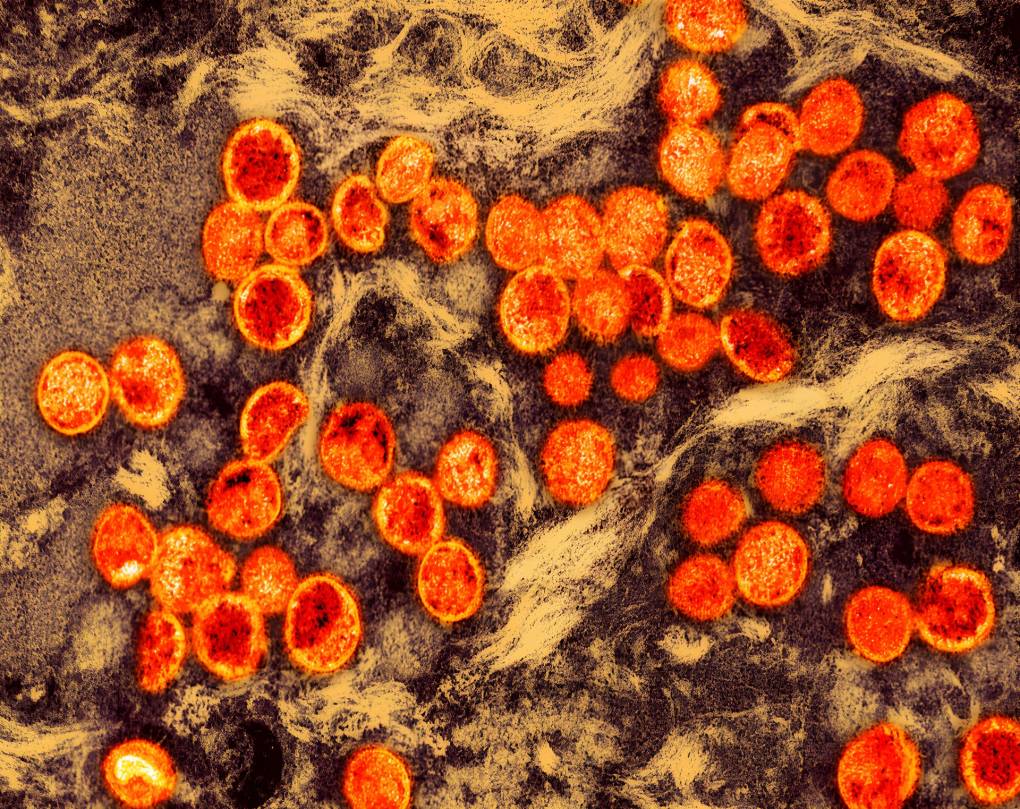
Wastewater data shows that four years after the initial 2022 outbreak clade II of mpox is still occasionally detected in the Bay Area’s wastewater.
According to the CDPH, San Francisco has seen over 1,000 cases of clade II mpox since the 2022 outbreak, but the state’s most recent data shows the average of new cases has dropped to under two people a week.
Clade I cases in Central and Eastern African countries “at first spread through heterosexual intimate or sexual contact between adults, then spread likely occurred within households, including to children,” the CDC said.
But the agency notes that while the first cases outside that continent were primarily linked to travel to Central and Eastern African countries, as of late 2025 central Western European countries began reporting clade I mpox cases “among individuals who had no documented history of international travel” — cases which the CDC concludes were “likely related to intimate or sexual exposure among men who have sex with men.”
The CDC now “expect[s] additional cases” of clade I in Europe and the United States.
What are the symptoms of mpox, and how does it spread?
The mpox virus spreads through close — usually skin-to-skin — contact with someone who is infected. This could be direct contact with the infectious rashes or scabs someone with mpox develops, scabs, having intimate physical contact with someone who has mpox, such as kissing, cuddling or sex. Coming into contact with infected bodily fluids or items that have been touched by rashes or fluids from an infected person can also expose you to the virus.
The symptoms of clade I and clade II mpox are similar, confirmed SFDPH’s Janssen, and they can often start as flu-like conditions — which is worth bearing in mind as the Bay Area enters respiratory virus season.
The mpox virus also appears as a rash or sores or spots that can resemble pimples or blisters on the skin anywhere on the body, including the face, inside the mouth, hands, feet, chest, genitals and anus.
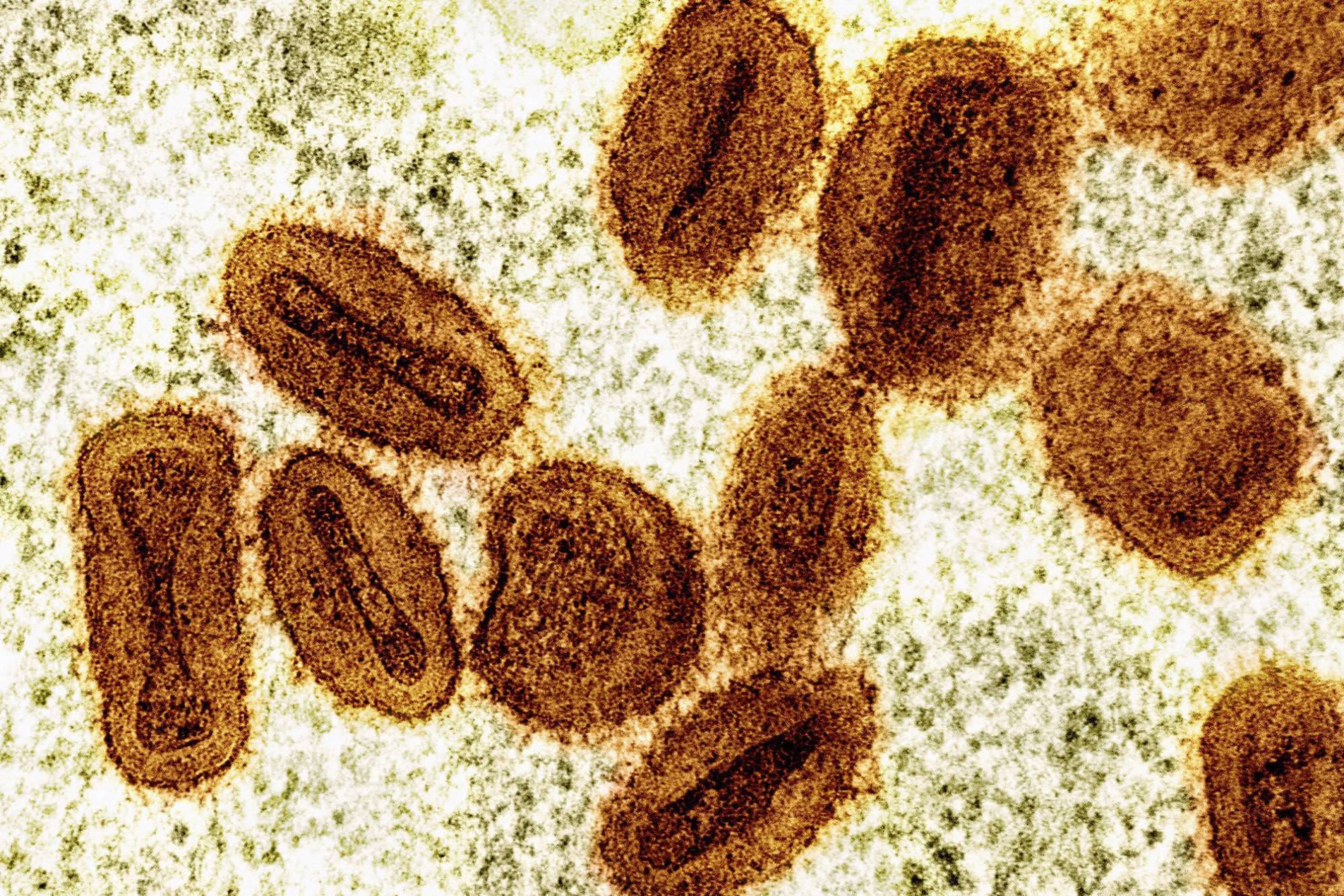 This colorized electron microscope image provided by the National Institute of Allergy and Infectious Diseases in 2024 shows Mpox virus particles, orange, found within infected cells, green. (NIAID via AP)
These spots often start as red, flat spots that then become bumps before the bumps become filled with pus and turn into scabs when they break. These symptoms can be extremely painful. If you’re unsure about recognizing an mpox rash, the CDC has a photo guide.
Mpox can have a long incubation period — that is, the time between when you’re exposed to mpox and when you start to develop symptoms — that can range from three to 17 days, according to the CDC.
If you suspect you might have mpox symptoms — even if they’re subtle — see your health care provider right away or consult one of SFPDH’s clinics for mpox testing.
Who’s eligible for an mpox vaccine in the Bay Area?
The vaccine currently available in the U.S. (brand name: Jynneos) is a two-dose series, with roughly a month between doses. Maximal immunity will build two weeks after your second dose. If you only got one dose previously, go ahead and seek out your second dose ASAP.
The vaccine “provides the best protection against the mpox virus and protects against both clade I and clade II,” according to a statement from the SFDPH.
The CDC recommends the two-dose mpox vaccine to gay and bisexual men and other men who have sex with men, as well as transgender, nonbinary, or gender-diverse people who in the past 6 months have had:
More than one sexual partner, and/or
A new diagnosis of one or more sexually transmitted infections.
The CDC’s vaccine recommendations also include anyone who has had sex at a commercial sex venue like a sex club or bathhouse. See the CDC’s full mpox vaccine eligibility recommendations.
 Hundreds of people wait in a walk-in line for a the monkeypox vaccine at Zuckerberg San Francisco General Hospital on Aug. 1, 2022. (Beth LaBerge/KQED)
San Francisco additionally recommends vaccination for anyone living with HIV, anyone taking PrEP or who’s eligible to take it and sex workers.
In 2024, the CDC updated its vaccination recommendations to extend to people traveling to countries with clade I outbreaks. The agency recommends getting both doses of the vaccine “if you anticipate experiencing any of the following” while traveling to these countries:
Sex with a new partner
Sex at a commercial sex venue, such as a sex club or bathhouse
Sex in exchange for money, goods, drugs, or other trade
Sex in association with a large public event, such as a rave, party, or festival.
The mpox vaccine was also originally only available for people aged 18 and older, but in 2022 the Food and Drug Administration (FDA) issued an emergency-use authorization that allows providers to also give the vaccine to young people aged under 18 who are “determined to be at high risk” of infection.
Where can I find an mpox vaccine?
If you have a regular health care provider, SFDPH recommends you ask them first about getting the mpox vaccine. Your vaccine will be free, but you may be charged a regular copay for seeing your provider.
If you’re eligible for the vaccine, your health insurance should cover the costs thanks to the CDC’s recommendations. If you don’t have a regular health care provider or insurance, SFDPH says you can visit one of these three recommended clinics in the city. You can opt to schedule an appointment or choose a walk-in clinic, depending on what works best for you.
(As with the COVID-19 vaccine, receiving an mpox vaccine won’t make you a public charge or affect any future immigration processes you may enter into, and you won’t be asked about your immigration status to receive the mpox vaccine.)
If you live in or near San Francisco:
See a full list of mpox vaccine sites near you in San Francisco. SFDPH confirms that you don’t have to be a city resident to get vaccinated for mpox in San Francisco.
You can also find an mpox vaccine clinic near you using the state’s myturn.ca.gov site
Getting an mpox vaccine at a pharmacy
Some pharmacies offer mpox vaccination appointments online, along with other vaccines like COVID and flu. But if you choose this route, you’ll be asked for insurance details — and it’s important to verify with your insurer ahead of time that they’ll cover the cost of an mpox vaccine at a pharmacy like CVS or Walgreens, as the out-of-pocket costs you’ll be quoted may be steep. If you find your insurance doesn’t fully cover the cost, SFDPH says you can seek your vaccine at one of their clinics, while supplies last.
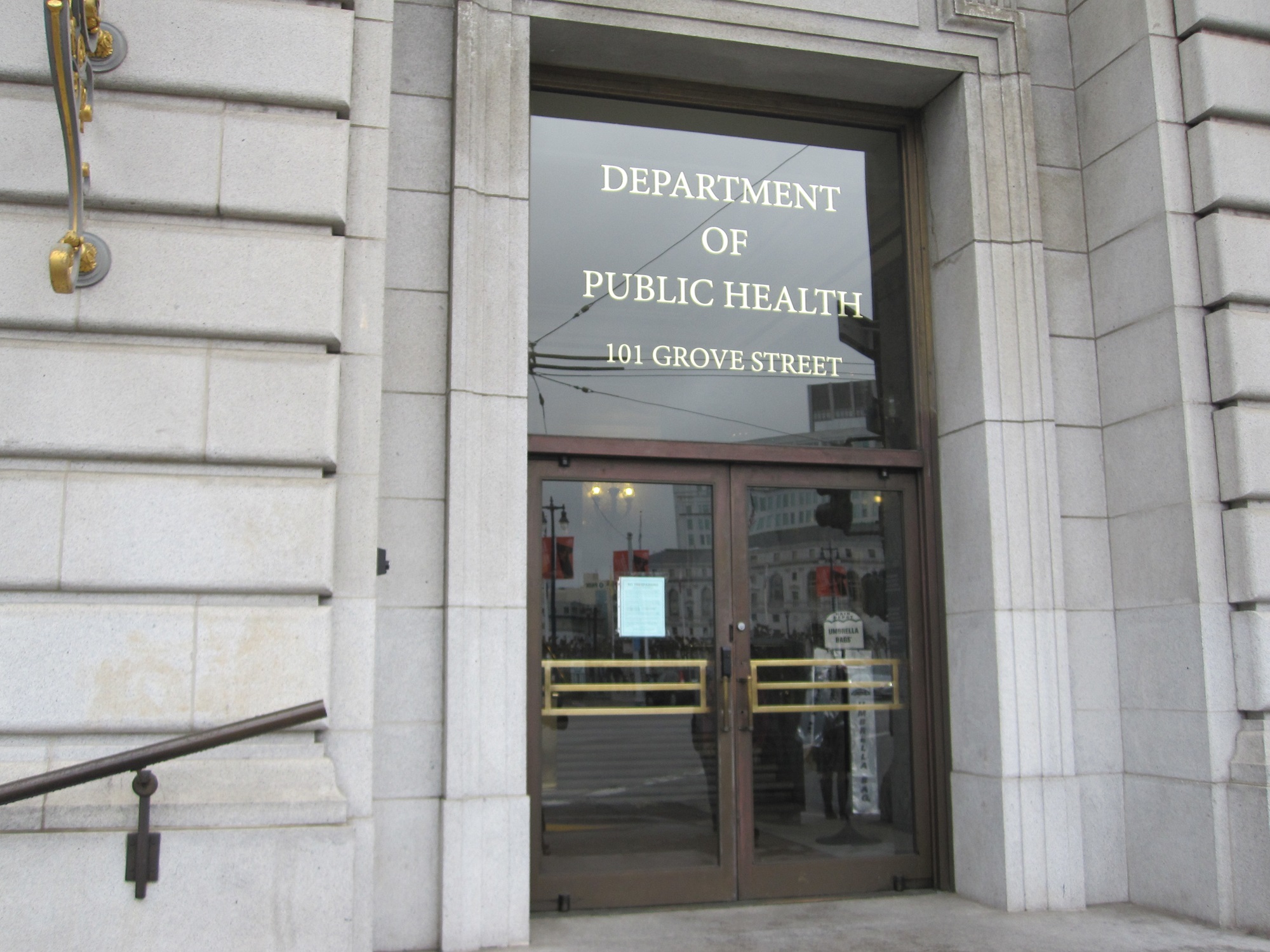 The San Francisco Department of Public Health on Feb. 6, 2014. (Getty Images)
If you get your health care through a health system like Kaiser Permanente, it’s unlikely you’ll be able to get your mpox vaccine covered by insurance at a pharmacy like CVS or Walgreens — the way you can’t get your COVID or flu shot covered by Kaiser at a pharmacy either — and may have to seek it directly from a Kaiser provider.
If you’re able to make an appointment online at a pharmacy for your mpox vaccine, you should consider calling that location ahead of time to verify that they do indeed have supply in stock.
This story includes reporting from KQED’s Carlos Cabrera-Lomelí and Nisa Khan.