
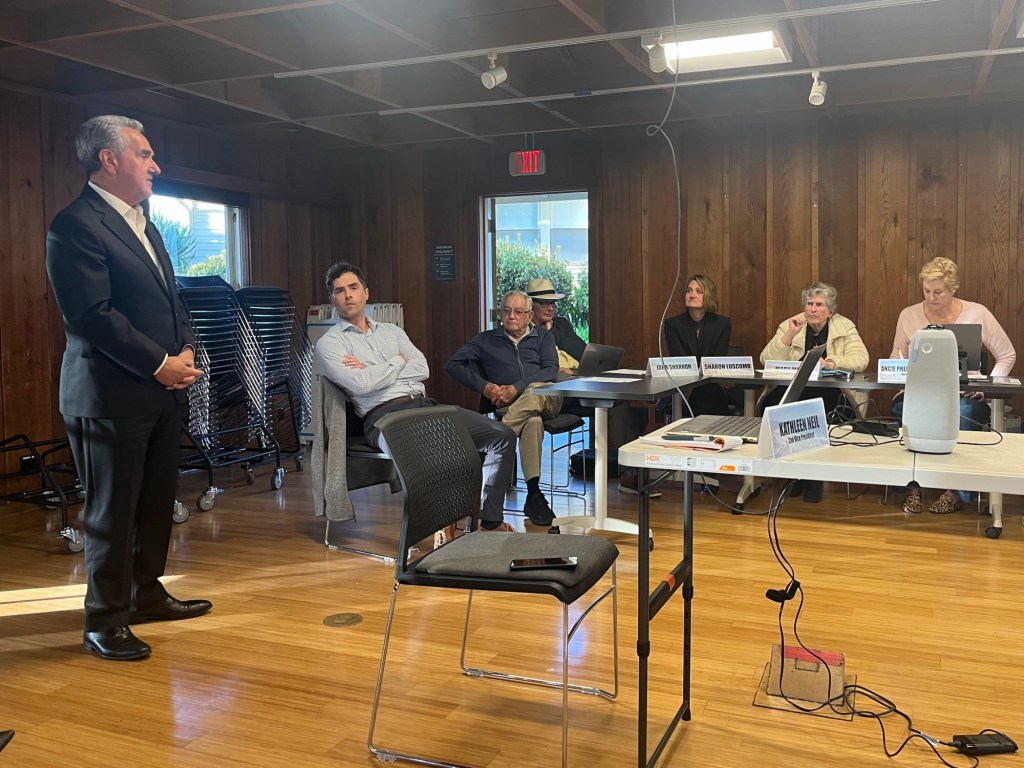
The day that San Diego Mayor Todd Gloria revealed his proposed city budget for the 2026-27 fiscal year, City Council President Joe LaCava went to the La Jolla Shores Association’s monthly meeting to take questions and offer his insights on the likely heated budget conversations looming in the next couple of months.
Under the budget proposal Gloria released April 15, San Diego would sharply reduce funding for local arts organizations, city libraries, recreation centers and many other programs in an effort to close a projected $146 million deficit.
The $2.2 billion spending plan would address the deficit with $26 million from worker furloughs, $44 million in new revenue and $76 million in service cuts that would come with about 130 layoffs.
The budget, which will be debated and adjusted by the mayor and the City Council, also merges three city departments into others and eliminates the Office of Child and Youth Success.
Other cuts include homeless services, facilities maintenance, zoning enforcement, park rangers, restroom closures in some parks and elimination of a team that adds bike lanes across the city.
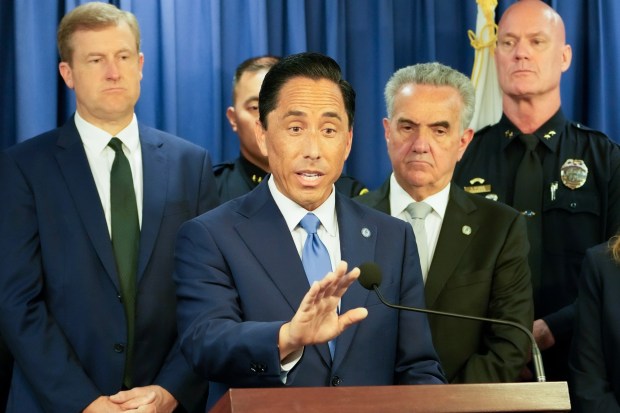 San Diego Mayor Todd Gloria speaks to reporters about his proposed city budget on April 15. (Nelvin C. Cepeda / The San Diego Union-Tribune)
The cuts are required because of employee pay raises, including 23% hikes over three years that were awarded to most workers in 2023, and relatively sluggish growth in city revenue.
Aides to Gloria said the $76 million in cuts he proposes would bring total budget cuts over two fiscal years to $189.2 million — nearly 9% of the city’s annual budget.
The mayor said he prioritized public safety, homelessness and transportation funding, adding that those priorities appear to match what city residents want based on recent surveys submitted online by more than 10,000 residents.
The budget would dramatically reduce annual arts funding from $13.8 million to just under $2 million, eliminating all funds under the city’s two grant-making arms: the Organizational Support Program and Creative Communities San Diego.
Money from those two programs go directly to arts groups, which use it to drive matching grants they apply for from the private sector.
The remaining $2 million would essentially keep open the city’s Cultural Affairs Department, whose staff oversees the public art program and grant-making process. The department is expected to continue working with individual artists and incubator programs “because those come from state funding,” said Alessandra Moctezuma, chairwoman of the city’s mayor-appointed Commission for Arts & Culture.
Gloria’s plan drew immediate objections from groups citywide, including in La Jolla.
“Eliminating arts and culture funding will have a catastrophic impact on San Diego’s cultural infrastructure that serves residents and visitors to the region,” said La Jolla Historical Society Executive Director Lauren Lockhart, whose nonprofit received $111,578 in the current fiscal year. “For La Jolla Historical Society, this funding is vital to ensure that our exhibitions and programs remain accessible to all and that we can preserve and activate our historic campus.”
Though last year the city undertook several revenue-increasing efforts, including controversial parking and trash fees, this year it is taking a different approach, LaCava said at the Shores Association meeting.
“There is no new revenue coming in,” said LaCava, whose council District 1 includes La Jolla. “We heard loud and clear from everybody to stop taking money out of our pockets to fix the budget crisis. So this year it’s going to be all about cuts.”
LaCava, whom Gloria said was included in the budget development process, encouraged the audience to offer feedback but with the need to balance the budget in mind.
“Look at the cuts, tell us the ones that are really unpalatable and then find a new cut that keeps us balanced, because we do have to have a balanced budget,” he said. “It’s not going to be pleasant … but we have a job to do to deliver that budget before the end of June.”
The new fiscal year will begin July 1, and Gloria will formally present his budget proposal to the City Council on Monday, April 20. The council will review it between now and June 9.
One part of the budget LaCava said cannot be adjusted without a ballot measure is pensions for city employees.
LJSA trustee Mary Coakley Munk advocated for restrooms near the beach to stay open, adding that it would be better to close them at City Hall. If restroom cuts are in the final budget, she said, only a few stalls should be closed at each end of the beach instead of closing a whole restroom building.
“You close the restrooms, that doesn’t mean the people stop going,” Munk said. “And the mess they leave that has to be cleaned up by our wonderful park maintenance people is criminal.”
LaCava responded that when he saw those cuts proposed two months ago, “I said very clearly that … that’s not acceptable” in beach areas like La Jolla Shores.
“It would help me if … the La Jolla Shores Association weighs in,” he added.
Trustee Ross Rudolph told LaCava that potholes on Via Capri are deep enough to damage vehicles, which he remarked is “traffic-calming, but not the way you want.”
LaCava said money is set aside for a complete repaving of Via Capri once utility work in the area is done. He said he’s been told that would be completed by the end of the year.
La Jolla residents rattled by Via Capri street work
Respect Bird Rock, a safety advocacy group led by Harry Bubbins, who also is a board member of the La Jolla Community Planning Association, released a statement saying that though “we are encouraged by the mayor’s continued commitment to transportation safety,” the new budget must commit funds to San Diego’s Speed Management Plan approved by the City Council in March. The plan would reduce speed limits on about 680 miles of city streets, including more than 75 street segments in La Jolla. The affected roads include Fay Avenue, Girard Avenue, Herschel Avenue, Pearl Street, La Jolla Boulevard, Prospect Street, Gilman Drive, La Jolla Shores Drive, Torrey Pines Road and more.
The Speed Management Plan “requires a modest investment for new signage, poles and installation,” according to the statement. “Without this investment, the plan cannot move forward. School zones, business districts and high-injury corridors will remain dangerously fast.”
— San Diego Union-Tribune staff writers David Garrick and Michael James Rocha contributed to this report. ♦