
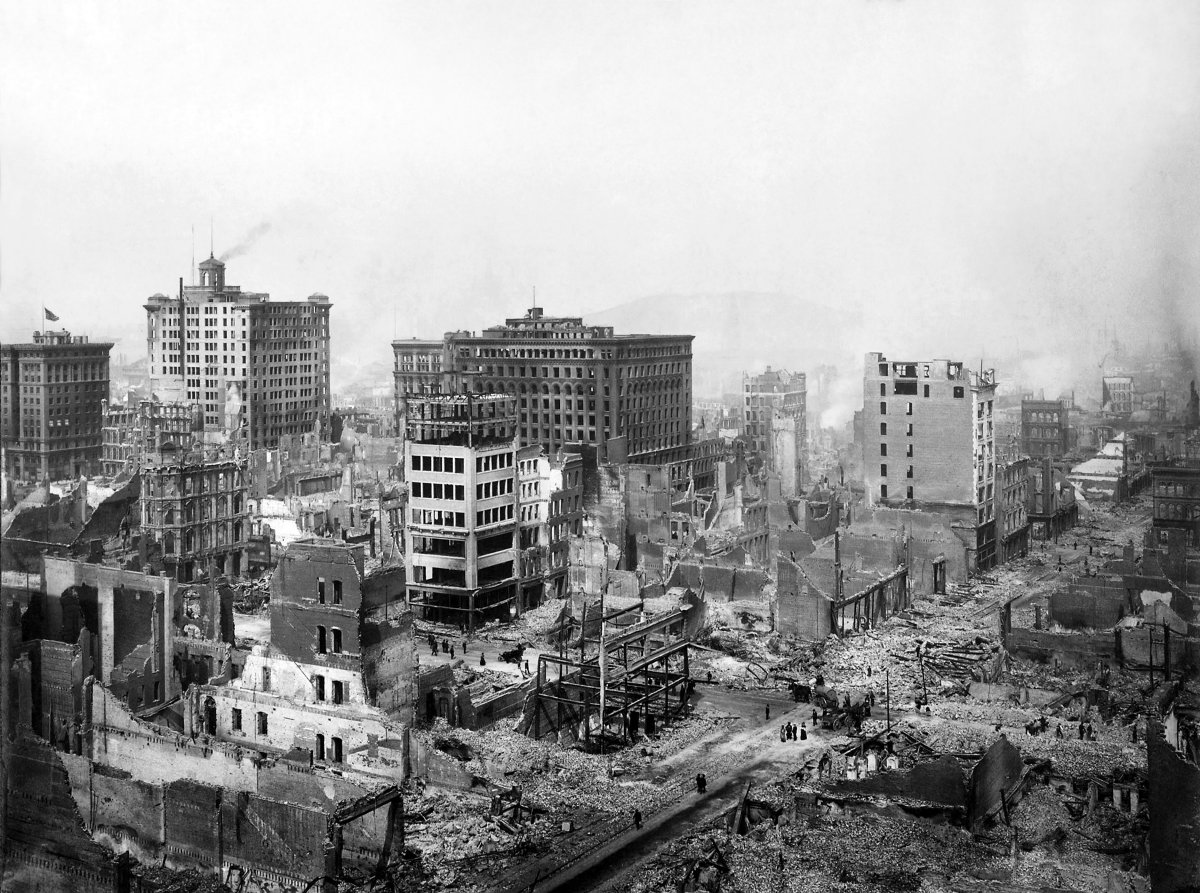
Unlike in 1906, direct damages caused by an earthquake are now insurable in the region. In California, it is primarily the state-run California Earthquake Authority (CEA) that sells homeowners insurance policies for direct earthquake damage, though they are quite expensive and include high deductibles. The CEA also offers considerable discounts when old buildings are retrofitted for greater stability.
In contrast to direct shake losses, losses from fires following an earthquake are covered in standard homeowners policies: California is one of the so-called SFP states, where the “Standard Fire Policy” sets the wording framework for standard building insurance. Among other risks, this covers damage caused by fires of any kind, including those resulting from earthquakes. It is only in regions at an extremely high risk of wildfires that homeowners have to rely on coverage through the state-supported “FAIR Plan” insurance programme, if standard insurers no longer provide coverage
In the event of a quake, the insured losses would therefore depend heavily on the type of damage: around US$ 30bn if comparatively few fires broke out, up to more than US$ 100bn if there were multiple major fires and strings of infrastructure outages. However, estimates are very difficult: due to the very small number of historical events, the risk is more difficult to assess than other natural hazards.
According to CEA estimates, less than 15 percent of homeowners throughout California have taken out insurance against direct earthquake damage. In light of the known threat, this could be due not only to the price of insurance and high deductibles. All in all, it seems that many people simply choose to take their chances. Furthermore, major mortgage lenders do not require earthquake insurance as a condition for granting loans. Nor do the Basel regulations for banks grant financial institutions any capital relief in the case of earthquake insurance for properties in their loan portfolios.
Insurance coverage for direct earthquake damage is also relatively uncommon in the commercial sector. Large corporates are likely to have higher coverage due to commonly used all-risk policies, which regularly include sub-limits to cap liability. Business interruption insurance, which covers indirect losses resulting from service interruptions after damages at suppliers’ facilities, often only takes effect after a certain waiting period.
A severe earthquake in California is one of the costliest risk scenarios for Munich Re. Therefore, we manage our exposure to earthquake losses and consequential losses very precisely, while maintaining a reliably high capacity. As a leading risk carrier with considerable financial resources and unique expertise, Munich Re generally grants risk cover, provided the rates and conditions are commensurate with the assessed risk.