
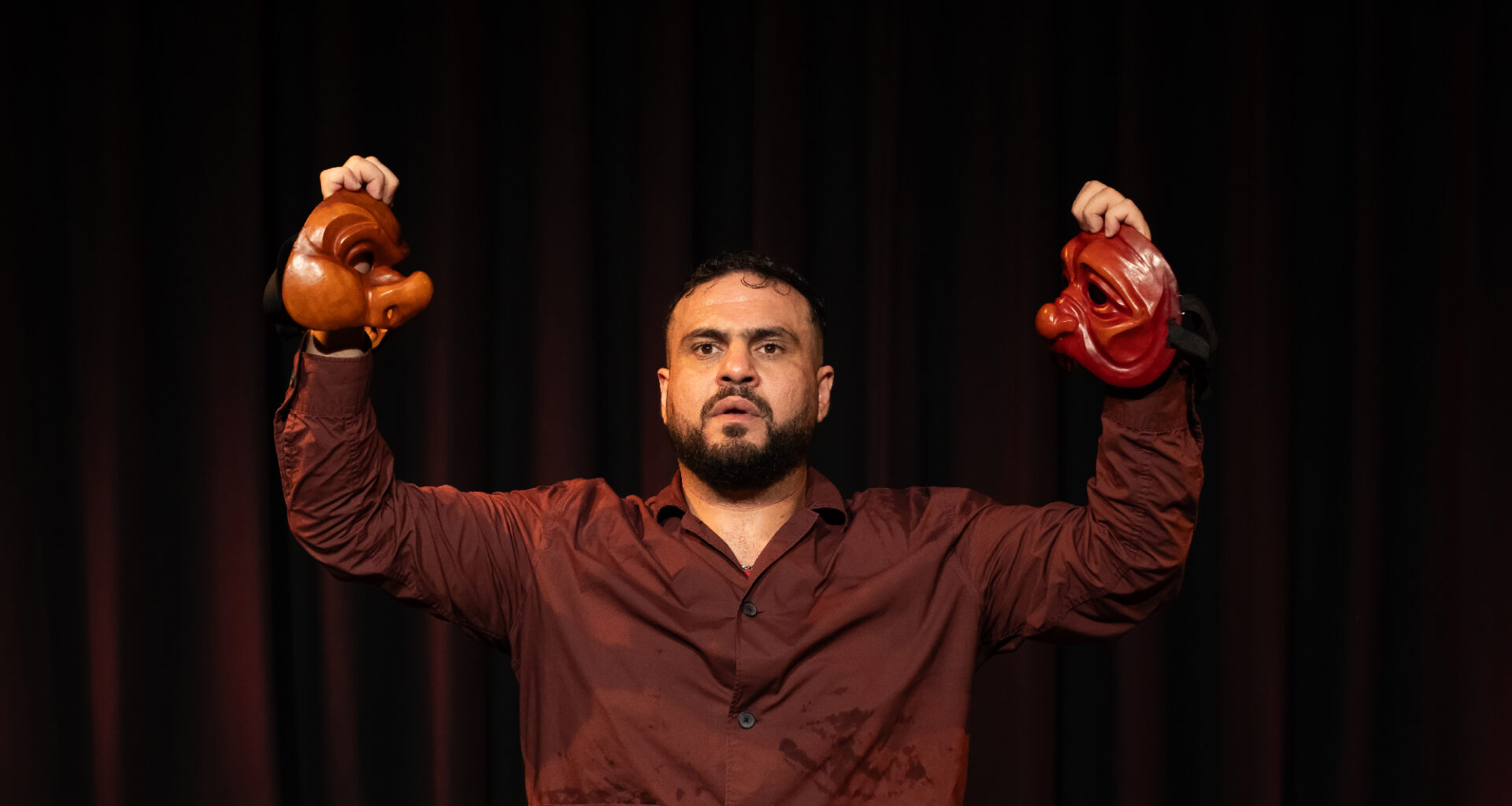
Shehada wasn’t the only person connected to Golden Thread to have his life disrupted. Even before the current conflict began, the Trump administration made international travel a logistical nightmare, severely limiting the number of Middle Eastern collaborators able to work onsite in San Francisco. The regional chaos caused since February has only exacerbated matters.
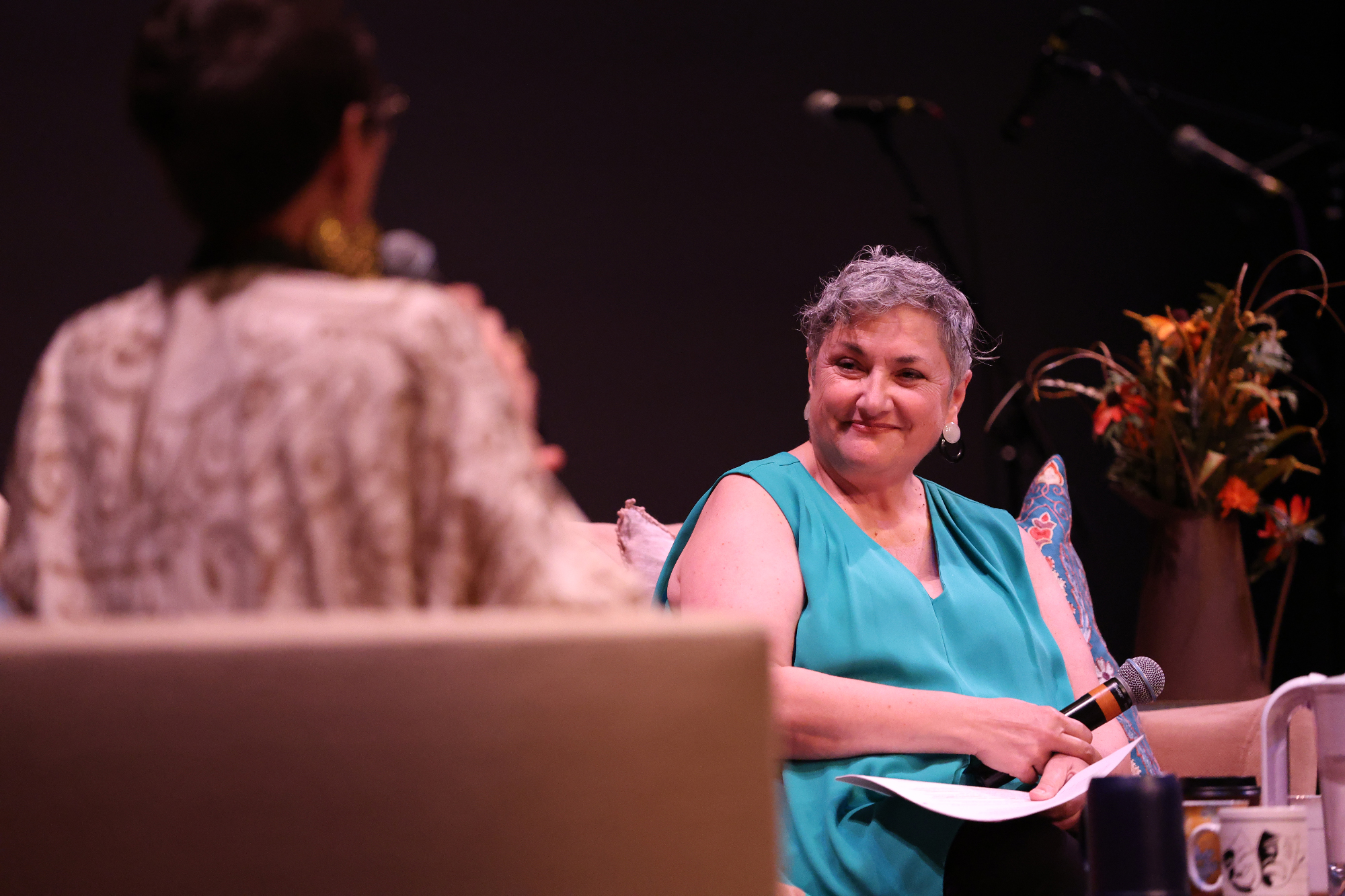 Golden Thread co-founder Torange Yeghiazarian at the 2026 program of What Do The Women Say? (Jared Randolph)
Since the Iranian-born director Torange Yeghiazarian co-founded Golden Thread in 1996, the company has prided itself on highlighting stories by and about MENA artists, many of whom travel to San Francisco to share their stories personally. Getting performers here has often involved maneuvering through the red tape of shifting travel restrictions, a task that only grew more difficult after 9/11.
In the nearly two months since Feb. 28, Golden Thread artists, along with their friends and family, have felt the effects of the attacks on Iran and Lebanon, as well as Israel’s continued presence in Gaza. By Nelson’s telling, Yeghiazarian has been out of contact with her family since the beginning of the attacks on Iran.
Notably, Nelson’s direct predecessor as artistic director, Lebanese theater artist Sahar Assaf, had been planning to return to San Francisco for the company’s annual What Do the Women Say? performance on March 8. The show would have been both a kickoff of the 30th anniversary season and a goodbye from Assaf to the company she led 2021–2025.
“[Sahar] had a ticket to come here from Lebanon when the airspace was completely closed,” says Nelson. “So, she was stuck there for a while as the war started, then decided ‘I can’t go to America even when-and-if the airspace reopens.’ Given the situation, she may not be able to return. That was devastating, and just so indicative of how this affects all of our lives.”
Ultimately, Assaf’s participation was limited to a livestreamed message the night of the event. Similarly, in lieu of a proper Horse of Jenin performance, Golden Thread presented two screenings of a filmed performance of the show.
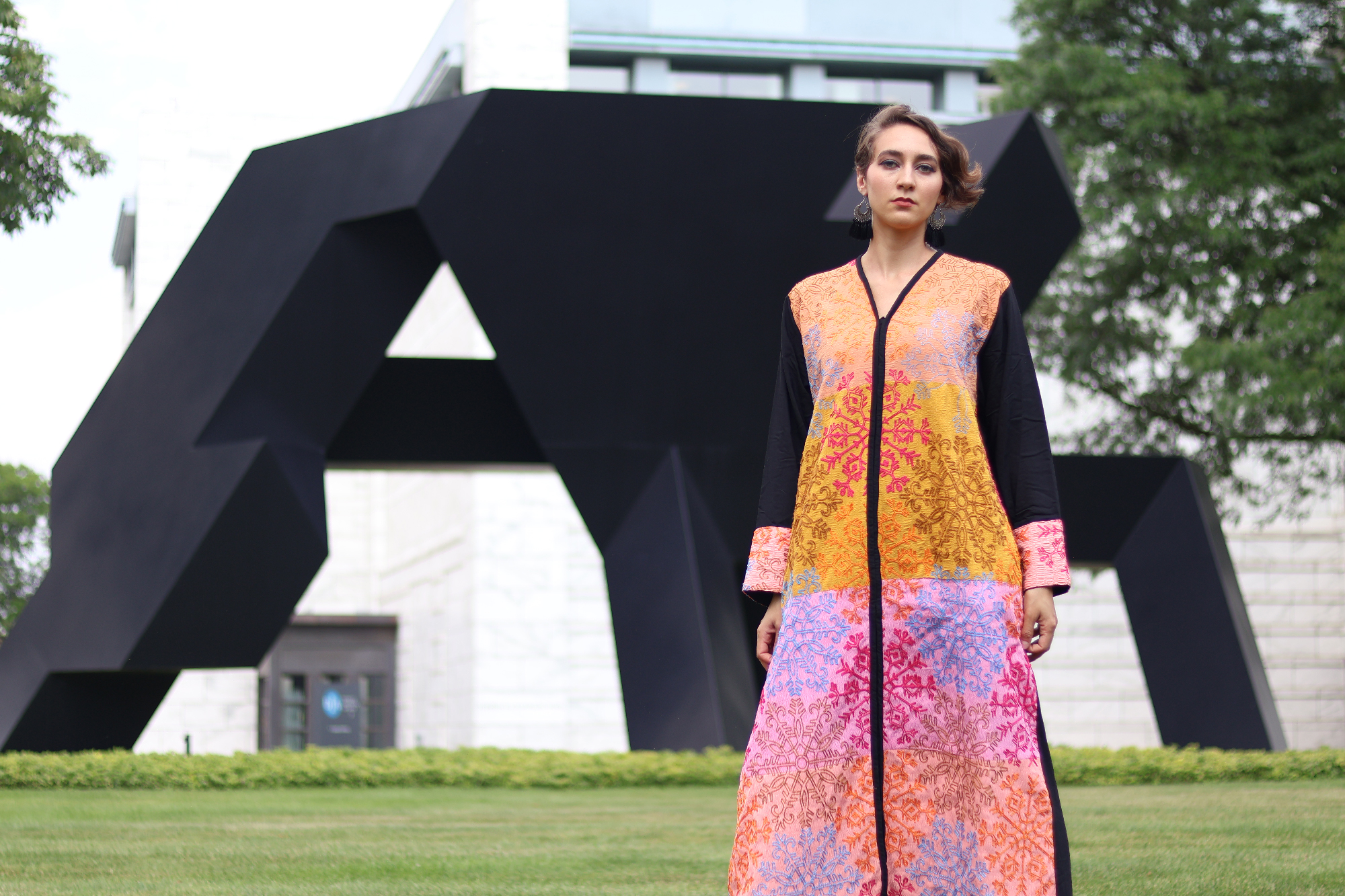 Golden Thread Artistic Director Nabra Nelson. (Hana Mattar)
Nelson insists that the company will move ahead with the rest of its season — which includes a full production of Denmo Ibrahim’s Arab Spring and the annual ReOrient Festival of Short Plays — but is staying in touch with performers and patrons in case world events continue to affect the schedule.
Although it’s turned her first year at the helm into trial by fire, Nelson is grateful Golden Thread is able to amplify MENA voices when other arts organizations remain silent about the Middle East — a silence she attributes to fear of backlash.
“It’s really despicable for people in arts organizations to be afraid to speak out when you compare that fear to what people are actually facing,” she says. “I don’t think there’s a specific thing an arts organization must do when there’s a war or genocide, but to not have that in the forefront of your mind, and make steps to listen to your community, doesn’t make sense to me.”
Despite the uncertainty, Nelson’s role of coordinating with international artists and providing a safe space for the community is one that has 30 years of precedent. She draws inspiration from both her artistic collaborators and community members who have circumvented Iran’s own internet blackout.
“Golden Thread has been doing it right, and there’s so much that proves that,” she says. “I consider my role to be a community service role; my mandate is to respond to what our community needs. I’m really cognizant about our responsibility as MENA artists and an arts institution to continue these conversations beyond the mainstream news cycle.”
Golden Thread’s Festival of Palestinian Art runs through Sunday, April 19 with ‘Amreeka: The Comedy Show’ at Potrero Stage (1695 18th St., San Francisco).