
To the extent that the state is on a path to quietly weaken the California Coastal Commission — and a growing number of the agency’s critics and supporters say that it is — Jan. 12, 2025, is as good a starting point as any.
That’s the date Gov. Gavin Newsom issued Executive Order N-4-25, the first in a series of orders that said most of the people hoping to rebuild homes or businesses in fire-ravaged Pacific Palisades and Malibu wouldn’t need to get approval from the Coastal Commission.
Newsom, no longer a candidate for public office in California, and perhaps speaking to a national audience, even threw some shade on an agency that’s widely viewed as having kept much of the state’s 840-mile coastline comparatively pristine for the past 50 years.
“As the state helps the Los Angeles area rebuild and recover, we will continue to remove barriers and red tape that stand in the way,” Newsom wrote in his signing statement about his order to sideline the Coastal Commission.
“We will not let over-regulation stop us … “
The smackdown was cheeky. Polling shows California residents actually like the kind of regulation-oriented environmental protection provided by the Coastal Commission, certainly a lot more than they like most public officials, including Newsom.
But Newsom’s jibe also leaned in to a criticism of the Coastal Commission that’s as old as the agency itself: that it’s a power-mad, bureaucratic swamp.
Other California lawmakers leaned in, too.
In the weeks and months after Newsom’s executive order, legislators pitched more than two dozen bills that directly or indirectly touched the Coastal Commission. Many called for streamlining, hastening or limiting the scope of what it does. Most didn’t make it into law. And some of the proposals (those aimed at streamlining the approval process for home building near the coast) were blessed by the Coastal Commission.
But, collectively, the efforts hinted at a broader message: There’s an anti-regulatory vibe in Sacramento right now, and the Coastal Commission might be a ripe target for some wing-clipping.
Now, some critics and supporters of the agency suggest that last year’s flirtations with environmental deregulation were just a warm-up act to what’s happening this year.
A new legislative battle, over a seemingly arcane bill, poses what some environmentalists view as a direct threat to the California Coastal Act, the 1976 law that created the Coastal Commission as an independent, environment-focused agency.
At stake, some argue, is nothing less than the long-term trajectory of environmental protection in California.
“The Coastal Act (of 1976) is a pretty unique thing” because it defines the beach as a public resource, said Garry Brown, founder of Orange County Coastkeeper, a Costa Mesa-based nonprofit that works to protect clean water in the region.
“And there have always been efforts to take it out because there’s always been a lot of money to be made along the coast. And, to do that, you have to go through the Coastal Commission.
“So, yeah, if what they’re talking about comes to pass, it could be a big deal,” Brown added.
“It could make California different than it’s been.”

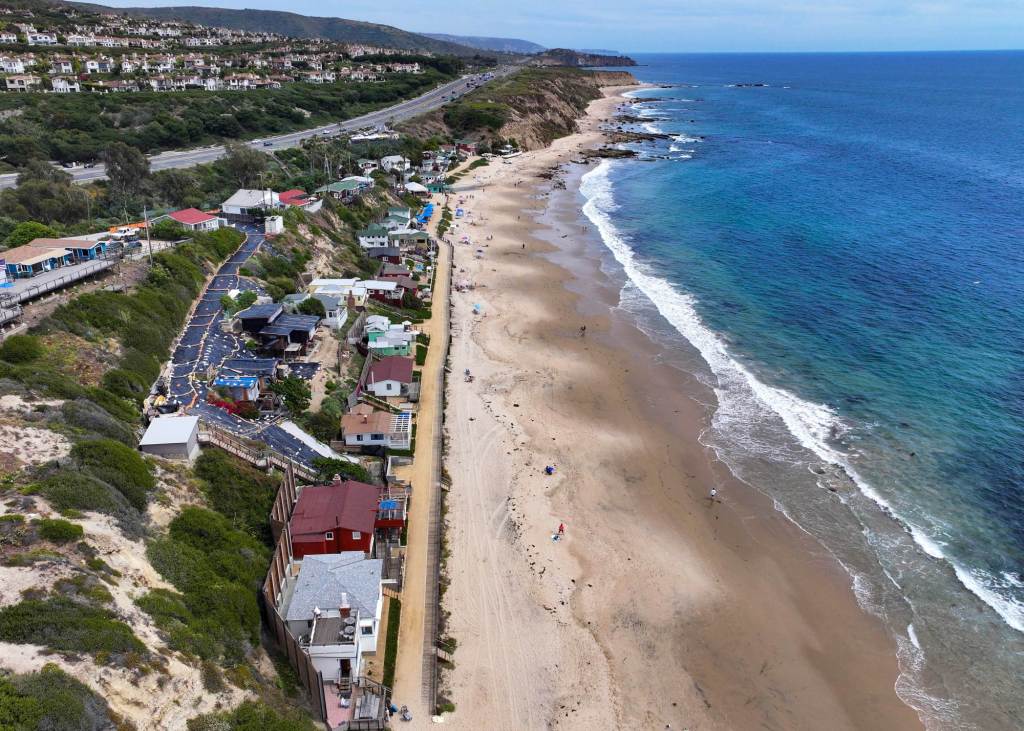
Work continues to secure the hillside and protect train tracks between North Beach and the pier in San Clemente, CA on Wednesday, April 15, 2026. (Photo by Paul Bersebach, Orange County Register/SCNG)
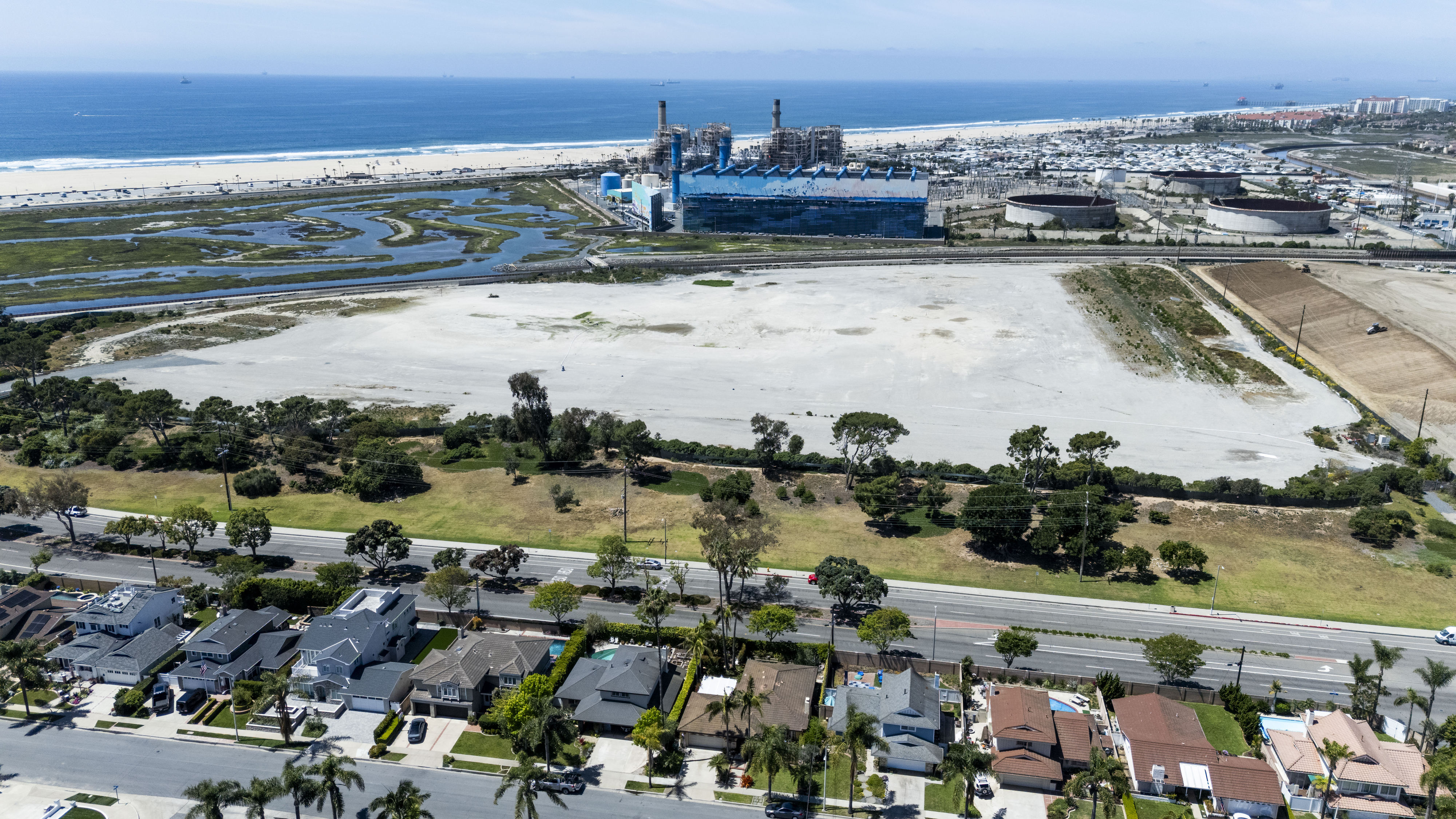
The area formerly called “Magnolia Tank Farm”, here on Wednesday, April 15, 2026, could be developed along Magnolia Ave., bottom, and PCH in Huntington Beach, CA. (Photo by Paul Bersebach, Orange County Register/SCNG)
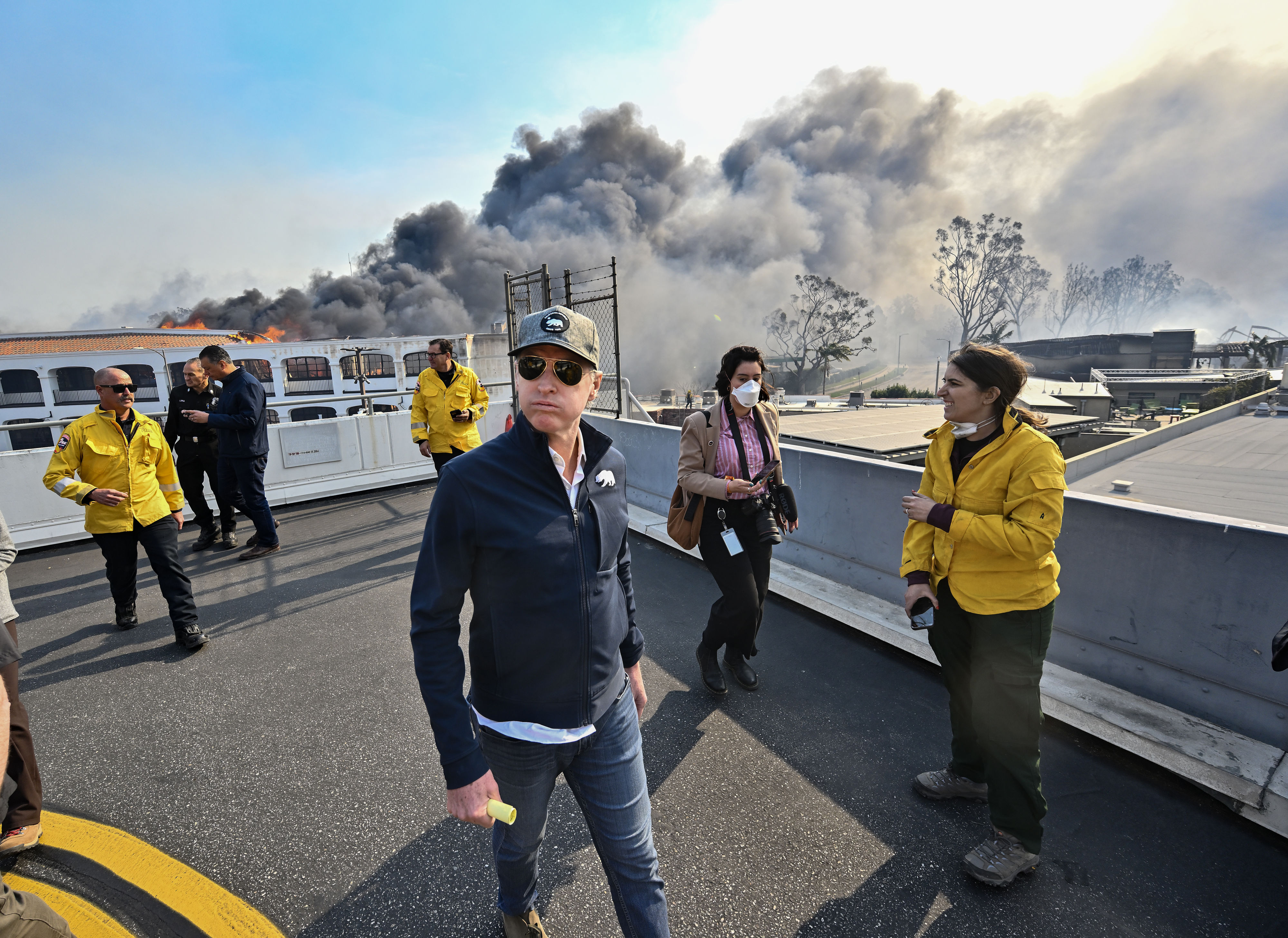
California Governor Gavin Newsom surveys damage in during the Palisades Fire on Wednesday, January 8, 2025, in Pacific Palisades. He signed an executive order on January 15, 2025, to jumpstart cleanup efforts for homes destroyed by wildfires in Los Angeles.
(Photo by Jeff Gritchen, Orange County Register/SCNG)
Show Caption
1 of 3
Work continues to secure the hillside and protect train tracks between North Beach and the pier in San Clemente, CA on Wednesday, April 15, 2026. (Photo by Paul Bersebach, Orange County Register/SCNG)
Expand
‘Multimodal’
Assemblyman Rick Chavez Zbur, a Democrat whose district ranges from Hollywood to the northeast side of Santa Monica, recently proposed Assembly Bill 1740, a real estate and transportation bill specifically backed by the city of Santa Monica.
The bill, which on Monday, April 13, was heard by a key committee, would do for beach-close business districts of Santa Monica what Newsom’s executive orders did after the fires — sideline the Coastal Commission from having a say over certain types of development in places where the agency previously has held sway.
If passed, the bill could let some beach cities and counties, not the Coastal Commission, oversee development of certain housing projects, as well as efforts to create new or improved bike lanes, outdoor dining expansions and temporary street uses connected to big events, such as the 2028 Olympics.
It’s backed by supporters as diverse as home developers and affordable housing advocates, the League of California Cities, advocates for bicycle use and state transportation officials.
The new rules would apply in places the bill describes as “urban multimodal communities.” That term, coined for the bill, isn’t defined in urban planning or California law. Zbur said it describes ocean-close cities that are “already built out, and heavily invested in transit and bus service.” Specifically, the bill’s language says it would apply to places that have three things: at least one “transit corridor,” a community plan aimed at reducing greenhouse gases and some bike lanes or similar paths. Population, Zbur added, isn’t a factor.
Based on those rules, coastal communities as diverse as San Francisco and San Clemente eventually could create zones in which Coastal Commission oversight is no longer required.
Initially, the bill was written to include multimodal communities up and down the coast. But when Zbur and others presented it to the Assembly’s Natural Resources Committee, the scope had been pared back to include only Santa Monica.
Zbur said future expansion would be based on its success in Santa Monica, and that such expansion is already contemplated.
“(The bill) does establish a procedure that other cities could use, so they could go to the Legislature and appeal for their own exemptions,” Zbur said.
Projects not covered under the bill would include anything pitched near what Zbur described as “environmentally sensitive” areas, such as estuaries, or projects aimed at the sandy side of the community’s most ocean-close street, which usually is Pacific Coast Highway. The beach, he said, should be viewed as an environmentally sensitive resource.
Under the bill, parking spaces on streets and highways could be removed to make way for some projects. But Zbur said “beach parking lots” would not be removed.
Zbur said his overall goal is to streamline what he views as common-sense development. He even argues that the law, if passed, could lead to more affordable housing along the coast, though there’s nothing in the proposal to specifically require that, and market forces, not environmental regulation, are a key factor in making beach-close properties expensive.
Overall, Zbur said he’s a fan of the Coastal Commission, and his bill isn’t intended to be a broad effort to change environmental law.
“I don’t agree that there should be significant concern,” he said. “It’s very limited in terms of what it focuses on.”
Yet Zbur also said the Coastal Commission could be better with some changes, and his bill is predicated on the idea that the Coastal Commission isn’t currently in step with things like bicycle use, mass transit and the need for more housing.
“The philosophy of the bill is that the Coastal Commission is using an old-school view of protecting public access to the coast. But in fact, in our view, the application of their policies inhibits access to the coast,” Zbur said.
“There are a lot of assertions about this bill that are not accurate,” he added. “And these characterizations that this is some broad-scale attack on the Coastal Commission, or the Coastal Act, just aren’t based on reality.”
Critics of Zbur’s bill see something much darker.
“(The bill) is a broadside attack on the Coast Act — and therefore on the coastal environment and the public’s right to access the coast — unlike any we have witnessed in the last three decades at least,” wrote leaders of the Surfrider Foundation, the California Coastal Protection Network and several other environmental groups opposed to the bill, in a letter to the Resources Committee.
Among other things, they wrote, loose terms like “multimodal community” will make it easy for developers and others to skirt environmental regulations to make bigger profit in and near beach communities up and down the coast. They also wrote that the bill expands no-Coastal Commission-approval areas more than Zbur and other supporters claim. Critically, they said, it would let beach cities eliminate parking used by people who don’t live near the beach to access the ocean.
But, beyond the specifics, opponents of the bill don’t like its rationale.
Yes, following the state’s coastal protection laws is hard and expensive. The difficulty factor and the expense have helped make it so California’s coast isn’t dominated by high-rises, like much of Florida’s coast, and that swimming and beach access is free for anybody, unlike the “beach tag” fees required of swimmers and surfers in New Jersey.
“I’ve been asked by developers to look at projects and tell them if it’s going to get approved by the Coastal Commission. Or I get asked what I think about the commission,” said Coastkeeper founder Brown.
“I tell them it’ll probably get approved, but you might not recognize it when they’re done and you’re not going to make as much money as you thought you were.
“I think that’s still true. I think that’s because enforcing environmental law isn’t free.”
Already changed
The average wait time for a ruling from the Coastal Commission isn’t years; it’s about two months, according to state data.
The vast majority of housing projects and housing renovations put before the Coastal Commission eventually win approval.
And long-standing complaints about the agency’s anti-housing bias are being addressed.
Last year, the Coastal Commission voted unanimously to not join environmentalists who opposed a controversial housing reform law. The Coastal Commission decision gave political cover to lawmakers in liberal-leaning communities to approve the bill that will speed up home construction by exempting most projects from deep environmental review.
And that was before three new board members were appointed: Jaime Lee, a Los Angeles-based real estate developer; Chris Lopez, a supervisor in Monterey County; and Jose Preciado, a council member in Chula Vista, who are openly viewed as pro-development.
Observers say such appointments suggest the Coastal Commission has already begun to change in ways that pro-housing reformers seem keen to attain. And even longtime supporters of the Coastal Commission believe that recognition that the state needs more housing, even in coastal areas, will help the agency in the long run.
But what environmentalists fear is that the kind of “mission creep” expansion that critics have lobbied against the Coastal Commission for years could be adopted by deregulators. If AB 1740 becomes law, and supporters and critics of the bill both believe passage is a toss-up, environmentalists fear the basic idea behind it, that following environmental law is hard, will become a new norm.
Others note that such arguments have been underway for a while. Gov. Jerry Brown, in his first stint running the state, referred to the Coastal Commission as “thugs” less than three years after he’d supported its creation.
But others, including Zbur, suggested that the Coastal Commission, an agency with about 200 employees and a mandate to review projects on 840 miles of coastline, could benefit if its mission got smaller.
“I would argue that my bill allows the Coastal Commission to focus its limited staff resources on the things we all want them to focus on … the Coastal Act,” said Zbur.
“The Coastal Act is one of the most important environmental laws in this country’s history, and I don’t want to do anything to reduce the Coastal Commission’s ability to protect the things they’re supposed to protect.”