
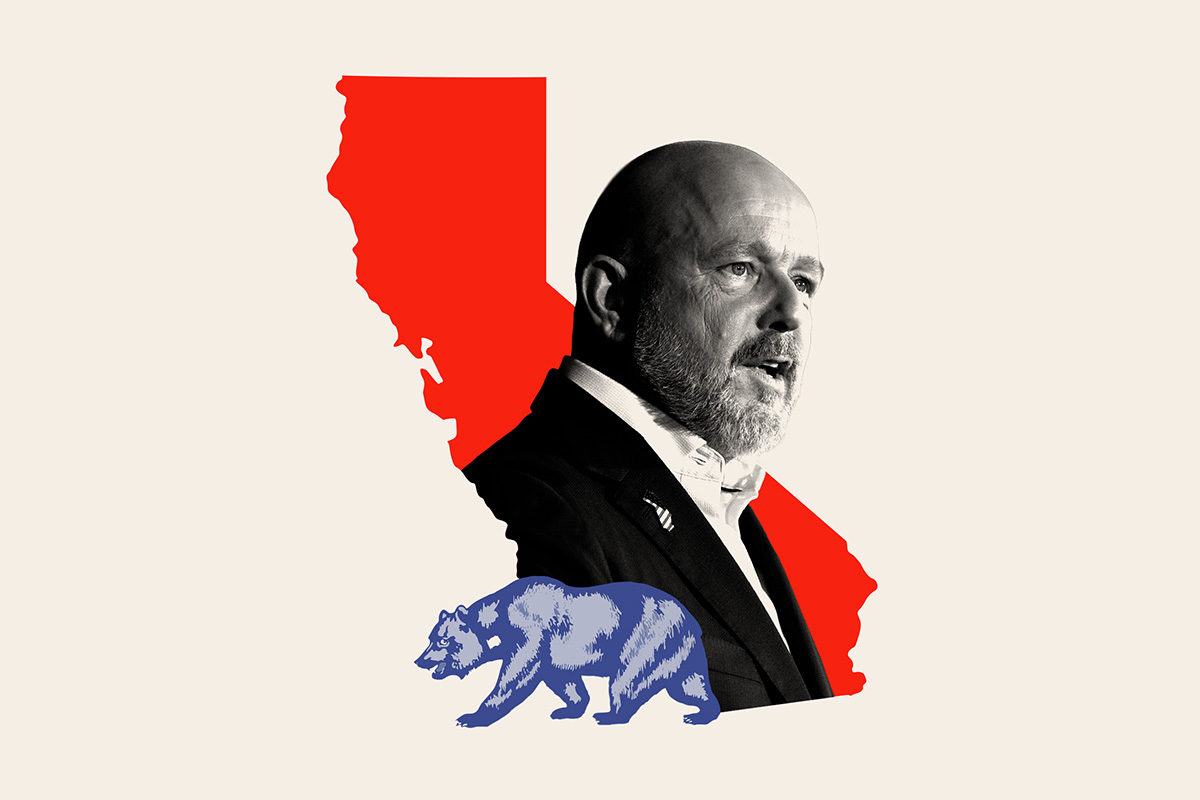
For a Republican running statewide in California, the math is typically unforgiving. Democrats dominate voter registration, control every major office, and have consistently carried the state in presidential elections by wide margins. That broader context has not changed in 2026.
What has changed, however, is the current dynamic of the gubernatorial field.
Republican candidate Steve Hilton has led in early primary polling, as multiple Democrats split the vote in a large and unsettled field. The withdrawal of former Democratic Representative Eric Swalwell after allegations of sexual assault and rape has added further volatility. Swalwell has denied the accusations but suspended his campaign and resigned from Congress.
Hilton, a former Fox News host and businessman who President Donald Trump endorsed earlier this month, is framing the race in stark terms.
“California is desperate for change. Everything’s heading in the wrong direction,” he told Newsweek in a Wednesday interview via Zoom. “It’s really a disaster and we’re desperate for a change.”
The central question is whether Hilton’s strategy can translate into a viable path to victory in November.
California Election Dynamics and What 2026 Polling Shows
California’s recent voting history underscores the scale of the challenge. Trump has consistently lost the state by wide margins, but his share of the vote has increased each cycle—receiving roughly 31 percent in 2016, about 34 percent in 2020, and just over 38 percent in 2024. Despite those gains, Democrats have continued to carry the Golden State comfortably.
The state has not elected a Republican to statewide office in nearly two decades, and Democrats maintain a significant registration advantage. They also control the governorship, both chambers of the legislature with supermajorities, and every other statewide constitutional office.
That reality is compounded by national political conditions. Democrats are broadly expected to perform strongly in 2026, aided by Trump’s low approval ratings and recent special election results that have trended in their favor. Hilton acknowledges those headwinds but argues the outcome will hinge on how voters interpret the race.
“If the campaign for California governor is about California…then I will win,” he said. “If the Democrats succeed…to make the California governor’s race about national politics, then the headwinds…will come into play.”
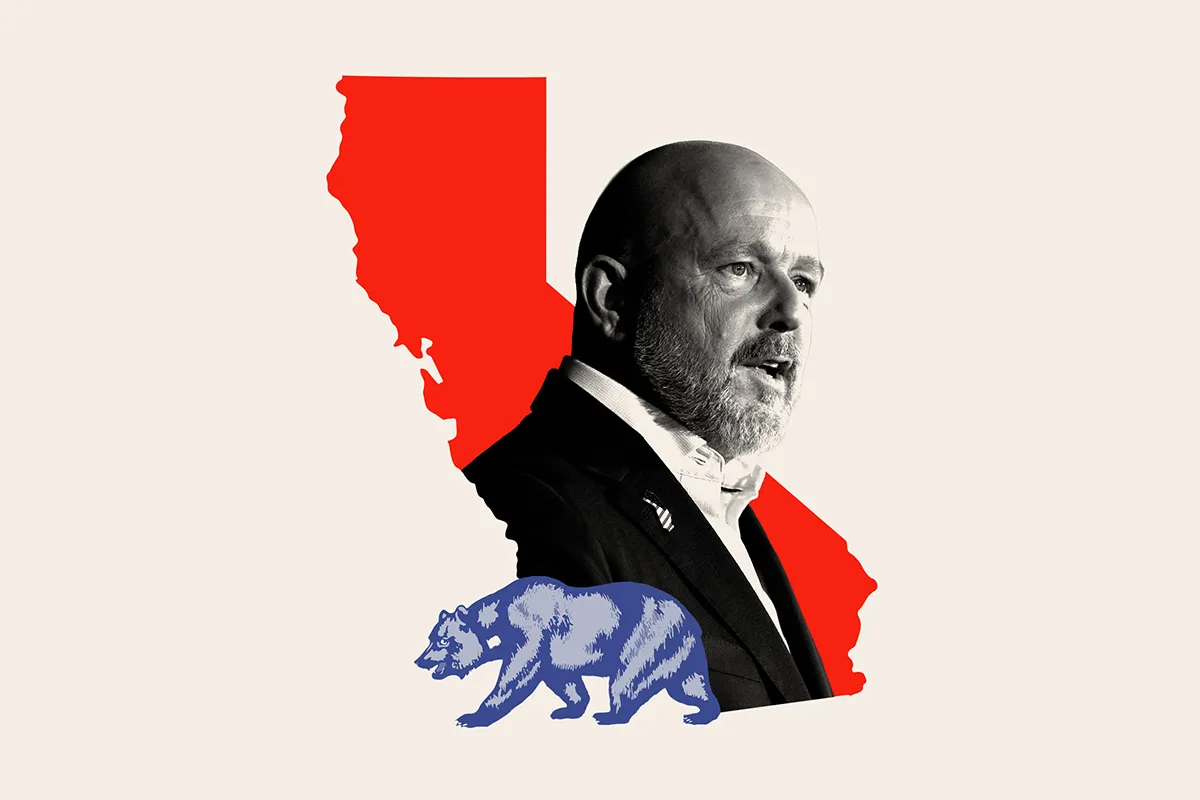
Recent polling reflects Hilton’s early positioning and the fragmented nature of the race.
An Emerson College Polling survey conducted April 14 to 15, found Hilton leading with roughly 17 percent support. Fellow GOP hopeful Chad Bianco and Democratic billionaire Tom Steyer tied for second at 14 percent. Several other candidates trailed in the low double digits, while a significant share of voters remained undecided.
Other public polling has shown a similar pattern, with no candidate approaching majority support but Hilton repeatedly appearing in the lead of the crowded field. That dynamic is not unusual in California’s top-two primary system, where a large field can allow a candidate with a consolidated base to emerge ahead early, even without broad majority support.
Democrats have pointed to that structure in assessing the race. Party officials have urged consolidation behind a smaller number of candidates to avoid splitting the vote. Candidates have also sought to define contrasts. Steyer, the founder of Farallon Capital, has emphasized economic reform and systemic change, while former Democratic Representative Katie Porter has focused on accountability, consumer protection, and corporate oversight.
Hilton, however, has argued broader dissatisfaction outweighs candidate-specific dynamics.
“In a sense it doesn’t matter who the Democrat candidate is…they’re gonna lose this year because we’re sick of it all and want change,” he said.
Hilton’s strategy is to keep the campaign focused on state-level concerns rather than national political dynamics.
“The real question is…if people are voting on California issues,” he said. “Whoever the Democrat is will be going on about Trump…”
He has argued the state’s long period of Democratic control has contributed to current challenges.
“The Democrats in California control every statewide elected office…the legislature…the big cities,” Hilton said. “It’s like total one-party rule, and it’s just not healthy.”
At the same time, he has acknowledged that national politics will play a role, particularly given Trump’s presence in the race through his endorsement. Hilton has pointed to that endorsement as a factor that could help drive Republican turnout, while emphasizing that a broader coalition will be necessary.
Cost-of-Living, Housing Crisis and Economic Pressures
Hilton’s campaign is centered on cost-of-living, housing, and homelessness—issues that consistently rank among the top concerns for California voters.
California is widely considered the most expensive state in the country. Housing costs are a primary driver, with median home prices exceeding $700,000 statewide and significantly higher in major metropolitan regions such as Los Angeles and the Bay Area. Rent prices similarly rank among the highest in the nation.
Energy costs, including gasoline and electricity, also exceed national averages, contributing to broader affordability challenges.
These pressures have contributed to population outflows in recent years, as some residents relocate to lower-cost states.
At the same time, California continues to face a severe homelessness crisis. More than 180,000 people are experiencing homelessness, according to recent estimates—the largest population in the nation. Despite significant public spending, the issue remains a central political concern.
Hilton frequently frames these issues as evidence of systemic problems in state governance.
“We’ve got the highest cost-of-living, highest price of gas, electric, housing, rent, everything,” he said. “It’s really a disaster.”
Housing policy is central to Hilton’s platform.
“We’ve got the highest housing costs in America and the lowest home ownership,” he said. “It’s the number one reason people are leaving our state.”
He has argued construction costs in California are significantly higher than in other states, citing regulatory requirements as a key factor.
“It costs about two or three times as much to build anything in California compared to Texas or Arizona,” the gubernatorial hopeful said.
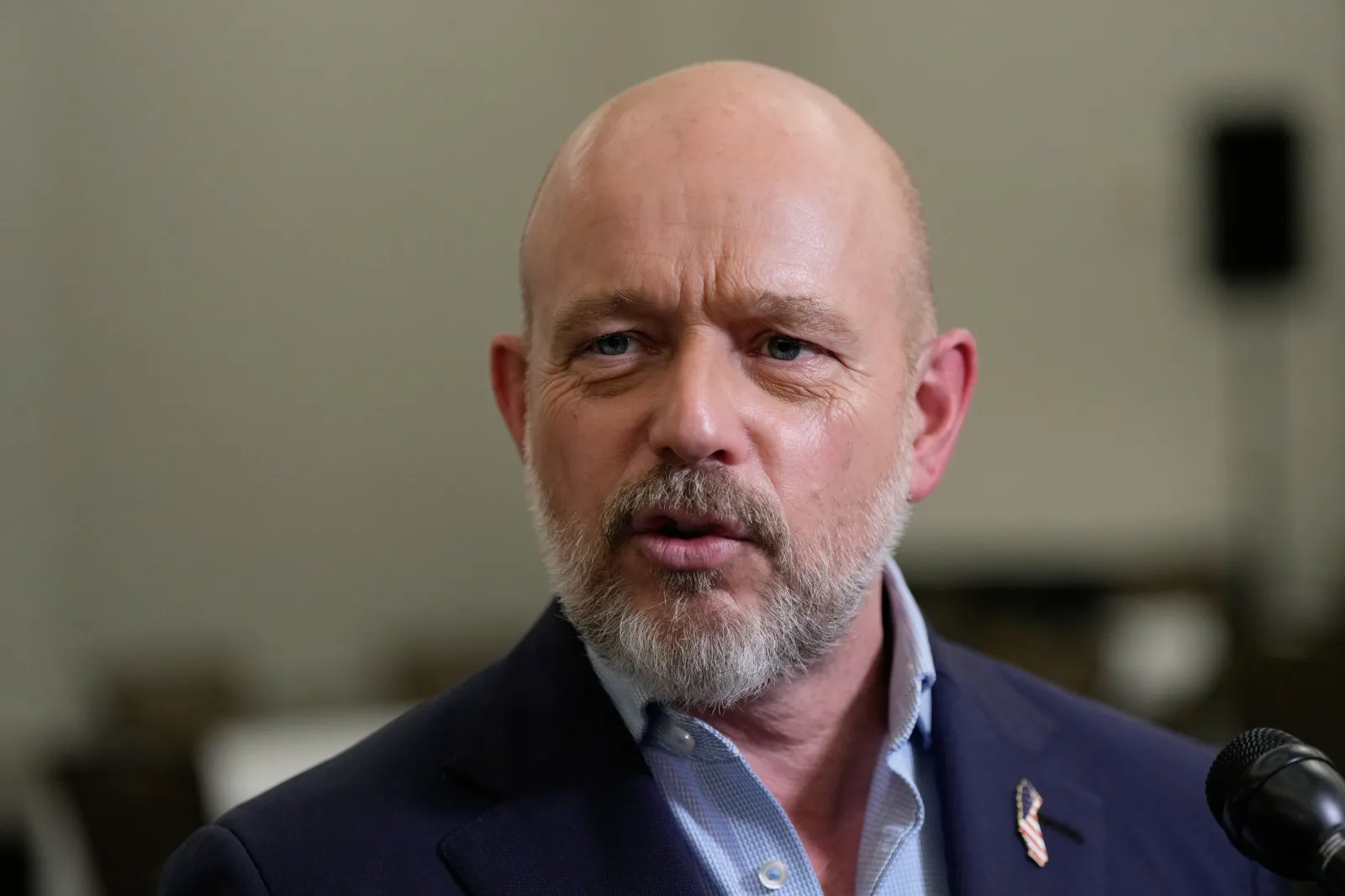
A major focus of his critique is the California Environmental Quality Act (CEQA), which he argues has been used to block housing development.
“Seventy percent of lawsuits under CEQA are used to block housing,” he said, who also pointed to local impact fees, which can add substantial costs to new construction, and has proposed limiting those fees.
Another element of his approach is expanding housing supply beyond existing urban areas.
“We’ve got to challenge this ideology of density,” Hilton said. “We’ve got plenty of land…but they won’t let us build.”
Hilton has tied his economic message to broader themes of opportunity and affordability.
On immigration, he has emphasized his personal background.
“I’m a proud American and a legal immigrant,” he said. “I am the candidate of the legal immigrant community for the legal immigrants community.”
At the same time, he has taken a firm stance on illegal immigration.
“When it comes to illegal immigrants…it’s illegal,” he said. “There’s probably about four to five million adult Californians who could be working…That whole equation is broken.”
On social issues, Hilton has sought to minimize their role in the campaign.
“It shouldn’t be a concern at all, because it’s not a part of my campaign at all,” he said. “There’ll be no change.”
Can Steve Hilton Win?
Hilton faces a difficult path in a state where Democratic advantages remain significant.
To win, he would need strong Republican turnout, significant support from independent voters, and some crossover backing from Democrats.
He has acknowledged the challenge.
“I’ve never said that it is going to be easy to win,” he said. “I understand it will be difficult…but it really is time for change.”
Whether that argument resonates broadly enough to overcome California’s political alignment remains uncertain.
Steve Hilton Q&A Transcript
The transcript has been significantly edited for brevity and clarity.
Newsweek: What’s your view of the fallout around Eric Swalwell?
Steve Hilton: It’s politics. I’ve seen it for many years…I hear that Katie Porter believes that it’s Tom Steyer who’s behind all this… But the point about everyone’s known about his behavior for a long time…The hypocrisy is breathtaking…It’s symbolic of the rot and decay of the California Democrats after 16 years of one-party rule.
Do you think Democrats more broadly are affected?
I just think that this party’s…time for change. They’re not delivering for the people of California…We’ve got the highest gas prices, highest housing costs…homelessness is totally out of control…We pay the highest taxes in the country for the worst results…California is in deep trouble after 16 years of Democrat one-party rule.
Why are you qualified to fix these issues?
We need change…it has to be a Republican…I’ve spent most of my career in business…I’ve got a pragmatic, problem-solving business mindset…I also worked at the highest levels of the UK government…I’ve been traveling the state, developing solutions…I would argue that I’m the best prepared and best qualified candidate.
What would you do on housing?
We’ve got the highest housing costs in America…It costs about two or three times as much to build…regulations have been layered on…CEQA…70 percent of lawsuits under CEQA are used to block housing…Impact fees add huge costs…We’ve got to challenge this ideology of density…We’ve got plenty of land…but they won’t let us build.
How do you win in California?
People outside California aren’t quite realizing how bad it is here…If the campaign for California governor is about California…then I will win…If Democrats make it about national politics, then the headwinds will come into play.
Does Trump’s endorsement help?
It’s a very powerful driver of turnout…In a midterm election…it’s about turnout…You can’t win without strong Republican turnout.
What about Californians concerns about Republicans and social issues?
It shouldn’t be a concern at all…It’s not a part of my campaign…There’ll be no change.
Where do you agree and disagree with Trump?
I strongly support the reorientation of the Republican Party…becoming a pro-worker party…One area I really disagreed was on the lockdowns…they did much more harm than good.
How do you approach immigration?
I’m a proud American and a legal immigrant…I am the candidate of the legal immigrant community for the legal immigrants community…When it comes to illegal immigrants…it’s illegal…There’s probably about four to five million adult Californians who could be working…That whole equation is broken.
What does America mean to you?
California means to America what America means to the world…Above all…the rebel spirit…not accepting the way things are… always believing there’s a better way…That’s America.