
Inside a nondescript Central Valley building, tucked between irrigation canals and orchards, sits what is probably the greatest collection of cannabis ever assembled. A constant buzz of activity hums inside as dozens of workers wearing reflective jackets unload semitrucks filled with cannabis and move carts of boxes back and forth across the warehouse floor. It’s like someone took a Costco and swapped pallets of toilet paper for millions of joints, vapes and cannabis flower, all packaged and ready to be enjoyed.

This is the storehouse for Nabis, California’s largest distributor, through which 30% of the legal market passes on its way from pot farms to retailers. You’ve probably never heard of the company, but if you’ve bought legal marijuana in California, there’s a good chance Nabis touched it.
While thousands of cannabis companies go under in California, including the spectacular collapse of the state’s previous largest distributor, Nabis has quietly grown into one of the biggest winners in the California cannabis market. The company is earning approximately $100 million a year in revenue and is profitable — a rare feat in the negative margins world of legal cannabis — and recently became the largest distributor in New York, according to CEO Vince Ning.
Article continues below this ad
Boxes of cannabis products at Nabis’ distribution warehouse in San Francisco as they wait to be shipped to retailers across the state. Nabis ships to nearly every cannabis store in California.
Lester Black/SFGATE
The former software engineer founded the company in 2018 in a San Francisco apartment with his childhood friend Jun S. Lee. They started small at first — their original titles were co-CEO as well as delivery drivers 1 and 2 — and now they’re processing $1 billion in cannabis a year. The growth has been surprising even to its founders.
“Even a couple of years ago,” Ning recently remembered, “people were like, ‘Who the hell is Nabis and why are we handing over all our stuff to them?’”
‘Very much like a marriage’
By their mid-20s, Ning and Lee had already established themselves in the tech industry. Ning worked at Microsoft and then, at 23 years old, sold a startup he co-founded to Amazon in 2017. Lee worked at Meta and by 24 was bootstrapping an artificial intelligence startup five years before the launch of ChatGPT made AI a household term.
Article continues below this ad
Make SFGATE a preferred source so your search results prioritize writing by actual people, not AI.
Add Preferred Source
The two childhood friends were well on their way to lucrative careers in tech, but they had always toyed with the idea of taking a risk working together on their own project. They were living together in San Francisco when, in 2016 and 2017, California was launching its legal cannabis market. The friends noticed a strange dynamic within the nascent industry: simply buying cannabis was a struggle.
“We just saw all these people wanted to buy weed, all these people wanted to sell weed, and it wasn’t working,” Lee said. “None of it worked.”
A Nabis employee looks through a cold storage room at the company’s Central Valley distribution facility.
Lester Black/SFGATE
Ning and Lee decided to apply their problem-solving skills honed in the tech world to the cannabis marketplace, borrowing the last five letters of “cannabis” to launch their new distribution company in 2018. They signed a lease for a commercial space in Oakland and then started signing up cannabis brands, hand-delivering boxes of vapes and joints to retailers around the Bay Area.
Article continues below this ad
The combination of living and working together turned their relationship into something that looked “very much like a marriage,” according to Lee.
“In the beginning, we were just in the trenches doing deliveries together, packing boxes together, assembling shelves or desks,” Lee said. “It’s a spouse in the truest sense of the word where like you wake up together, you work on everything together, and you go to bed thinking about the same thing.”
Nabis had the benefit of venture capital funding from the start, going through the elite Y Combinator incubator and raising over $10 million in its first three years of business from investors including NFL Hall of Famer Joe Montana and Stanley Tang, the co-founder of DoorDash, Ning said. But the founders didn’t immediately drop that cash to buy the biggest space they could find. Instead, they expanded only as needed, as they ran out of space for products. First they launched inside a 500-square-foot Oakland space that Ning described as a “closet,” then they grew into a 2,000-square-foot East Bay garage, followed by the 2021 opening of a 20,000-square-foot distribution facility in Southern California.
This expansion came right as the California legal market went through its most turbulent years to date. Statewide sales were increasing as customers bought more cannabis during the COVID lockdowns; some California companies saw their valuations grow to billions. But nearly all cannabis businesses still struggled to turn a profit as their balance sheets were weighed down by costly regulations and taxes.
Article continues below this ad
Employees move cannabis goods at the Nabis distribution facility in the Central Valley.
Lester Black/SFGATE
Despite the cloudy outlook, Lee and Ning decided to place their biggest bet yet. In 2021, just a few months after opening their big Los Angeles facility, they raised $23 million to buy an 87,000-square-foot distribution facility in the southern Central Valley. According to Lee, they spent nearly all of their money on a warehouse that at the time, they could only fill 30% of. They weren’t the largest distributor in California, but they believed they had room to grow.
Nabis opened its new warehouse doors in 2023. Two months later, a rival’s stunning collapse would give Ning and Lee the opportunity to fill all of those empty metal shelves.
Historic collapse
Just as Nabis was getting ready to open its new warehouse, the biggest distributor in California at the time was in the midst of a crisis. Santa Barbara-based Herbl had quickly grown to be the state’s largest distributor at the outset of the legal market, opening multiple distribution centers across California and capturing $700 million of the market annually.
Article continues below this ad
Veteran executives from the food distribution industry ran the widely respected company. But Herbl suddenly collapsed in June 2023. The crash revealed that the company had been mired in a debt crisis with millions owed to the cannabis producers for product and the state for taxes.
Industry insiders said the collapse of Herbl signaled a warning for the entire industry, as a collective debt crisis worth $600 million took out some of the most established operations in the state.
But as Herbl fell, Nabis deftly filled its place.
Vince Ning and Jun S. Lee pictured at a ribbon cutting ceremony for the new Nabis warehouse in Rochester, N.Y., on Friday, June 13, 2025.
Lauren Petracca
Part of Lee and Ning’s success is they have apparently solved the problem that has taken many other companies out. California’s pot shops are notorious for not paying their bills — retailers owed Herbl nearly $2 million when the company collapsed — so Nabis launched its own financing arm called Nabis Capital. The concept is fairly straightforward: Cannabis producers can sell their products to retailers and get immediate cash from Nabis Capital, instead of waiting for the retailer to pay an invoice, which could take months. On the other side of the transaction, Nabis Capital pays the producer by purchasing the rights to the invoice based on an internal system that measures the retailer’s credit worthiness. The distribution company is then in charge of collecting the debt, and they get to use the considerable might of a large company like Nabis to do so, giving it a better chance than an individual small producer would have. Lee said Nabis Capital has so far provided more than $50 million in short-term financing to producers.
Article continues below this ad
In addition to financing, Nabis also offers a range of other features to its customers. It has a digital marketplace with essentially every retailer in the state, allowing producers to see marketplace data and make deals with pot shops across California, and then use the distribution company’s trucks and warehousing to make the delivery. The company likes to call itself a platform — a word that’s been overused in the tech world to the point of becoming almost meaningless — but the company’s success appears to be a sign that there could be some truth to the claim.
“Our job is really just to make sure that everyone can get the products out there for as cheap as possible over time,” Ning said. “We essentially become this utility company.”
Murky valuation
While the growth of Nabis is impressive, its greatest accomplishment might just be keeping its doors open in the cutthroat world of legal weed, according to Jerry Derevyanny, a partner focusing on the cannabis industry at Bengal Capital.
Article continues below this ad
Nabis’ distribution facility in the Central Valley is the largest warehouse for cannabis goods in the world.
Lester Black/SFGATE
“What’s interesting is that they’re still around,” Derevyanny said. “That’s probably the most impressive thing. There were plenty of other California distributor platforms that did not make it and had seemingly strong pedigree and good funding.”
The fact that Nabis is not only surviving but apparently profitable and growing makes it even more notable. Ning and Lee no longer live together: Lee moved to Los Angeles to oversee the company’s expansion in Southern California, while Ning moved to New York to launch Nabis in that state’s new legal cannabis market. The New York operation started in 2024, but Nabis is already the largest distributor in the state, according to Ning.
It’s impossible to know exactly how valuable Nabis is because it is a private company and does not share its financials. Derevyanny said distribution companies are generally not valued highly because they operate on such thin margins, especially in the cannabis industry where federal illegality makes all marijuana companies less profitable. He said even a distribution company bringing in $100 million in revenue likely wouldn’t be worth much more than $200 million in today’s market.
Article continues below this ad
“Distribution is a really tough business, and it’s tough to get in a position where you can charge a lot, where if you try to charge too much they’ll say, ‘We’ll just distribute ourselves,’” Derevyanny said. “These businesses tend to do a lot of revenue, and what falls to the bottom line is much worse than what you would expect.”
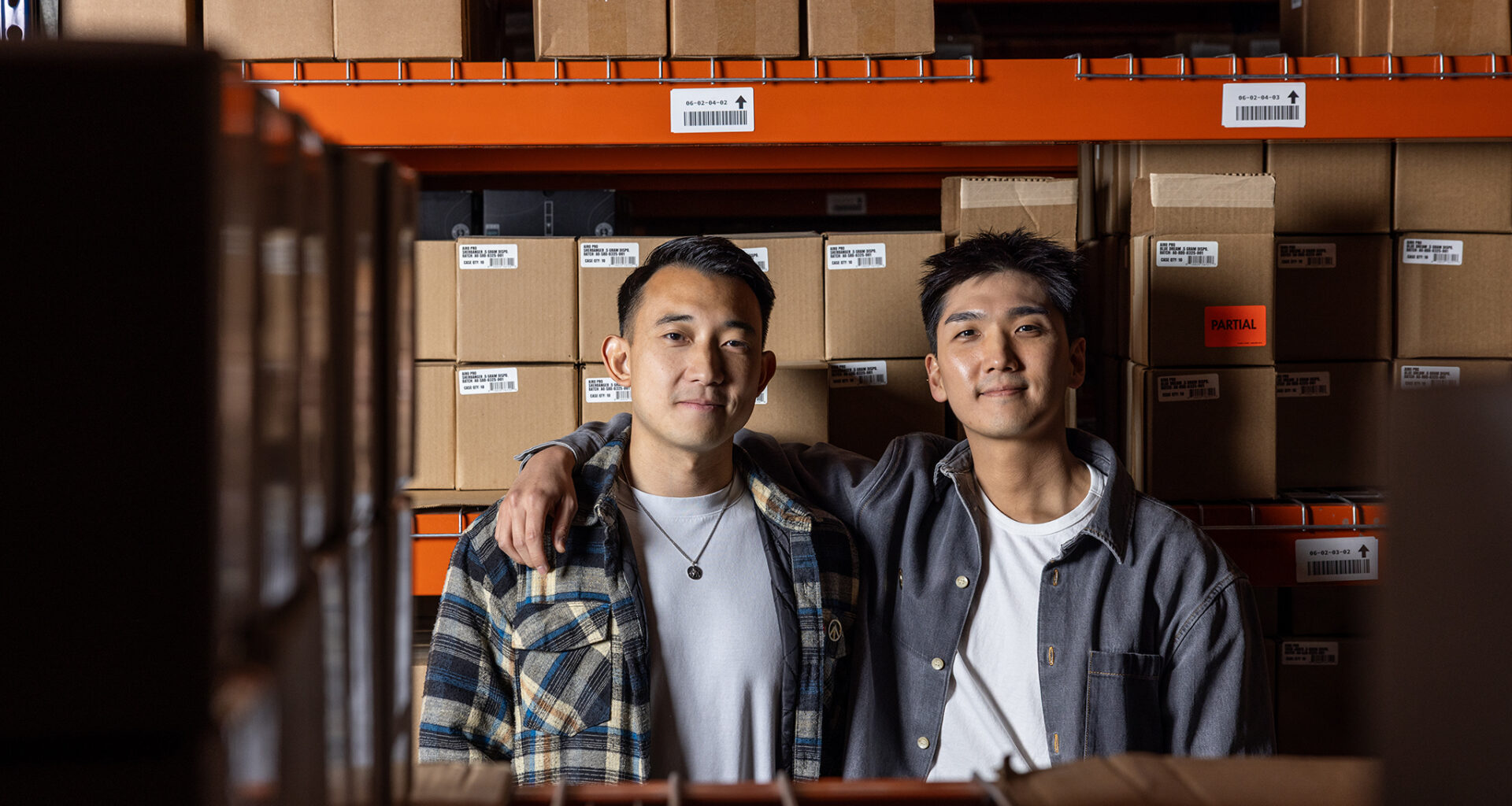
Vince Ning and Jun S. Lee pictured at the Nabis distribution facility in California’s Central Valley.
Lester Black/SFGATE
Ning and Lee both seem unbothered about their current company valuation, saying they aren’t actively looking into going public through an IPO or being acquired by a larger company. Ning said he’d guess their value is somewhere in the “few” $100 million range, but he said “we don’t really think about it too much.”
“Valuation is important, but with not too many exit opportunities at the moment, it’s actually just more about generating cash flow, profits and customer value. The valuation will solve itself eventually,” he said.
Article continues below this ad
If it’s like any other problem the duo have faced in their first eight years running Nabis together, they’ll probably find a solution before too long.