
Published April 20, 2026 05:05AM
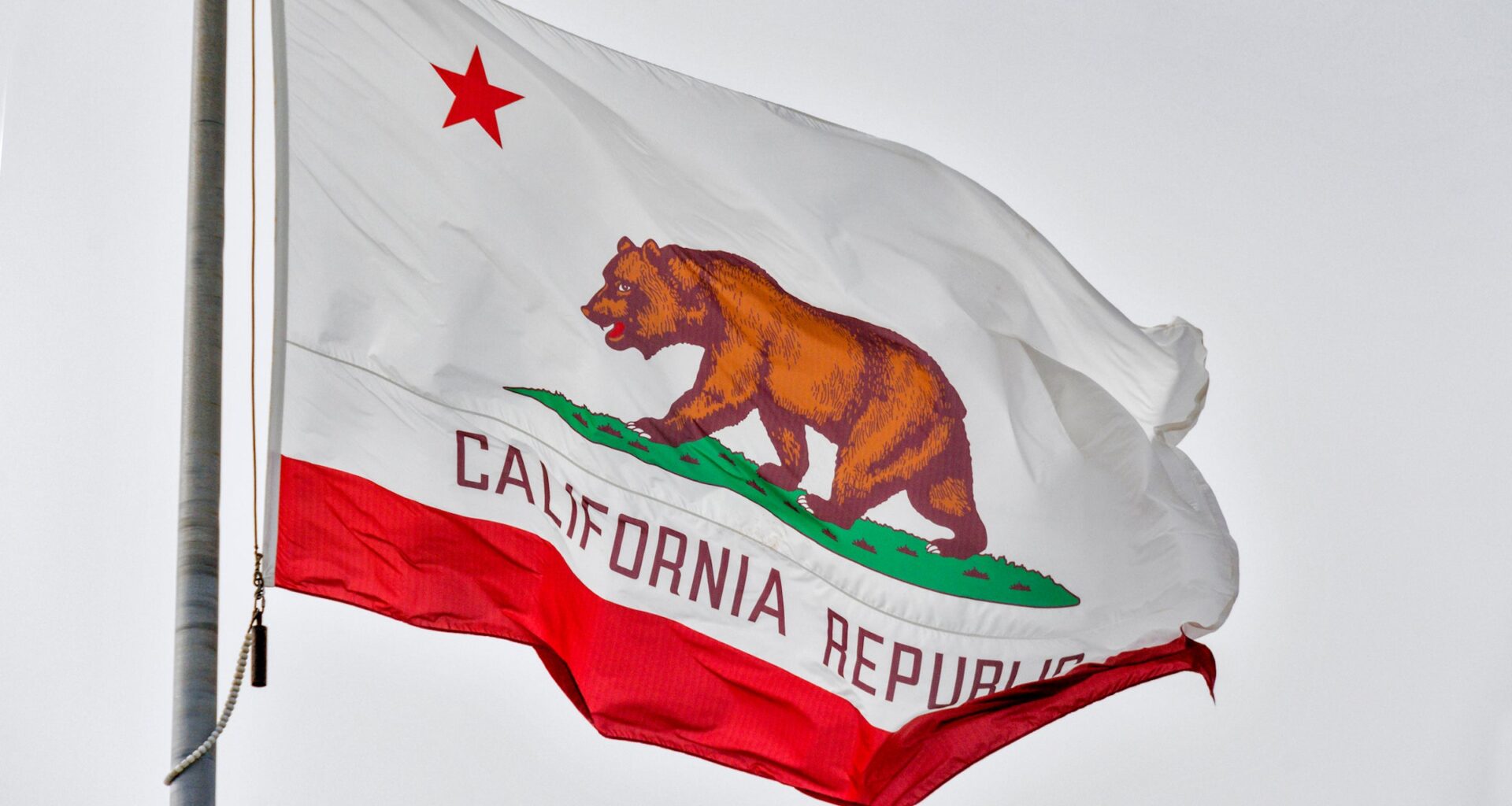
Many Californians don’t realize that the creature on its iconic state flag—a golden-furred subspecies of the North American grizzly—is long extinct. For the last 100 years, the apex predator has lived on only in souvenir shops and place names. Soon, however, it could make a comeback.
This year, lawmakers are considering a bill that would direct the California Department of Fish and Wildlife to “create a roadmap” for the potential reintroduction of this unique subspecies of grizzly. If approved, the office would have until 2030 to evaluate the viability of a self-sustaining population, including analyzing habitat suitability, human-wildlife conflicts, and ecological impacts.
The proposal follows a 200-page study published in 2025 by the California Grizzly Alliance, which found that restoring the population would be “very likely biologically feasible.” However, the success of the project may depend more on human factors than biological ones
“Sound science must inform species reintroduction and recovery efforts, but science alone cannot answer the question of why the bears should return—or what it would mean if they do,” the study’s authors wrote.
In other words, it’s true that California grizzlies once played an important ecological role in dispersing seeds, redistributing nutrients, and keeping prey species in check—and likely would again. The biggest obstacle is whether or not Californians are willing to live alongside them.
To get a clearer picture of what bringing grizzlies back to California would involve, it helps to look at how and why they disappeared in the first place.
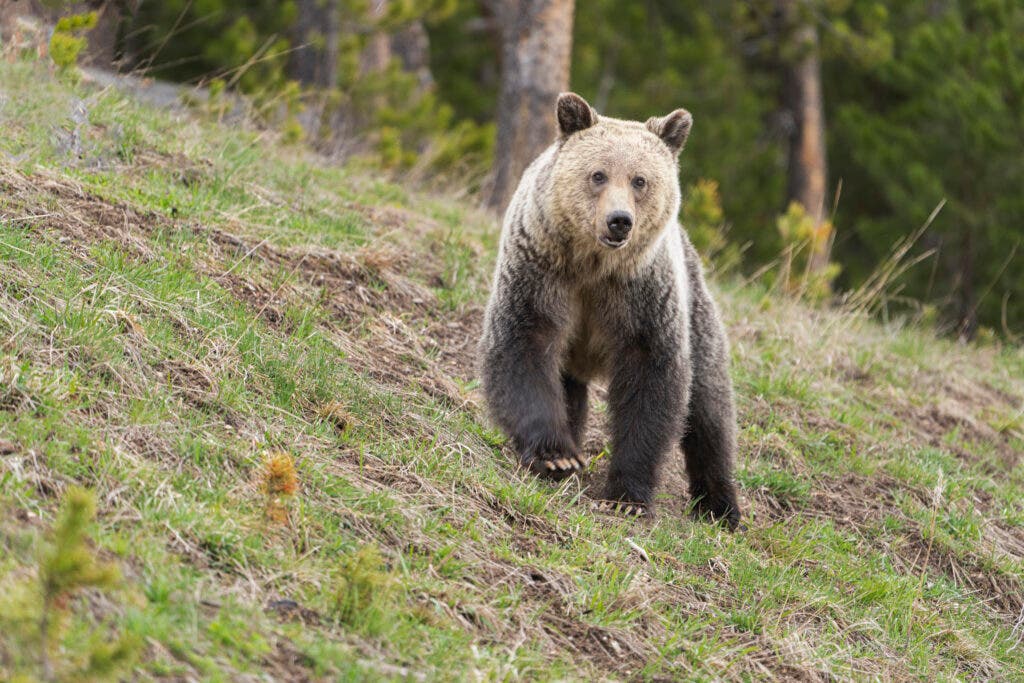 California grizzlies were distinct for their light, sometimes silvery color. (Photo: Getty Images)
What Was the California Grizzly?
Thousands of years ago, grizzly bears arrived in North America from Eurasia by crossing the Bering Land Bridge. They first settled in Alaska. Then, thousands of years later, they expanded their range southward to the Lower 48. The California grizzly bear—sometimes referred to as Ursus arctos californicus—was a regional population of the grizzly bear (Ursus arctos horribilis). The grizzly, in turn, is a North American subspecies of the brown bear (Ursus arctos).
Across the state, California grizzlies lived not only in the mountains but along coastlines and in montane forests, foothill woodlands, chaparral shrublands, and savannas—pretty much everywhere but desert. Considered opportunistic omnivores, they ate a diet of wild game and fish, as well as nuts, berries, tubers, and seeds.
Historical accounts exaggerated California grizzlies “as massive hypercarnivores” but research from 2024 reveals that they ate mostly plants and weighed an average of 350 to 750 pounds—close in size to the surviving North American populations. On their two back legs, they could stand as tall as 9 feet. On four legs, they could run as fast as 35 mph.
With no natural predators, these bears sat at the top of the food chain with only humans above them. Different Indigenous communities navigated the animal’s presence in different ways. Some prohibited killing or eating grizzlies, while others hunted them; some held dances every spring in celebration of the bear’s emergence from hibernation. A few may have even kept them in captivity.
“Our ancestors understood the grizzly, possessing deep knowledge, passed down since time immemorial, of how to coexist with the bear,” Tejon Indian Tribe chairman Octavio Escobedo III wrote in the feasibility study. “It is said that some of our chiefs, including signatories of the 1851 Tejon Treaty, kept grizzlies as pets and even gifted them to other tribal leaders.”
And Yurok Tribe Chairman Joseph L. James wrote, “To our ancestors, the grizzly bear was a revered relative, who kept the natural world in balance. Our people feel the same way today.”
By the time European settlers arrived in the late 1700s and early 1800s, California was home to as many as 10,000 grizzlies—a fifth of the North American grizzly population across 18 Western states.
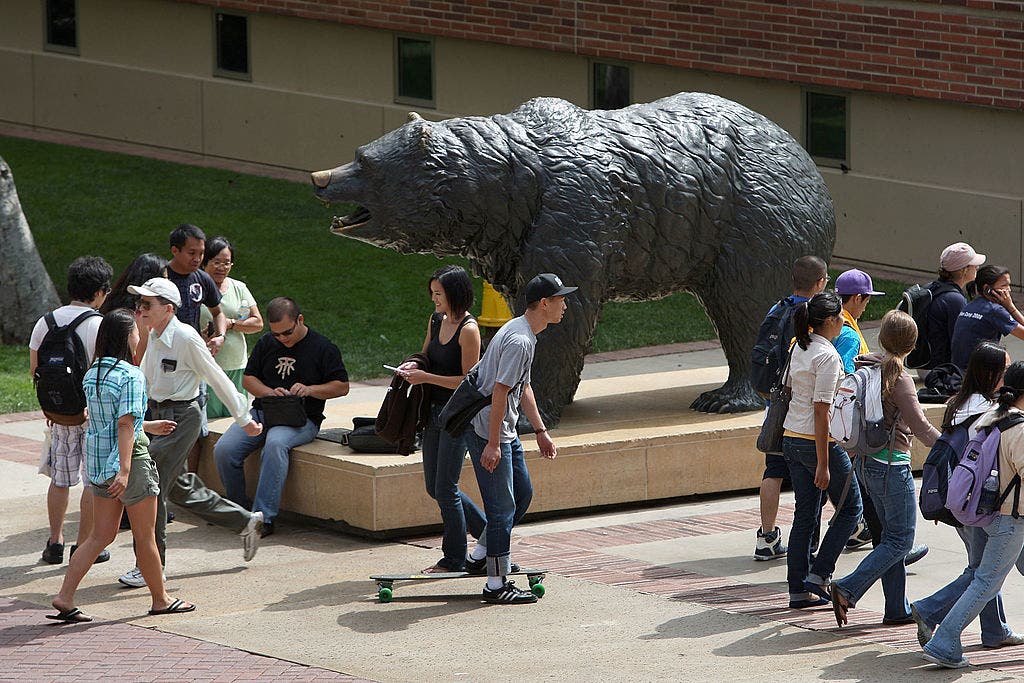 Statues of the California grizzly litter the state—from government buildings to college campuses. (Photo: David McNew/Getty Images)
Where Did California’s Grizzlies Go?
The bear boom didn’t last long. Within decades of settlers arriving on the West Coast, the California grizzly was driven to extinction by state-sponsored extermination, widespread poisoning, and habitat loss as agriculture and ranching industries grew.
It started when colonists like Meriwether Lewis and William Clark recast grizzly bears into something to fear rather than revere. After reportedly being chased and attacked during their voyages in the 1800s, they described the grizzlies as “ferocious tyrants of the American woods.”
In fact, American naturalist George Ord formally named the grizzly bear Ursus horribilis—“the horrible bear”—based on Lewis and Clark’s notes. (Biologists now classify it as Ursus arctos horriblis, clarifying its role as a subspecies of the brown bear.)
Even as they pushed the bears out of historic habitats, settlers embraced the creatures as a symbol of the Western wilds—and America’s subjugation of those lands. One notorious Californian was John Adams, later nicknamed Grizzly Adams for killing and trapping bears for use in bull fights in the 1850s. According to one popular legend, he also befriended two grizzlies named Ben Franklin and Lady Washington, who followed him everywhere like dogs.
In 1889, long after Adams died of animal attacks (first by a grizzly, then a monkey), newspaper magnate William Randolph Hearst ordered the capture of a California grizzly in the hills near Los Angeles. It was a publicity stunt “to dispel the myth that grizzlies were extinct in California,” according to an undated magazine article. Some say the bear, named Monarch, was not captured but bought in captivity.
For his remaining 22 years, he was paraded around at amusement parks and zoos. Today, his stuffed body is on display at the California Academy of Sciences in San Francisco.
The last reliable sightings of a wild California grizzly bear occurred in 1924. In the midst of an unseasonably dry April, a road crew working near Moro Rock in the center of Sequoia National Park spotted a large bear sniffing near their camp. The men had seen bears before. Some of them had worked in Yellowstone, where grizzlies were still common, and recognized its characteristics immediately: the massive frame, the unmistakable hump between its shoulders.
Months later, when temperatures dropped again in October, a cattleman named Alfred Hengst came face to face with what was likely the same animal near the headwaters of Cliff Creek, miles from Moro Rock. It was, he said, “the biggest bear I ever saw—bigger than any cow,” its coat so pale it looked dusted with snow. There was no doubt in his mind. He had seen a grizzly.
These two accounts, recorded by early Sequoia ranger and naturalist Walter Fry, were especially remarkable because no one had spotted a grizzly in the park for four decades. Fry hoped that if it left the safety of the park, it would not be killed by “some thoughtless hunter.”
Alive or dead, the lone bear was never seen again.
Fifty years later, under the Endangered Species Act in 1975, the entire grizzly bear subspecies received protections in the lower 48 states. For the California population, it was too late.
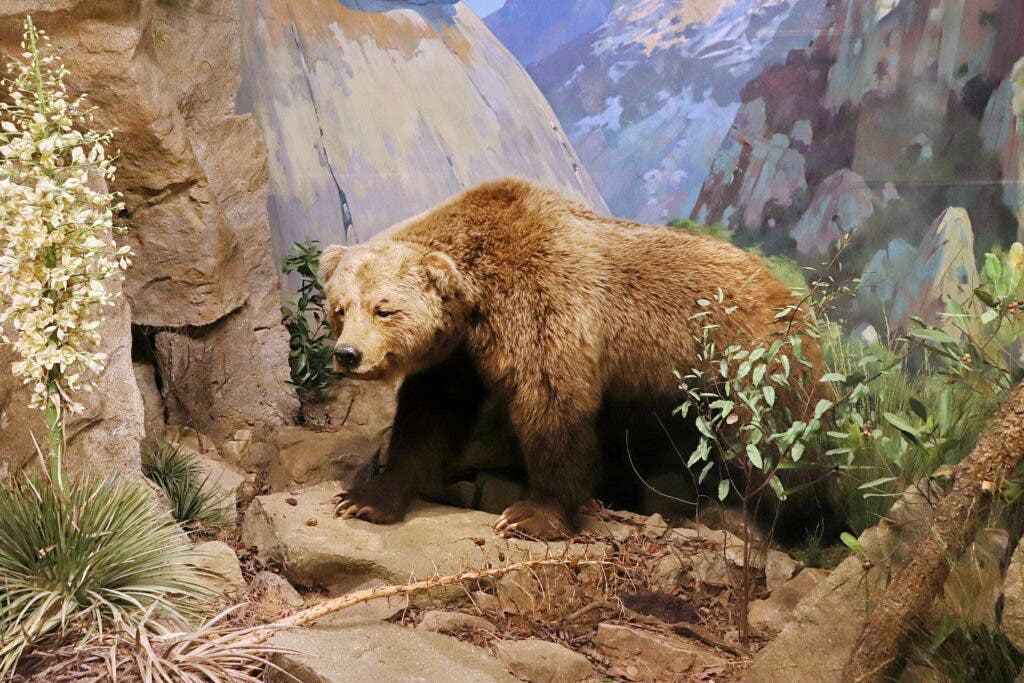 One of the few specimens of the extinct California grizzly is on display in a Santa Barbara museum. (Photo: Vahe Martirosyan via Flickr)
The Case for—and Against—Grizzly Reintroduction
Today, fewer than 2,000 grizzlies live in the contiguous U.S., relegated to national parks and wilderness areas in Washington, Idaho, Montana, and Wyoming. Alaska’s population is much larger, with an estimated 30,000 brown bears.
The authors of the California feasibility study calculated that the state could support more than 1,000 additional bears, potentially relocated from Northern Rockies populations that are “genetically indistinguishable” from the extinct California grizzly. The authors also identified three possible reintroduction zones: the Northwest Forest, Sierra Nevada, and Transverse Ranges.
It’s hard to say what the result will be because it’s difficult to quantify what California has lost in the grizzlies’ absence. As the authors of the feasibility study say, it “has probably affected California ecosystems in numerous ways, but more research will be necessary to better understand” those.
“The grizzly bear is far and away the most ecologically and culturally significant species that we have lost from California,” wrote Brendan Cummings, conservation director at the Center for Biological Diversity, who contributed a legal chapter for the feasibility study. “Fortunately, this study clearly shows that the loss [of the species] is not irreversible.”
Supporters argue that bringing grizzlies back to the state would help restore a missing piece of the ecosystem, reviving an important species and honoring its cultural significance—particularly for Indigenous communities who have long viewed the animal as integral to the landscape.
As for the bigger problem of the bears’ PR? Data from a 2019 California Grizzly Research Network poll suggests broad public backing, with about two-thirds of Californians in favor and roughly 14 percent opposed.
Critics say reintroduction is a gamble, one that could bring new risks to rural communities, from livestock losses to dangerous encounters. They argue that California ecosystems and land use have changed too much for a return to realistically be successful.
“Our state is already struggling to properly manage mountain lions, black bears, and growing wolf populations,” wrote California assemblymember Heather Hardwick, whose bill to use hound dogs to pursue black bears failed in committee last year. “Rural communities are dealing with livestock losses, public safety concerns, and limited wildlife enforcement capacity. Before introducing another apex predator, we must fix the systems we already have.”
Complicating matters, California had its first documented fatal bear attack in 2024, when a black bear mauled a 71-year-old woman to death in her home in the Sierra Nevada.
While black bear–human conflicts have risen in parts of California, encounters with brown bears including grizzlies remain rare, averaging about 40 cases worldwide each year over the past 15 years. Grizzly bears, proponents argue, avoid people as much as possible. Reintroducing them to California isn’t likely to change that.
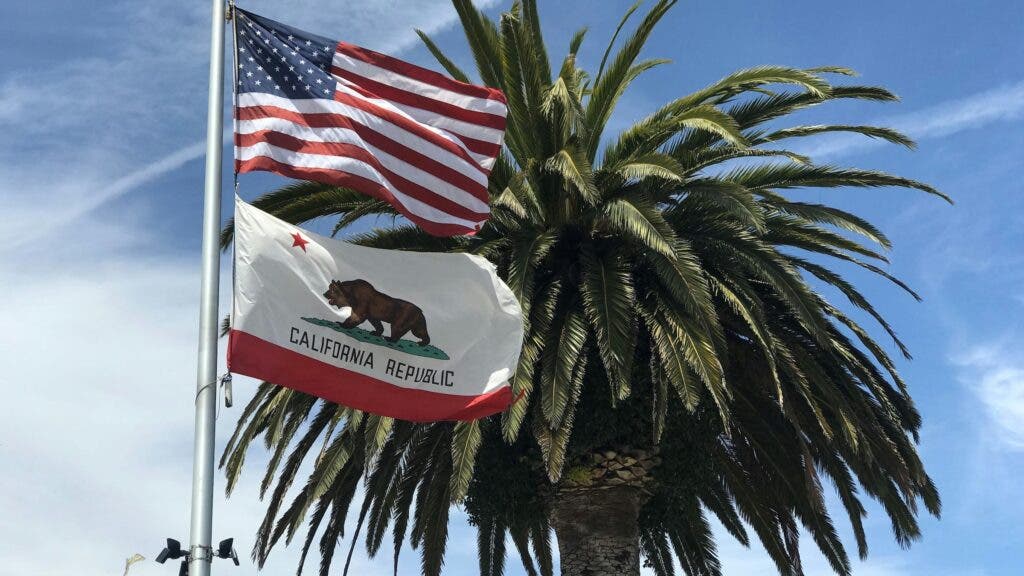 The California grizzly—the iconic animal featured on the state flag—could be coming back. (Photo: Unsplash)
The Path to Reintroducing the California Grizzly
Even if California lawmakers approve the plan to reintroduce grizzlies, its implementation is far from certain and would likely take years, if not decades. A similar effort in Washington’s North Cascades offers a glimpse of what the process could look like.
In April 2024, after decades of debate and two years of concentrated work, the National Park Service and U.S. Fish and Wildlife Service agreed to move forward with a grizzly restoration plan. It calls for the translocation of grizzly bears from the Rocky Mountains or interior British Columbia to establish an initial population of 25 bears over a period of five to ten years.
For now, there is no set timeline for translocation and the Cascades plan has stalled between approval and action—many residents say their concerns were not represented in the decision.
Meanwhile, California is many steps behind. On April 7, the California Senate Natural Resources and Water committee advanced Senate Bill 1305, sending it to another round of hearings and opening the door for public comment as it moves through the legislature.
The project has already experienced its first delays: The deadline for a formal feasibility study, including consultation with Native American tribes, local governments, and landowners, moved from 2028 to 2030, underscoring how complex and contentious the process will likely be.
If anything, the delay emphasizes that this isn’t a new fight. The question of whether grizzlies belong on the land has been hotly contested for decades.
During a 1997 House oversight hearing on whether to reintroduce grizzlies in national forests, one Idaho lawmaker argued that wildlife reintroduction should be decided by the people who live with the area, not by outside political or scientific consensus alone:
“I don’t think that I have the right as an Idahoan to insist that California accept introduction of the grizzly to the Central Valley just because I think there is food and habitat to support it there.”
If the grizzly bear’s absence reshaped California in ways researchers are only beginning to understand, its return could do the same. But finding out could take years of debate over how, and with whom, the land should be shared.