
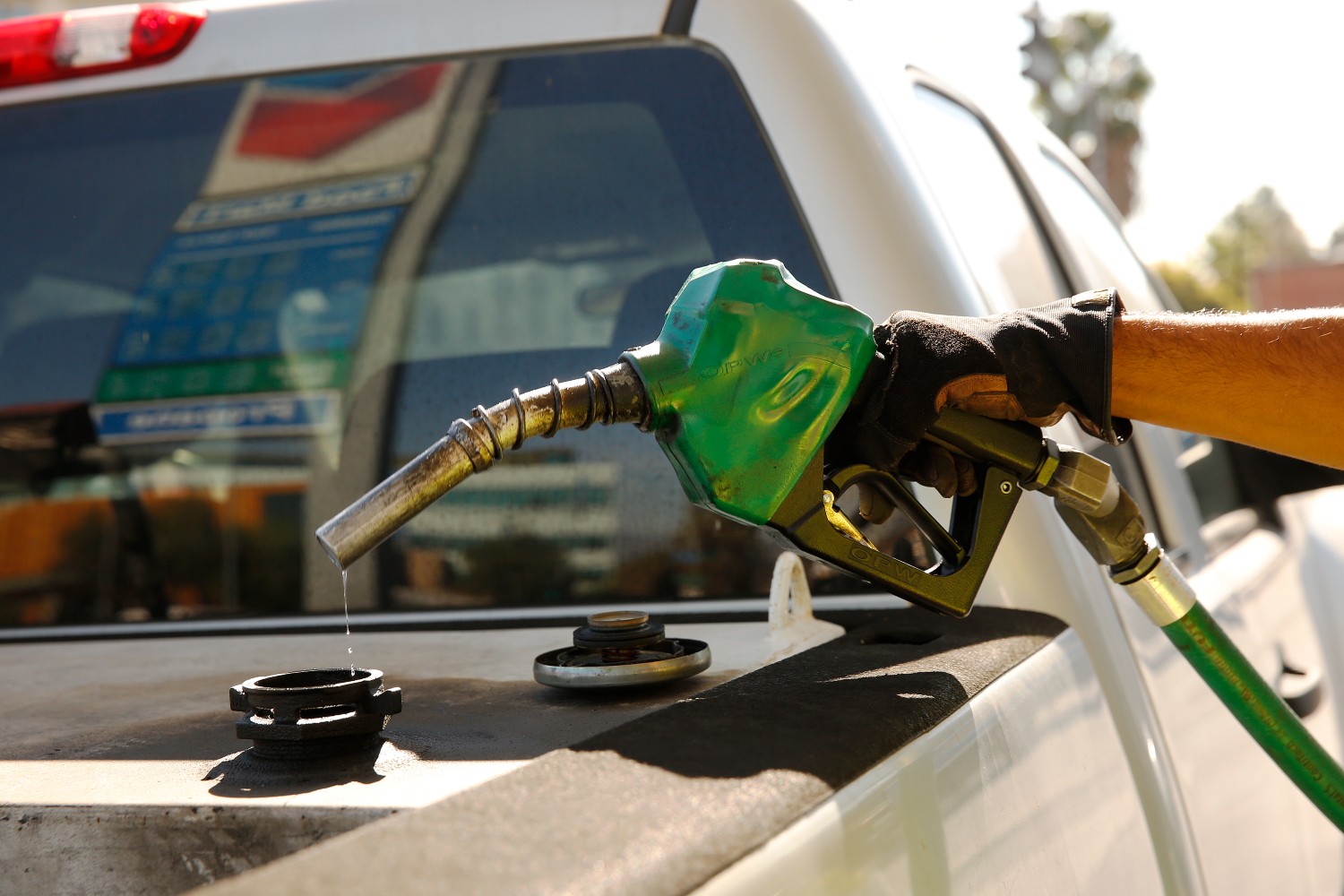
With oil movement threatened through the Strait of Hormuz, Los Angeles faces renewed pressure from rising energy costs
On the other side of the world, tankers are idling in the Strait of Hormuz. And in Los Angeles, drivers are feeling the consequences at the gas station.
Over the weekend, oil prices skyrocketed after renewed tensions between the United States and Iran threatened traffic through the Strait of Hormuz, a critical waterway through which about one-fifth of the world’s oil supply flows. U.S. crude jumped more than 7 percent, to roughly $90 a barrel, while international benchmarks spiked. Stock futures fell in response, reflecting investor anxiety over the tense, unpredictable conflict.
For Angelenos, the implications are immediate and tangible.
Southern California drivers are already accustomed to some of the highest gas prices in the country. But global disruptions like this can quickly send prices even higher. Gas prices in Los Angeles have already reached $6 a gallon — up more than $1.30 since the U.S.-Iran war began — while diesel in California has hit a record $7.46 per gallon.
Rising fuel costs also affect airfare out of LAX and grocery delivery fees. Heating oil futures, often used as a proxy for jet fuel, also surged, signaling potential increases in travel costs as the summer season approaches.
The stakes hinge on what happens in the Strait of Hormuz, where escalating military exchanges have disrupted commercial shipping. Beginning on March 4, Iranian forces declared the strait closed, threatening and carrying out attacks on ships attempting to pass through.
On Friday, Iran briefly declared the waterway open again, sending oil prices plummeting 11 percent, only to reverse course over the weekend, accusing the U.S. of only partially honoring the ceasefire. By Sunday, dozens of commercial ships that tried to exit the strait had turned back. A vessel operated by CMA CGM reported coming under warning fire. President Trump announced that the U.S. military had boarded an Iranian ship. Iran’s armed forces promised retaliation.
As gas prices continue to rise nationwide amid ongoing attacks on Iran, a new analysis shows Americans have paid about 35% more for gasoline since the conflict began, an estimated $8.4 billion in additional costs across U.S. households. https://t.co/dXM5PuWlEr pic.twitter.com/jYbq0JKLgP
— KTLA (@KTLA) April 6, 2026
Scroll to continue reading
It is this uncertainty that makes markets so volatile. Ceasefires announced, then questioned; negotiations proposed, then denied. The result is an unpredictable market that is highly vulnerable to geopolitical events.
California’s fuel market is especially sensitive to global affairs. The state relies heavily on imported crude and operates under a specialized, relatively inflexible refining system that can struggle to adjust when supply is disrupted. California’s unique air-quality fuel standards also limit how much gasoline the state can import from other regions.
Energy Secretary Chris Wright said Sunday that gas prices may not drop below $3 per gallon until next year, as the conflict and the strait closure continue to affect energy markets.
For a region already grappling with high housing costs and persistent inflation, an energy price surge could further squeeze budgets.
All eyes are now on whether diplomatic efforts can stabilize the situation, or whether tensions will escalate further. Trump said over the weekend that U.S. representatives were heading to Islamabad for negotiations, even as Iranian state media said there were no plans to participate. Meanwhile, analysts have said that if the strait remains closed for weeks, oil prices could cross $100 per barrel — raising the cost of gas, groceries and everyday life in Los Angeles.