
A bill is making the rounds in the California Legislature that could help create “surfing reserves” up and down the state — with some in La Jolla hoping a few local spots will be designated as such.
Assembly Bill 1938, authored by Assemblywoman Jacqui Irwin (D-Thousand Oaks), would create an option for local governments to designate local breaks as state surfing reserves if they meet certain criteria.
“It’s only right for California to recognize the immense value of our iconic surf breaks,” Irwin said. “Surfing brings in billions of dollars to our economy and an untold amount of joy and recreation to people across our state. This bill is about ensuring we are on the right path to protecting these resources for generations to come.”
Before joining the Assembly, Irwin was an All-American swimmer at UC San Diego in La Jolla.
According to Irwin’s office, “surf resources” refers to everything that makes a wave surfable and worth protecting, including the “wave itself, the ocean and seafloor that shape it, the surrounding ecosystem and the environmental conditions that keep it working.”
The bill would not establish any new protections or regulations but would allow local governments to identify surf breaks that should be preserved and protected. The model is inspired by the Adopt-A-Highway program that provides an avenue for individuals or organizations to help maintain certain segments of California highways.
If a local surf break were designated as a reserve, local supporters could organize and establish a conservation group to make sure issues are addressed as needs arise and that the area remains open and protected.
If approved, the bill would require the state’s Ocean Protection Council to establish criteria for designating an area as a state surfing reserve and develop an application process by July 1, 2027. The council also would review applications by local governments and approve designations that meet the criteria.
The bill recently was advanced by the Assembly’s Natural Resources Committee and is on its way to the Appropriations Committee, which reviews bills that may have costs associated with them. In this case, the cost would be to cover the Ocean Protection Council’s time to draft the criteria and application process. An Appropriations Committee hearing is expected in late May.
From there, the bill would cycle through applicable state Senate committees. Should it clear that process, it would head to the governor’s desk to be signed into law.
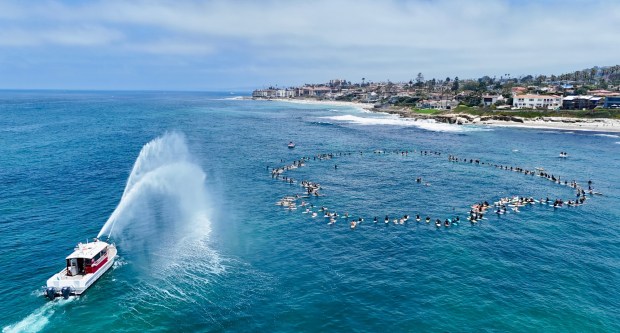 Surfers accompanied by a lifeguard boat pay tribute to late surfer Mike Hynson during a paddle-out at La Jolla’s Windansea Beach last June. (Santiago Aguerre)
Some La Jollans are hoping that local areas such as Windansea Beach and Black’s Beach would be designated as surfing reserves as a result of the bill.
“The history of Windansea Beach as one of the best surfing beaches in California goes back decades, and is so important to recognize,” said Friends of Windansea member Melinda Merryweather. “To have Windansea designated as a surfing reserve would help keep it the way it is and honor the history.”
She said Black’s Beach being designated could help ensure that public access to it remains open.
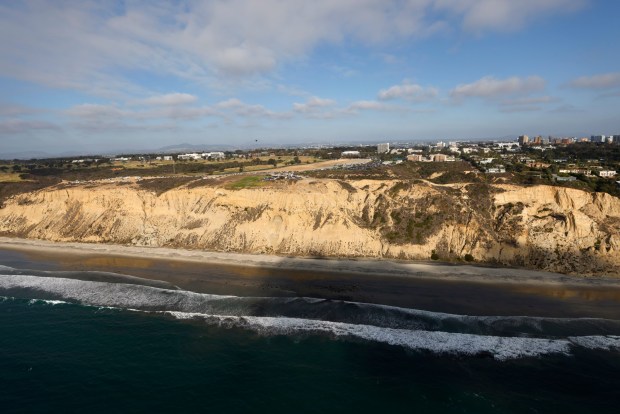 Black’s Beach is one of the La Jolla surf spots that locals would like to be designated as surfing reserves. (K.C. Alfred / The San Diego Union-Tribune)
Izzy Tihanyi, co-owner of Surf Diva, a surfing school and shop in La Jolla Shores, said the surfing industry “brings so much joy to so many people, but it also fills our hotels and restaurants” because “we have people coming from all over the world to try our waves. It’s important that we recognize that.”
She said AB 1938 “on the surface … looks fantastic.”
“I think we need to protect our surfing resources,” Tihanyi said. “I have seen … what happens when these resources are not protected,” referring to development or limited access.
“They are precious to me personally, but I see they are precious to the community. Man-made wave pools are being built all over the world, so what does that tell you about the value of these waves? Why not protect what we have? Surfing is such a huge piece of La Jolla culture.” ♦