
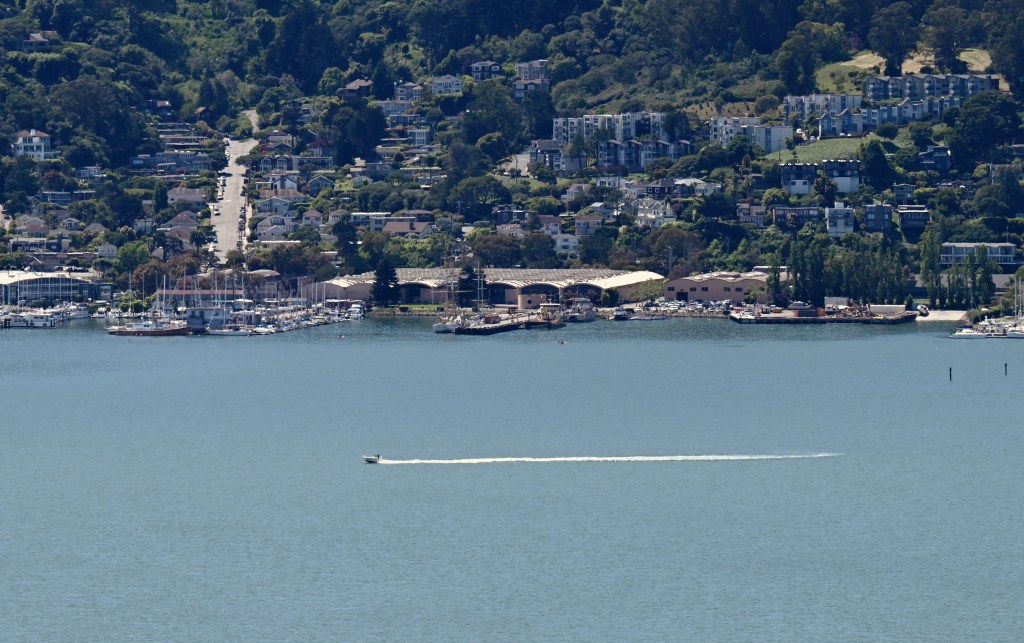
Most of Richardson Bay has been cleared of illegally moored boats, according to the Richardson Bay Regional Agency.
In March, the last of the so-called anchor-outs — boat residents living on the bay — was removed from the “eelgrass protection zone” northward from the Spinnaker restaurant in Sausalito to Strawberry Point, the agency said.
“It’s worth celebrating the full clearing of the EPZ because protecting and restoring the eelgrass beds are key components of the agency’s core mission,” said Jack Ryan, the agency’s board chair and a member of the Tiburon Town Council.
“The waters of San Francisco Bay are there for everybody to enjoy,” Jim Malcolm, the agency harbormaster. “It’s protected, but that just means you can’t anchor there. What you now see every morning is kayakers out there. You see people in their sculls rowing. You see people fishing.”
“It’s definitely a turning of a page,” he said.
Since the 1960s, Richardson Bay has drawn hundreds of people seeking a rent-free life on the water.
“Living out there, I had the greatest time,” said Louis Tenwinkle, a former anchor-out who now lives on a boat in San Rafael. “I really did, and so did a lot of other people, even with all the constant harassment.”
However, their presence increasingly was seen as a blight by local officials, waterfront businesses and people who worked for years to legitimize houseboat marinas.
During the past decade, every layer of local government — the bay agency, Sausalito, the county and regional and federal agencies — wrestled with how to find housing for people who often resented rules and resisted authorities, and to convince anchor-outs to leave the bay or move ashore.
“It was a multi-pronged effort that took many partners and many years to accomplish,” said Marin County Supervisor Stephanie Moulton-Peters, whose district includes Sausalito.
“We weren’t just moving people off the water,” she said. “We were offering them housing and support services, and we were buying their boats back, which gave them some operating cash when they moved into their homes. We were providing counseling and other supports.”
“There were some mariners who really loved life out there,” Moulton-Peters said. “They were there, but so were a lot of people who couldn’t afford to live anywhere else, and they were not sailors, and they were not really suited to live safely on the water.”
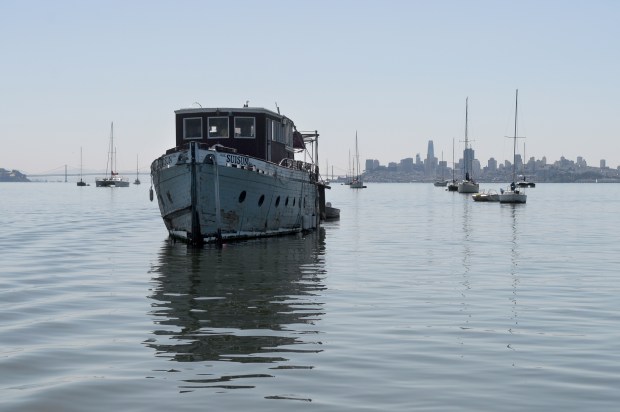 A boat anchored in Richardson Bay near Sausalito on Thursday, April 2, 2020. (Alan Dep/Marin Independent Journal)
A decade ago, Sausalito began to clear the southern stretches of the water beyond the Richardson Bay Regional Agency jurisdiction. At one point, 90 boats filled inlets near the waterfront, said Councilmember Jill Hoffman.
City officials were frustrated that people would get seriously hurt and boats would be damaged in winter storms, she said. Sausalito’s response included offering housing support. The Richardson Bay Regional Agency and county officials suggested building a 200-boat mooring field in the bay’s north end, which the city opposed.
Earlier this year, Brad Gross, the agency’s executive director, gave a speech recapping the problems and solutions.
“In 2016, Richardson Bay had over 240 illegally anchored vessels — derelict hulks, improvised floating homes, boats with no working heads, no safety equipment and anchor chains scouring hundreds of acres of eelgrass off the bay floor,” he told the San Francisco Bay Conservation and Development Commission. “There were decades of symbolic enforcement, but there was no clear vision, goals or direction. The RBRA codes and ordinances did not support the type of enforcement or due process our programs needed.”
In 2019, the agency shifted gears in response to pressure from other regional agencies, he said. It began updating its rules allowing three-day anchorages to barring any vessel from anchoring in the eelgrass protection zone. In 2022, there were still more than 100 vessels in the zone.
That year, state Sen. Mike McGuire of Sonoma County secured a $3 million state grant allowing the Richardson Bay Regional Agency to partner with the Marin Housing Authority and county social services agencies.
The goal was to provide subsidizing for housing and support services for 27 people, Gross said. The 27th person is slated to move in May, he said.
The agency also instituted a vessel buyback program that has removed 44 boats.
“Today, just two vessels remain,” Gross said. “One is currently seeking housing. The other is in our safe and seaworthy program with an October 2026 deadline.”
The Marin County Department of Health and Human Services says 51 people have been housed since 2022 through the Richardson Bay Regional Agency and county programs.
Some former anchor-outs like Tenwinkle, who grew up nearby and has lived on the water since the 1970s, are bitter that their community, however flawed, is gone.
“It was an economy for everybody,” he said. “Sausalito used to be a fishing town, a fishing village. They built boats and I got in on the tail end of it.”
Hoffman said that with the houseboats and the marinas in Sausalito, the city “still has a lot of people who live on the water.”
“Sausalito and RBRA have reined in the hazards while supporting cleanup efforts, eelgrass restoration and migratory bird protection,” she said. “We are still very much a community connected to the bay, just safer and more healthy.”
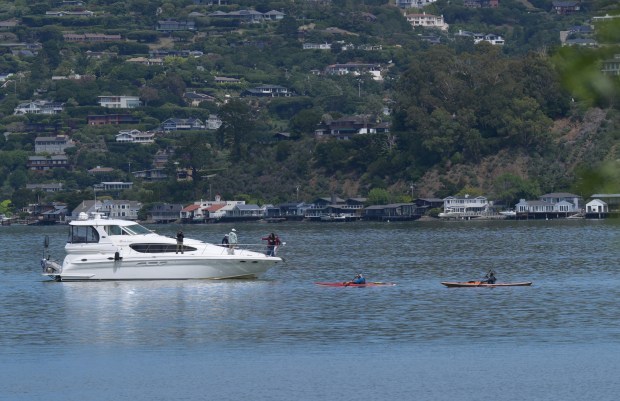 Kayakers cross paths with a boat on Richardson Bay near the Sausalito waterfront on Wednesday, April 15, 2026. The bay has been cleared of nearly all the vessels where people had lived offshore. (Sherry LaVars/Marin Independent Journal)