
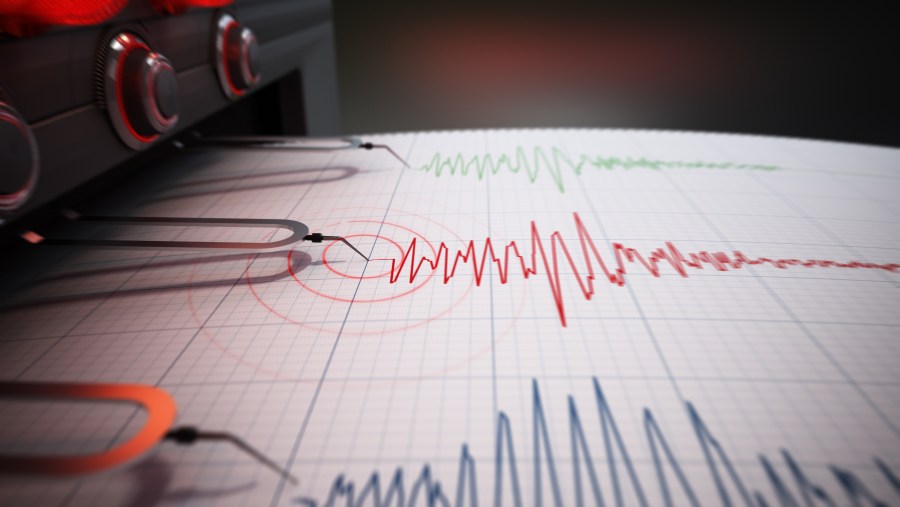
BAKERSFIELD, Calif. (KGET) — April is Earthquake Preparedness Month, and with constant seismic activity in California, both experts and officials want the Kern County community to be ready.
Matthew Herman, an assistant professor at CSU Bakersfield, said Kern County is on the boundary of two tectonic plates.
NICU alumni celebrate reunion at Dignity Health
“So if you go west of here, you get to the Pacific plate right here, we’re on the North American plate and they’re trying to move past each other. But along their boundary, which we know is the San Andreas fault, they’re stuck and they can’t move past each other,” Herman said.
Herman has studied seismology for years. While Kern County isn’t directly on the San Andreas Fault, it has seen its fair share of quakes.
“This was one that had a magnitude 7.5 in 1952,” said Herman. “It destroyed parts of downtown Bakersfield and kind of leveled Tehachapi as well. So this was a significant earthquake. I’ve had conversations with people, retirees who were in that earthquake as children and talk about how that event just tossed them from wall to wall.”
Near Japan, a 7.7 magnitude quake struck just this week. Earthquakes can’t be predicted — but you can prepare for them, Herman said.
“You don’t know if you’re going to be able to go back in your house or if your electricity, water, gas lines are going to be working. So you want to have things like a go bag that’s got documents for you that’s got closed, that’s got some food for a few days. You want to make sure you have access to water. So you want to have this go bag. You also want to have a plan to prepare,” he said.
Watch ‘After Sunrise’ on KGET+; Click to learn how to get KGET+ on your smart TV devices
The State Emergency Services Office agreed. While unlikely, having the proper supplies and following law enforcement guidelines could save your life if the plates below us shift.
Jon Gudel with the California Governor’s Office of Emergency Services said people should listen to their local authorities if they’re asked to evacuate.
“If you are forced to stay in your house for 72 hours or possibly longer without emergency services, make sure you know what items to have, including food, water, again, for 72 hours or longer, medications, phone chargers,” Gudel said. “So things that maybe we take for granted that you should always have in your house or in a go bag in case you need.”
Copyright 2026 Nexstar Media, Inc. All rights reserved. This material may not be published, broadcast, rewritten, or redistributed.
For the latest news, weather, sports, and streaming video, head to KGET 17 News.