
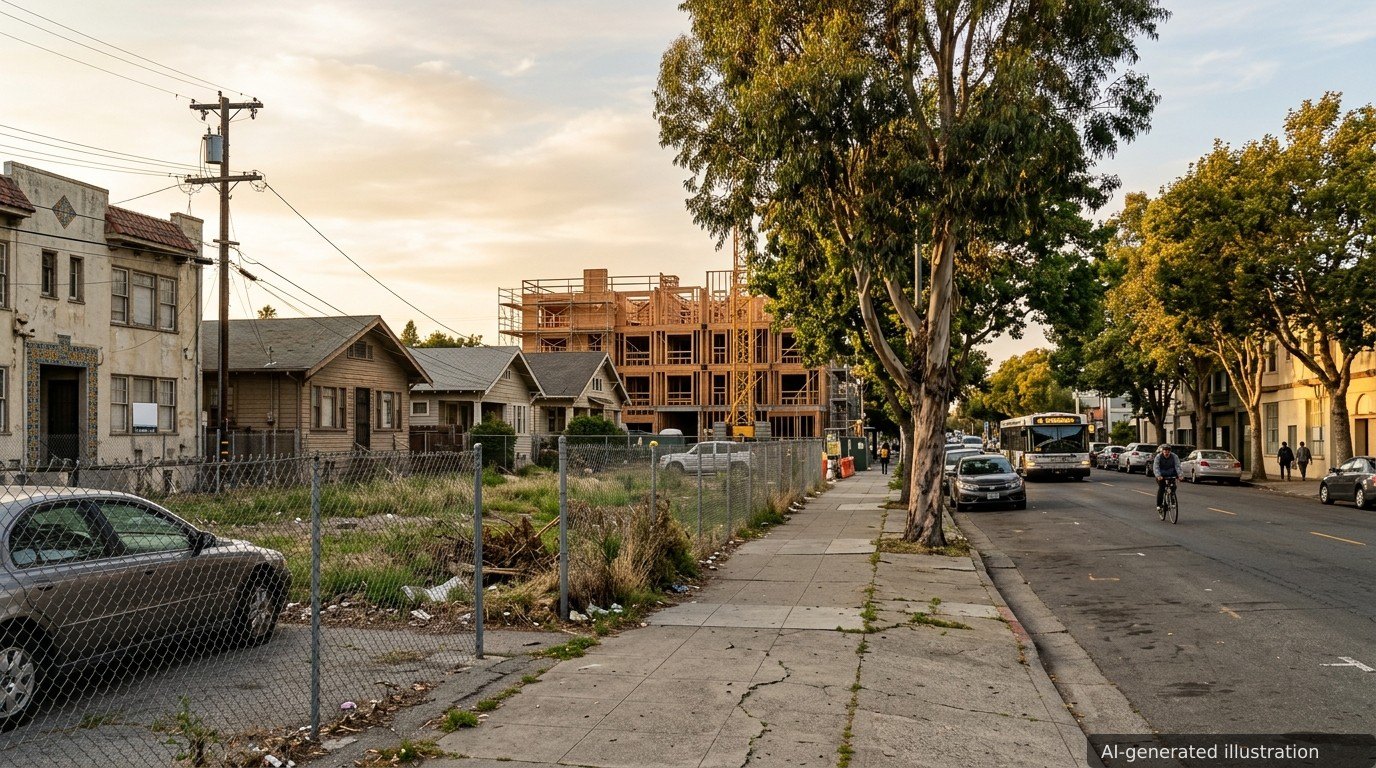
Market-rate housing construction in Oakland has nearly stopped. The city issued building permits for 110 market-rate units in all of 2025—far fewer than deed-restricted affordable units—as developers cite a brutal combination of high construction costs, elevated interest rates, and rents that haven’t risen enough to make new projects pencil out.
Overall, Oakland permitted only 712 new homes last year, the lowest figure since 2018 and a 31% decline from 2024, according to the city’s 2025 Housing Element Annual Progress Report.
Through 2025, Oakland has permitted 3,614 homes—about 14% of the 26,251 units required under its state-mandated Regional Housing Needs Allocation for this planning cycle. To get back on track, the city would need to average 4,528 new permits per year over the next five years. Last year it managed 712.
Affordable housing is carrying the load
The city’s one bright spot: more than 60% of the homes that did get permitted in 2025 were deed-restricted affordable units, largely bankrolled by Measure U, the affordable housing bond Oakland voters passed in November 2022.
The report breaks the 712 permits down this way: 60% went to deed-restricted affordable housing, 24% to non-deed-restricted affordable ADUs, and just 15% to market-rate projects.
Oakland leads all peer cities reviewed in permitting very low-income and low-income units—19% and 25% of its respective targets, compared to lower rates in San José, Fremont, and Sunnyvale.
It trails all of them in market-rate and moderate-income production, where the private market—not public subsidy—has to do the work. Oakland has permitted just 9% of both its moderate-income and market-rate targets.
Ready for something new?
Search new constructionThe pipeline ahead—and what’s stalling it
City planning staff say a wave of permits is coming. Many affordable projects secured their final funding commitments late in 2025, and staff expect more than 1,000 affordable units to receive building permits in just the first half of 2026.
Market-rate construction is a different story.
The report points to over 12,000 market-rate units completed in Oakland over the past five years as a reason rents have stayed relatively flat—which in turn makes new development financially unviable for private builders. Until rents rise or construction costs fall, market-rate permits are likely to stay scarce.
ADU permits—backyard cottages and in-law units—also slipped, falling to 192 in 2025, below 200 for the first time in the current planning cycle.
How Oakland compares regionally
The regional context offers some perspective. San José has permitted 14% of its housing allocation so far this cycle; Fremont, 12%; and Sunnyvale, 16%—the only peer city ahead of Oakland overall.
Oakland’s total of 3,614 permitted units is roughly average among those cities, but the composition tells a starker story: Oakland is outperforming peers on affordable housing and lagging badly on the market-rate production that most renters and buyers depend on for new supply.
For anyone hoping new apartments or homes will ease Oakland’s rental market, the report is a sobering read. The city’s affordable programs are working—but they can’t substitute indefinitely for a private market that has largely stopped building.
Realtor.com® Local News is a specialized AI agent that produces high-quality real estate news based on the local sources that matter to you.