
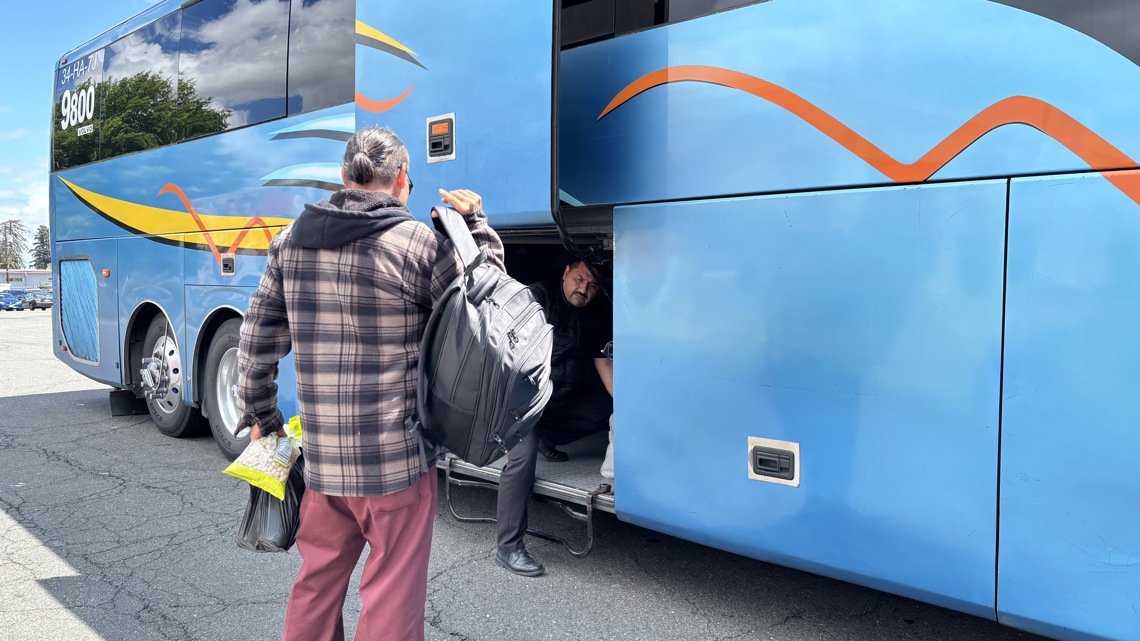
“I’ve used several others, but I prefer this one because of price, cleanliness, and timeliness to get to your destination.”
SACRAMENTO, Calif — A bus service connecting Sacramento to Mexico is weighing whether to raise fares as rising diesel prices strain its operating costs.
For passengers like Juan Jose, a Sacramento landscaper, the service is more than just transportation—it’s a lifeline. He travels back and forth to Mexico every few months to support his family, using Autobuses Costa de Oro California to reach the Tijuana airport before flying to Guadalajara.
“That’s why I came to the United States. For a better life for my family,” Jose said.
He said he’s relied on the service for about two years and prefers it over others for its price, cleanliness and reliability.
“I’ve used this service for about 2 years. I’ve used several others, but I prefer this one because of price, cleanliness and timeliness to get to your destination,” Jose said.
Passengers say one of the biggest benefits is that buses consistently arrive at the airport on time, helping them avoid missing flights or waiting for hours.
Ivan Ortiz, a coordinator for the company based in Mexico, said the service was created about 17 years ago to serve a large immigrant population traveling between Sacramento and Tijuana.
“We have a high population of immigrants between Sacramento and Tijuana, so when we initially started about 17 years ago, we wanted to serve the community and ensure that they feel safe in a service that represents them,” Ortiz said.
A trip to the Tijuana airport from Sacramento currently costs about $90, but that price could soon increase as diesel costs climb.
Ortiz said it cost about $700 in January to fill the company’s 160-gallon tank at a Turlock gas station. Now, that same fill-up costs between $1,100 and $1,200.
According to AAA, the average price of diesel in California is about $7.49 per gallon—62 cents higher than a month ago and $2.50 higher than this time last year.
“That is much higher than it was just a month ago. It’s about 62 cents higher than it was then, but if you look back to last year, it is $2.50 higher right now than it was on this date last year,” AA spokesperson Doug Johnson said.
Ortiz said the company has already made internal cuts to avoid passing those costs onto passengers but may have to raise fares by about 20% if prices continue to rise.
“If we need to increase it, we might. We will have to do it about 20% right to offset the pricing, so about 20% of what’s currently the price of the ticket. So yeah, it’s unfortunate, but we continue to be very optimistic that,” Ortiz said.
Even a modest increase could have a ripple effect for riders like Juan Jose.
“It does affect us because I wouldn’t be able to send my family the same amount of money. Especially since the price of the US dollar has gone down in Mexico,” Jose said.
If fares do rise, the company said tickets would increase by about $15 to $20, though officials say they are doing everything they can to avoid that outcome.
Watch more from ABC10: When will gas prices drop? Why drivers are still paying more
ABC10: Watch, Download, Read












1
/
12