
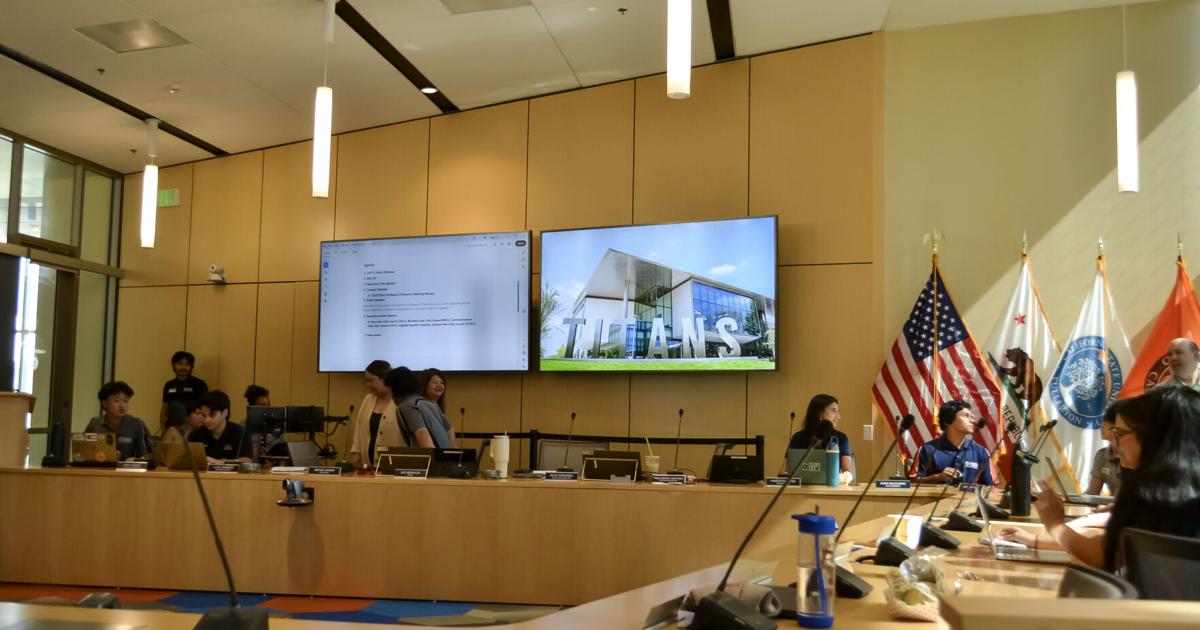
On Tuesday, Oct. 21, the Associated Students board of directors met to vote on a resolution pertaining to ASI Research Grants and listen to updates from the College of Natural Sciences and Mathematics and the Division of Information Technology.
ASI research grants are offered to graduate and undergraduate students each year and are designed to aid recipients in supervised research in all fields of study. This program is monitored and coordinated by the ASI Corporate Affairs Office. $25,000 is allocated towards these grants each year by ASI.
During their Sept. 11 committee meeting, the process for returning unused funds was reviewed.
“The committee had also recommended clarifying the policy to specify that funds are for research proposals and not for travel,” said Mahak Ahmad, board of directors vice chair.
The amendment to clarify the policy was voted on, with all board members voting yes to the recommendation.
The Dean for NSM Marie Johnson came to the board with updates from the college, including updates on the renovation process of several classrooms and facilities, along with the creation of a data science minor.
NSM worked with the colleges of Health and Human Development, Engineering and Computer Science and Business and Economics to develop this minor in order for it to be applicable to as many majors as possible.
“What makes it (data science) interesting that supports an application which could be a lot of things,” Johnson said. “We think virtually any major at Cal State Fullerton might be interested in how to use large sets of data to make decisions.”
After getting approval by the CSU Board of Trustees and submitting their proposal in curricula, Johnson is hopeful that the minor will be available to students in the next year.
The Vice President of IT Chris Manriquez discussed what technology on campus will look like in three to five years with artificial intelligence continuing to grow.
Manriquez presented to the board the Universal Strategic Plan. A plan that would help to create a roadmap into how the campus can respond to the growing demand in technology.
“We’re gonna try things. We’re gonna pilot it. We’re gonna put in innovation,” Manriquez said. “If it works, we’re gonna move it forward in collaboration and we’re gonna say ‘This is gonna be transformative for how the campus works.’”
As the plan is still in the conversational stages, Manriquez is to meet with key directors and people inside the IT division to find out what the campus might need technologically.
He plans to take this conversation to the broader campus community in the spring.
“We’re gonna go out to the campus community come spring and have a dialogue and say ‘Here’s what we’ve heard so far, what are we missing in this dialogue,’ so that we can begin scaling the solutions for what the issues might be that we have on campus,” Manriquez said.