
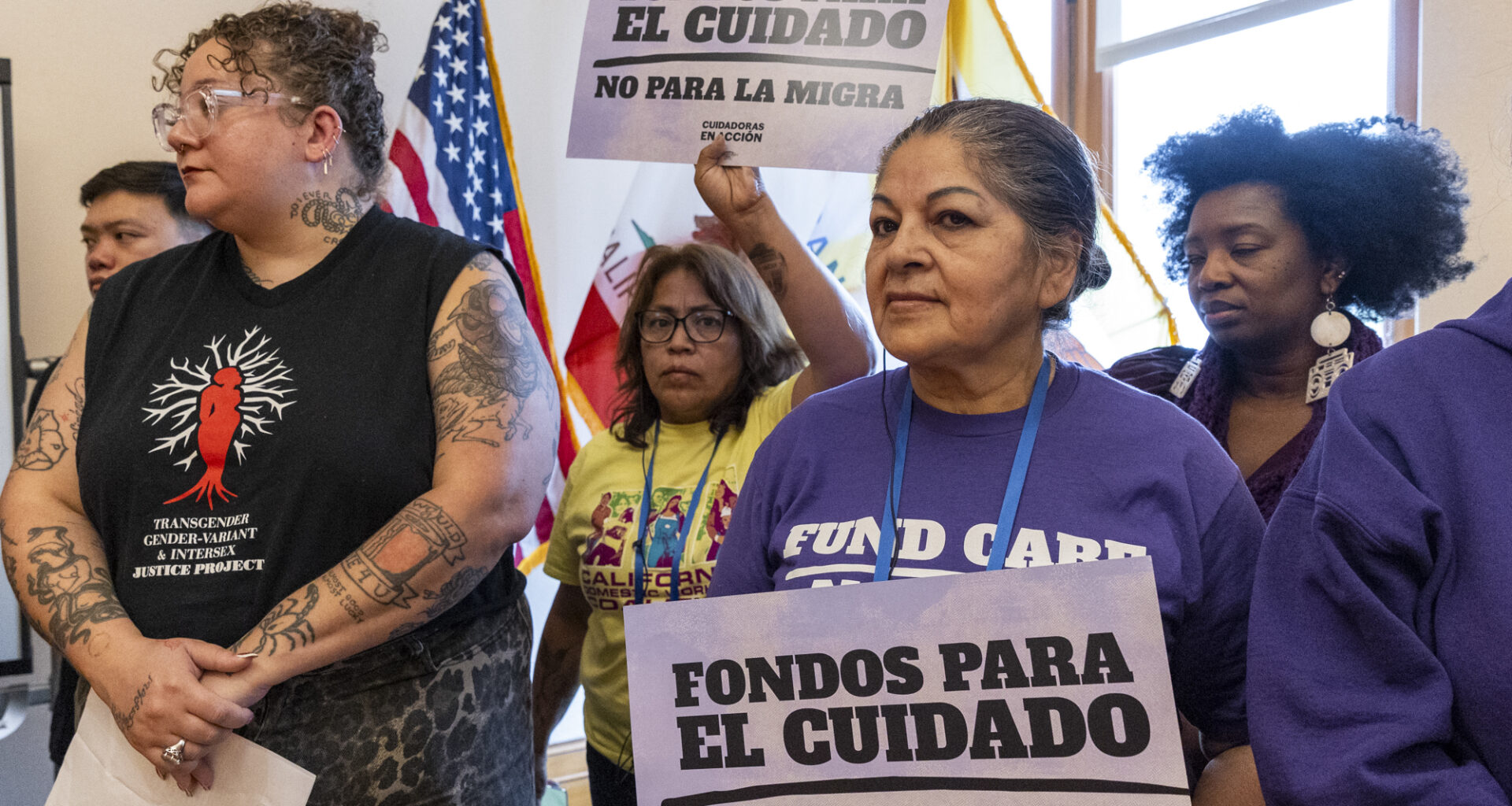
“I have seen firsthand how these organizations worked to stabilize working families in my district,” Chen said. “Without them, I fear that we will see increased homelessness, job loss.”
Nonprofit workers and service providers are also fighting the proposed cuts, which they said will only make the increasingly expensive city less affordable to low- and middle-income families, who help run many of the city’s essential services, by cutting off safety nets.
Leaders at La Raza said they are facing over $660,000 in proposed cuts to programs like their Family Resource Center, which provides basic needs for low-income and many immigrant families.
“San Francisco has increasingly become one of the most expensive cities to live in … I’ve witnessed my community, the Latino, low-income and hard-working community, continue to be pushed out and displaced from this city,” said Ethena Caldas, chief of staff at La Raza, at Wednesday’s hearing. “We help sustain these families with food, diapers, financial assistance, housing stabilization and enrollment in services that will sustain them in the long term.”
The budget is still up for negotiation, and Lurie has until June 1 to submit his proposal to the full Board of Supervisors.
The mayor has acknowledged that the proposed cuts will be difficult. But he has repeatedly said that reductions will be necessary to balance the budget, especially in light of state and federal funding cuts that have impacted the city.
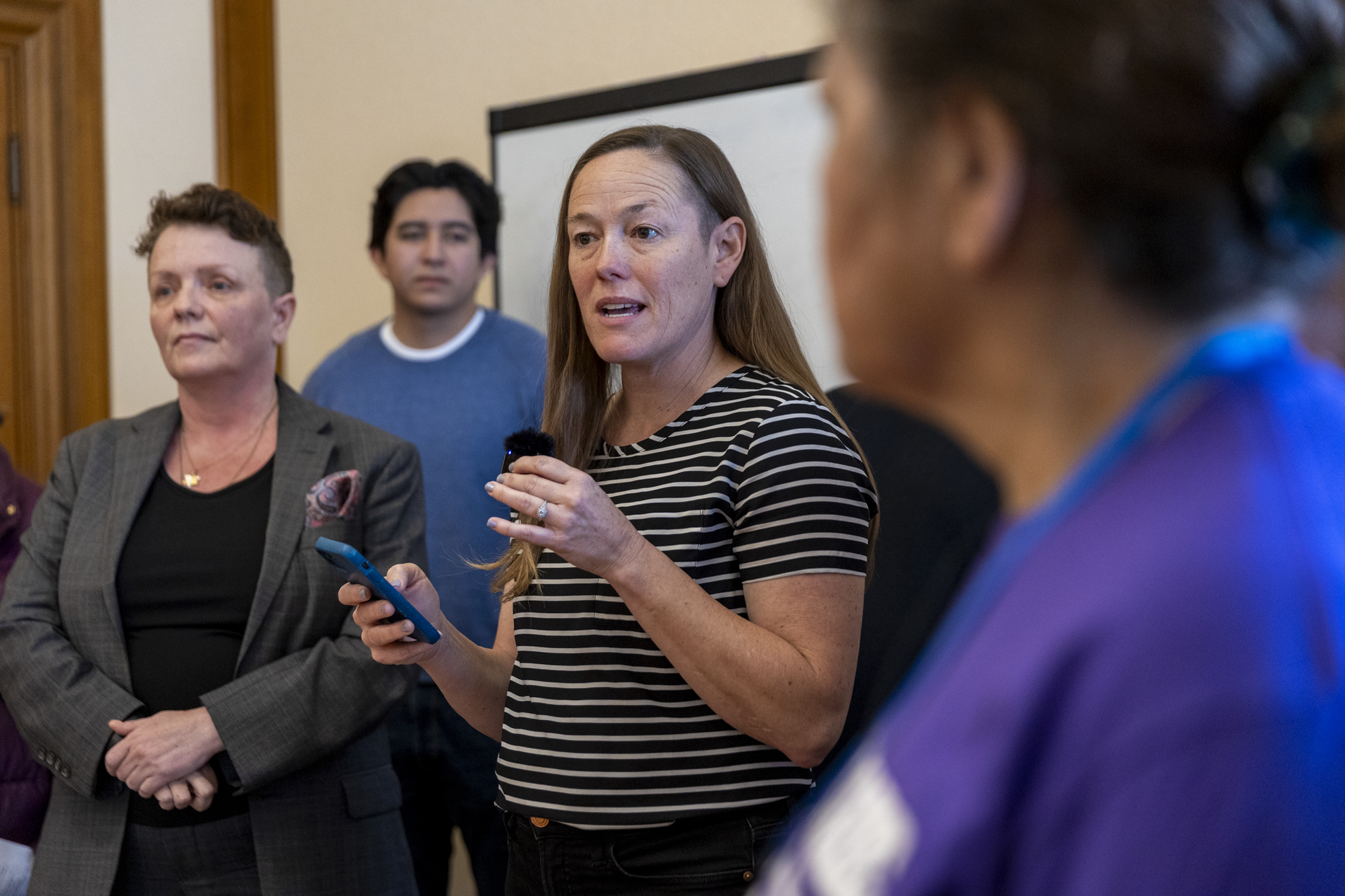 Rosemary Gardner, of the SF LGBT Center, speaks at a press conference hosted by SF People’s Budget Coalition, where community organizations speak out against major budget cuts to organizations that support low-income families at San Francisco City Hall in San Francisco on April 22, 2026. (Tâm Vũ/KQED)
“The city has to stop spending more money than we have. Temporary fixes may buy time, but tackling the structural deficit is the best thing we can do to set up our city for a broad-based, durable recovery,” Lurie said at a recent Board of Supervisors meeting. “Federal and state cuts to health care and safety net funding have set us back, and our deficit will reach one billion dollars in the coming years if we do not act further.”
Affordability has increasingly become a buzzword for Democrats looking to connect with their base leading up to the midterm elections this November.
“Our office has been continuing to advocate to push forward family affordability, affordability across San Francisco for all of our residents,” said Dan Adams, director of the Mayor’s Office of Housing and Community Development. “It’s a difficult conversation to talk about diminishing budgets, but I want to emphasize our ongoing commitment to affordability and advancing that as a goal for the city.”
Average rents in San Francisco, currently around $3,600 for a one-bedroom, are among the fastest-growing in the country amid a boom in artificial intelligence companies, according to the San Francisco Office of the Controller. Housing prices are also increasing faster than the state average.
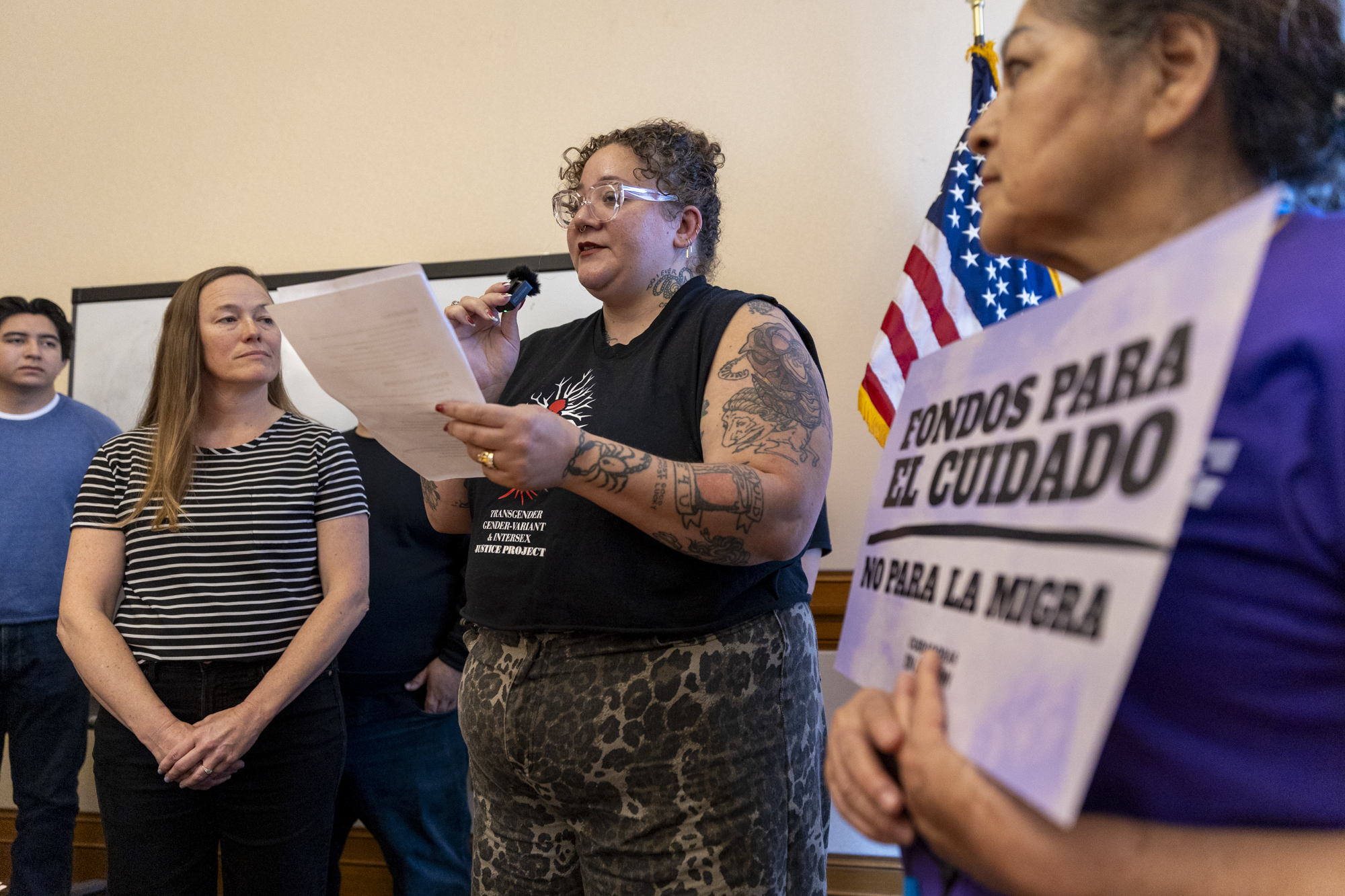 Ronika McClain speaks at a press conference hosted by SF People’s Budget Coalition, where community organizations speak out against major budget cuts to organizations that support low-income families at San Francisco City Hall in San Francisco on April 22, 2026. (Tâm Vũ/KQED)
At the same time, the federal government has slashed funding for basic needs services like CalFresh and MediCal, which help thousands of San Franciscans make ends meet.
Last December, Lurie successfully passed one of his key legislative efforts, the Family Zoning Plan, which allows the city to build taller and more dense buildings, particularly in residential neighborhoods.
Supporters say the plan clears the way for developers to finally build the thousands of units that the city needs in order to remain in good standing with state mandates, while increasing housing supply to drive down the cost.
But critics say that the plan encourages market-rate development over affordable or public housing, risking repeating histories of displacement and gentrification that have happened during the city’s past development booms.
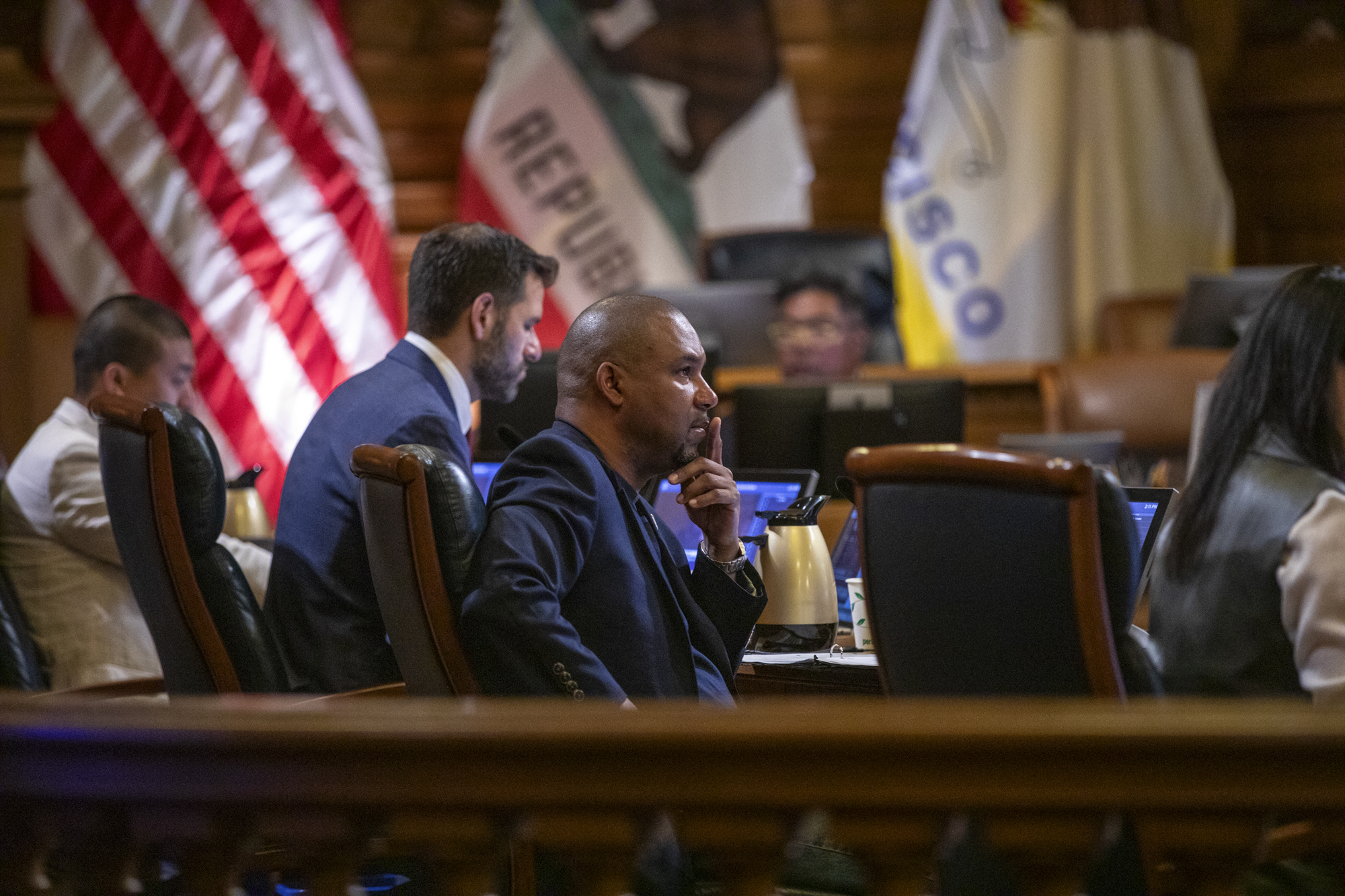 Supervisor Shamann Walton (center), representative of district 10, speaks at a meeting in the legislative chamber where city budgets are being discussed at San Francisco City Hall in San Francisco on April 22, 2026. (Tâm Vũ/KQED)
“The family zoning plans also encourage developers to build small units, and the requirements for larger units are insufficient,” Jeantelle Laberinto of the Racial Equity in All Planning Coalition advocacy group said at the Wednesday hearing. “Despite being touted as a main solution to the housing needs of families, the recently passed family zoning plan under our current housing element is not going to deliver the affordable housing our families need.”
Chen said she’s still seeking answers about the city’s longer-term strategy for its lowest-income residents who will lose access to services that keep the city affordable.
“It is especially important that we are considering any significant impact to the social safety net and the most vulnerable population that it serves,” she said. “The budget that we all agree to, it is a statement of our San Francisco values.”