
Written by a group of Black feminist artists and academics in April 1977, the statement is a manifesto on intersectional oppression and how liberation for Black women leads to liberation for all.
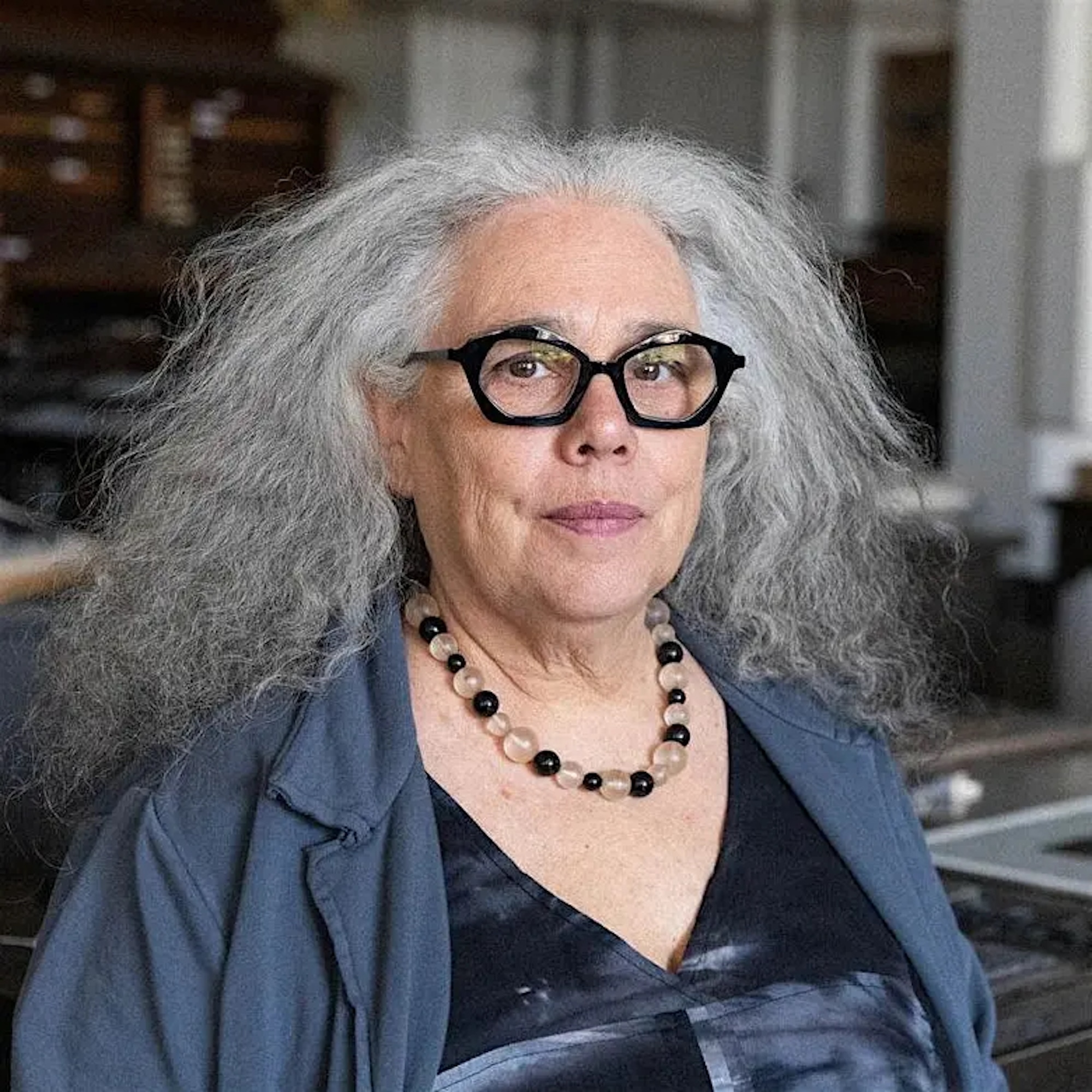 Alison Saar at Arion Press in San Francisco, 2024. (Courtesy of L.A. Louver Venice CA. Photograph by Nicholas Lea Bruno)
To guide the discussion, Ekundayo will pull from many of its concepts, as well as an analysis of the current state of art in San Francisco.
Two years ago, Ekundayo asked the SFO Museum and San Francisco Arts Commission how many women were in the permanent collection of the airport. “They gave me a list, it was very short,” she says.
That list grew even shorter when she asked how many of them were women of color. And shorter still when she asked how many were Black women.
“There were two,” recalls Ekundayo. “Mildred Howard and Alison Saar.”
The collection now includes the works of 14 artists who are Black women and gender-expansive people of color, including Sydney Cain, Erica Deeman, yétúndé ọlágbajú, Trina Michelle Robinson and others.
In the spirit of the Combahee River Collective, addressing the history of institutions and the current state of arts in the community is Ekundayo’s larger goal.